

Florence Nightingale is considered the founder of modern nursing and the first nurse researcher and statistician. She collected and published data about the morbidity and mortality of British soldiers during the Crimean War. Twelve months of data were displayed in polar area charts which are commonly used to display cyclical data such as annual or seasonal cycles (Anderson, 2011; Gilbert, 2020).
“Nurse researchers bring a holistic perspective to studying individuals, families, and communities involving a biobehavioral, interdisciplinary, and translational approach to science”(American Association of Colleges of Nursing (AACN), 2019). The nurse scientist has a doctoral degree focused on research (PhD, DNSc) that prepares them to generate evidence by designing, conducting, and disseminating research. This differs from nurses who work as research coordinators for clinical trials and nurses with advanced practice degrees (MSN, DNP) who translate and implement evidence into practice (National Academies of Sciences, 2021).
Before the ANCC Magnet® program (1994), nurse scientists functioned mainly in academia. Their research role activities primarily focused on developing and advancing their program of research, teaching and mentoring students, acquiring grant awards, publishing, and achieving tenure (American Association of Colleges of Nursing (AACN), 2019). Over the last decade or so, nurse scientist roles in hospitals have grown in response to organizations seeking Magnet® designation, which puts a major emphasis on research conducted by nurses.
The Magnet® model’s emphasis on new knowledge requires that healthcare demonstrate knowledge generation to achieve and sustain designation (Allen et al., 2023). However, the role of the nurse scientist in healthcare systems has not been well defined and continues to evolve, which contributes to the variability in role implementation, scope, administration, funding, and affiliation across healthcare sites (Hampton & Williams, 2023). The nurse scientist role in healthcare settings has been described as a nurse with a doctorate (PhD/DNSc) degree, having expert knowledge in a specific clinical area such as oncology, guiding nursing staff in clinical inquiry, facilitating implementation of research into practice, and leading teams in the conduct and dissemination of nursing research (Allen et al., 2023). Healthcare-based nurse scientists who work with nursing staff can also pursue their own programs of research interest.
Nurse scientists are valuable partners with healthcare organizations towards achieving this designation. They lead and engage nurses in research activities that align with the New Knowledge, Innovations, and Improvements component of the Magnet® model (American Nurses Credentialing Center – ANCC, n.d.). Also, they provide education and mentoring about the research process and dissemination. Specific examples of these activities are establishing a nurse research fellowship program, leading nurse research councils, disseminating research newsletters, and hosting annual research conferences. Nurse scientists affiliated with academic institutions typically benefit from a wealth of essential resources that may not be available to those in a healthcare setting. These may include comprehensive library systems, expert statistical consultation, and dedicated grant-writing support. Many also hold faculty appointments at universities, which further expands their access to institutional tools and collaborative opportunities that enhance their research capabilities (Tofthagen et al., 2024).
The extent that which expectations for performance and the standards for measurable outcomes are generalizable across clinical care settings remains unclear (Chipps & Zadvinskis, 2023; Granger et al., 2022; Hampton & Williams, 2023). Overall, the literature suggests that the nurse scientist role in a clinical setting can be challenging to implement in complex healthcare environments. However, successful models include the nurse scientist in a leadership role, alignment of research with institutional priorities, and strong support from senior leadership (Allen et al., 2023; Hampton & Williams, 2023). The commitment and support of an organization’s leadership are vital to the successful implementation of nurse scientists in healthcare settings (Allen et al., 2023).
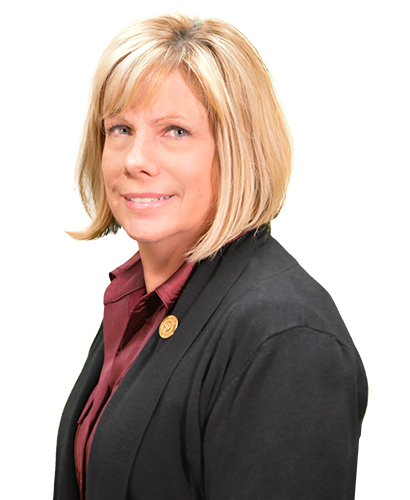
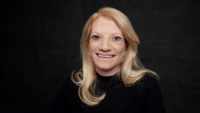
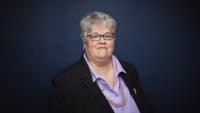
Drs. Geddie and Mason are members of the Florida Nurses Association and are Nurse Scientists at Moffitt Cancer Center & Research Institute, Tampa, FL. Dr. Mason, Director of Nursing Research, and Dr. Geddie lead, mentor and support clinical nurses in generating nursing research and research related activities.
References
Allen, D. H., Arthur, E. K., Blazey, M., Brassil, K., Cahill, J. E., Cooley, M. E., Fadol, A. P., Hammer, M. J., Hartranft, S., Murphy, B., Nolan, T. S., Sun, V., Whisenant, M., & Yoder, L. H. (2023). A scoping review on the nurse scientist role within healthcare systems. Worldviews on Evidence-Based Nursing, 20(1), 47-55. https://doi.org/10.1111/wvn.12624
American Association of Colleges of Nursing (AACN). (2019). Guiding Principles to Academic-Practice Partnerships. https://www.aacnnursing.org/Academic-Practice-Partnerships/The-Guiding-Principles.
American Nurses Credentialing Center – ANCC. (n.d.). Magnet Model – Creating a Magnet Culture. American Nurses Association. Retrieved August 26, 2025 from https://www.nursingworld.org/organizational-programs/magnet/magnet-model/
Anderson, R. J. (2011). Florence Nightingale: the biostatistician. Molecular Interventions, 11(2), 63-71. https://doi.org/10.1124/mi.11.2.1
Chipps, E., & Zadvinskis, I. M. (2023). Optimizing the Role of the Hospital-Based Nurse Scientist in a Changing Nursing Environment: Recommendations for Nurse Leaders. Nursing Administration Quarterly, 47(2), 118-125. https://doi.org/10.1097/NAQ.0000000000000568
Gilbert, H. A. (2020 ). Florence Nightingale’s Environmental Theory and its influence on contemporary infection control. Collegian, 27(6), 626-633.
Granger, B. B., Bryant, R., Crow, A., & Tracy, M. F. (2022). A scoping review of outcomes of operational success for nurse scientists in clinical practice settings. Nursing Outlook, 70(2), 247-258. https://doi.org/10.1016/j.outlook.2021.11.002
Hampton, M. D., & Williams, M. Y. (2023). Maximizing Nurse Scientist Role Potential in Health Care Organizations. Nursing Administration Quarterly, 47(4), 338-349. https://doi.org/10.1097/NAQ.0000000000000594
National Academies of Sciences, E., and Medicine. (2021). Educating nurses for the future. In M. K. Wakefield, Williams, D.R., Le Menestrel, S., & Flaubert, J.L. (Ed.), The future of nursing 2020-2030: Charting a path to achieve health equity. National Academies Press (US). https://doi.org/10.17226/25982
Tofthagen, C., Umberfield, E. E., Al-Saleh, S. A., Conley, S., Lindroth, H. L., & Chlan, L. L. (2024). Nursing science at Mayo Clinic: An alternative model to traditional hospital-based nurse scientist positions. Nursing Outlook, 72(4), 102187. https://doi.org/10.1016/j.outlook.2024.102187