
New Jersey is home to 194,107 Registered Nurses (RNs), Advanced Practice Nurses(APNs), and Licensed Practical Nurses (LPNs), yet not even one currently serves in the state Senate or Assembly. Meanwhile, when bills relating to nursing issues are discussed in state legislative sessions, there are typically no nurses present to testify and educate the legislators. This stark gap in representation means the complex challenges facing the state’s most vital healthcare profession are often debated and decided without the voice of frontline expertise. The latest 2026 Nursing Data and Analysis Report from the New Jersey Collaborating Center for Nursing (NJCCN) underscores precisely why this voice is so critical.
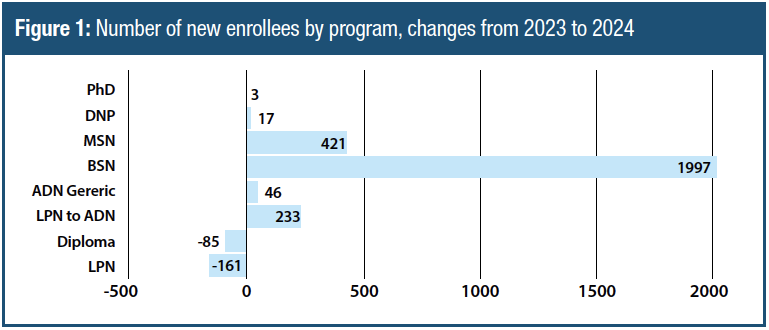
The report reveals a dual reality in the state’s nursing pipeline. The educational capacity section shows the RN sector experienced a significant turnaround, with new enrollees in pre-licensure programs surging by 39% from 2023 to 2024, reversing a 7% decline in the previous year. This was complemented by a 19% increase in RN graduates. The surge in RN enrollment was driven almost entirely by over 100% growth across Baccalaureate of Science in Nursing (BSN) programs (including generic BSN, accelerated BSN, and LPN-to-BSN tracks) (Figure 1). However, the LPN sector faces urgent challenges with a drop in enrollment by 11.8%, and a 21% decline in graduates. Compounding this issue, New Jersey’s (NJ) 2024 NCLEX-PN pass rate lags 5% below the national average.
Although the RN pipeline is heading in the right direction, there continues to be barriers for nursing schools accepting more applicants. Forty percent of prelicensure nursing programs reported they cannot increase enrollment. The most common barrier was lack of classroom space for BSN programs and lack of qualified faculty for Associate Degree in Nursing (ADN) programs. Although nursing faculty employment in 2024 increased, there were 80 vacancies; more than half of these vacancies were in ADN programs.
The workforce supply section of the NJCCN report reflects license renewal data submitted to the Board of Nursing. In parallel to the increases seen in nursing capacity, the workforce experienced increases in RNs, APNs, as well as LPNs. The racial/ethnic profile of RNs, APNs, and LPNs diversified from the previous year as evidenced by a larger proportion of non-White nurses.
Meanwhile, the demand section of the report shows problems with nurse retention continue to plague the workforce with turnover rates highest since the pandemic: 31% RNs, 38% APNs, and 56% LPNs. This higher demand is illustrated by the increase in salaries for RNs, APNs, and LPNs as well as higher job posting intensity for RNs. Employment is projected to increase from 2024-2034 with the most substantial growth expected among nurse practitioners (NJCCN, 2026).
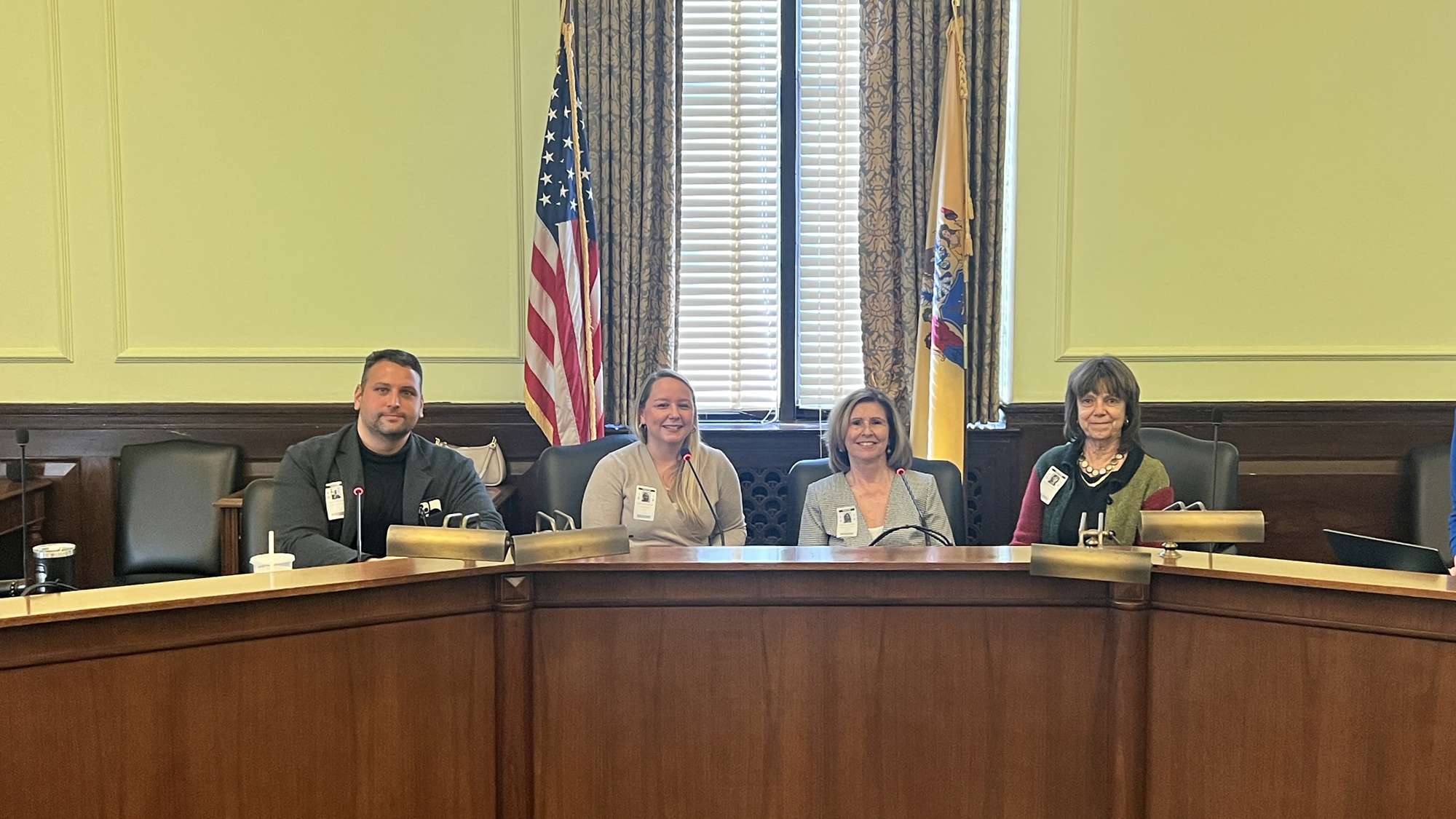
To bridge the divide between policy and the workforce and the other issues nurses face, NJCCN held a Nurse State Policy Advocacy Day last fall at the Trenton Statehouse. Nursing students gathered to hear firsthand distinguished nurse panelists discuss the power of political advocacy and state-level testimony. The event was more than a workshop; it was a powerful call to action. One participant remarked, “I learned more about how nurses can directly influence health policy, which was a new and empowering experience for me.”
The data is clear, and the need is urgent. To address workforce disparities and sustain growth, NJ must make strategic investments in nurse retention, faculty recruitment, and clinical capacity with targeted support for LPN programs. Imagine the transformative impact if NJ’s 194,107 nurses regularly communicated with their senators and assemblypersons, educating them on the issues that will define the future of healthcare in our state. We are all calling on all nurses to find their voice for the healthcare topic they are most passionate about. The time to act is now. Watch the panel discussion from Nurse State Policy Advocacy Day on YouTube or listen to the discussion on the Nursing Insights Podcast.
Reference
New Jersey Collaborating Center for Nursing. (2026). Nursing data and analysis. Newark, NJ:NJCCN. https://www.njccn.org/nursing-workforce-supply-and-demand/
















1 Comment. Leave new
Thank you for this valuable information. We need to rally together to get a representative present in these meetings so our voices can be heard. Maybe we can have this question added to a voting pole with representative names.