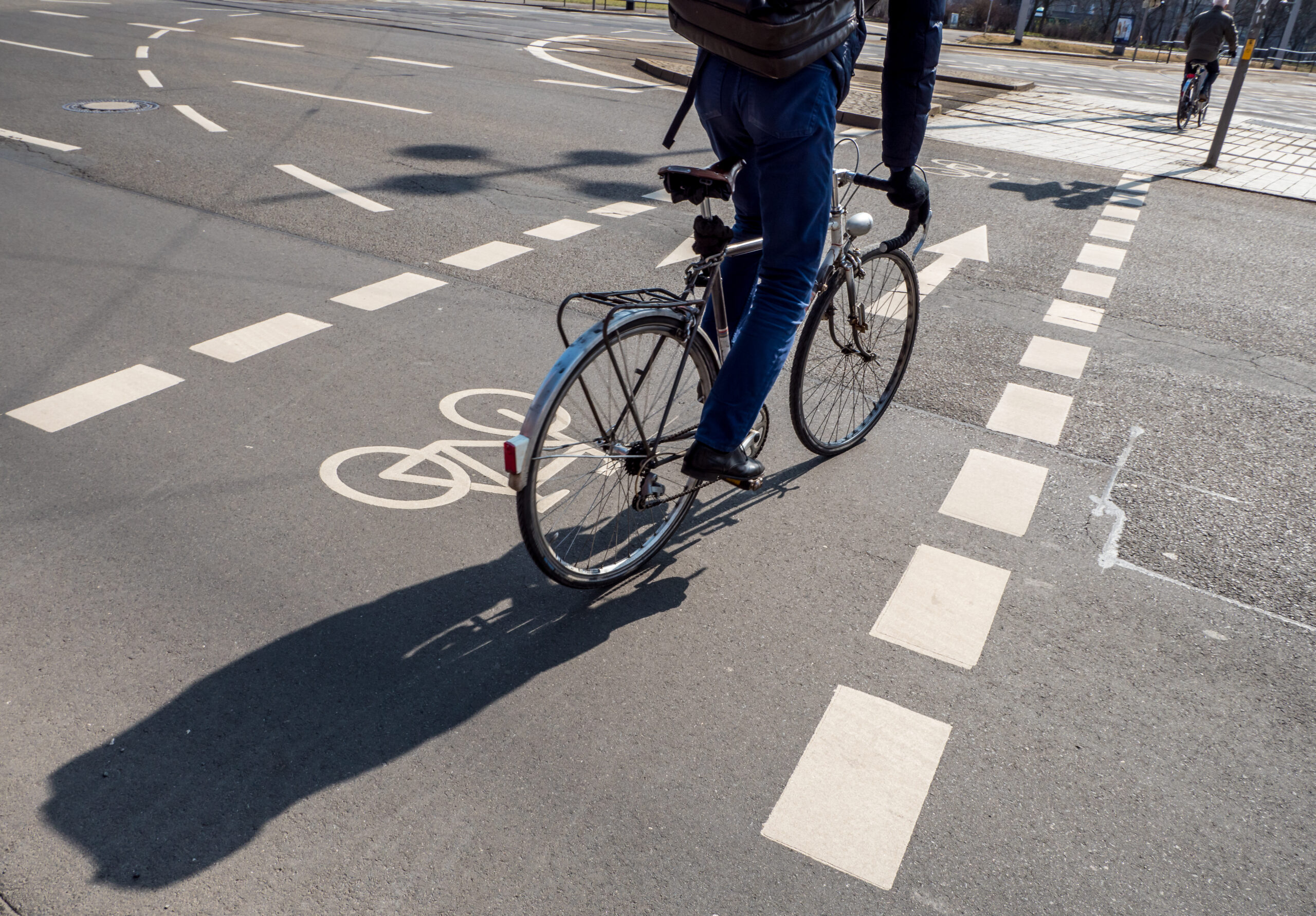

Retirement is a time for nurses to: (a) relax, (b) enjoy hobbies and interests, (c) meet community and population health needs, or (d) all of the above. Although these options are not limited to retirement, retired nurses have time to devote to these activities. Happily, the correct answer could be (d). This can happen by combining nursing interests (health and safety) with a bicycling interest, and by helping to collect data that leads to a safer, healthier community. Bicycling can be dangerous on Ohio’s streets and roads. According to the Ohio State Highway Patrol (2025), in 2024 there were 1,334 bicycle-related crashes, including 23 fatalities and 189 ‘likely’ serious injuries. Most crashes occurred in Franklin (206), Cuyahoga (186), and Lucas (98) Counties.
Bicycling is a more economical, and environmentally friendly way to travel than driving a car or truck, especially for short distances. Bicycling can foster positive health outcomes. According to the Office of Disease Prevention and Health Promotion (2023) physical activity (such as biking) is associated with lower risk of all-cause mortality, cardiovascular disease, hypertension, type 2 diabetes, adverse blood lipid profile, dementia, depression, cancers of the bladder, breast, colon, endometrium, esophagus, kidney, lung and stomach. It improves quality of life, sleep, proper weight maintenance, bone health, and physical function. Walking and biking are associated with a lower risk of falls and fewer, less serious injuries from falls that do occur.
Health benefits alone save costs for individuals and communities, but bicycling also provides additional positive economic impacts. High quality cycling infrastructure is associated with increased property values, municipal revenue, and further savings from decreased pollution and greenhouse gas emissions (ITDP, 2022). Household transportation spending in low-density, car-centric neighborhoods is, on average, twice that of households in compact, bike-friendly, walkable communities (ITDP, 2021).
A Cleveland-area bike advocacy organization sought to reduce the number of bicycle, pedestrian, scooter, and wheelchair-related crashes in Cleveland, and began tracking data. Narratives from 911 calls about crashes were accessed, then matched with more detailed OH-1 reports about the same crashes. Police officers are required to file OH-1 reports with the Ohio Department of Public Safety. Details were obtained about location, sequence of events, fatalities, injuries, ambulance transfers, property damage, and any citations issued. Some of the reports even contained photos or video footage. Data collectors were also encouraged to add suggestions for ways the crashes might have been prevented — reduced speed, more lighting, increased visibility at intersections, for example.
Reports for all bicycle, wheelchair, scooter, and pedestrian-related crashes in Cleveland were gathered for 2023 and 2024. In 2023, there were 550 reported crashes, with 9 fatalities. In 2024, 603 crashes were reported, with 15 fatalities. Bicycle advocacy organization staff then created documents containing data, maps, and details about particular crashes. Narratives from some of the crash victims and accounts of particular crashes were also highlighted (Bike Cleveland, 2023, 2024). These documents were shared with Cleveland City Council members, focusing on the crashes that occurred in their wards. They also have been presented to the council as a whole and to various traffic safety committees. Some council members have taken these documents a step further by discussing them at ward safety meetings and by determining best ways to deploy traffic calming measures. As a result of this data, plus that from other traffic counts, the city of Cleveland added 100 speed tables in 2024 (City of Cleveland, 2024). More traffic calming was planned for 2025 and 2026.
It is hoped that insights gained through this data collection, together with increased support for traffic safety, will bring about fewer crashes, injuries, and deaths, and more bicycle/scooter/pedestrian/wheelchair-friendly streets. Meanwhile, crash data will continue to be tracked, hopefully with improved results, so more people will come to enjoy traveling in healthier, more economical, and environmentally friendly ways
References
Bike Cleveland. (2023). Bicyclist & pedestrian crash report 2023. https://www.bikecleveland.org/wp-content/uploads/2024/02/2023-Crash-Report.pdf
Bike Cleveland. (2024). Bicyclist & pedestrian crash report Cleveland, Ohio 2024. https://www.bikecleveland.org/wp-content/uploads/2025/05/2024-Crash-Report.pdf
City of Cleveland. (2024). Speed table installation. https://www.clevelandohio.gov/city-hall/departments/public-works/divisions/traffic-engineering/traffic-calming
Institute for Transportation & Development Policy (ITDP). (2021). The compact city scenario – electrified. https://itdp.org/publication/the-compact-city-scenario-electrified/
Institute for Transportation & Development Policy (ITDP). (2022). Making the economic case for cycling. https://itdp.org/publication/economics-of-cycling/
Office of Disease Prevention and Health Promotion. (June, 2023). Physical Activity Guidelines for Americans. https://odphp.health.gov/our-work/nutrition-physical-activity/physical-activity-guidelines
Ohio State Highway Patrol. (2025). Crash dashboard. https://statepatrol.ohio.gov/dashboards-statistics/ostats-dashboards/crash-dashboard?