
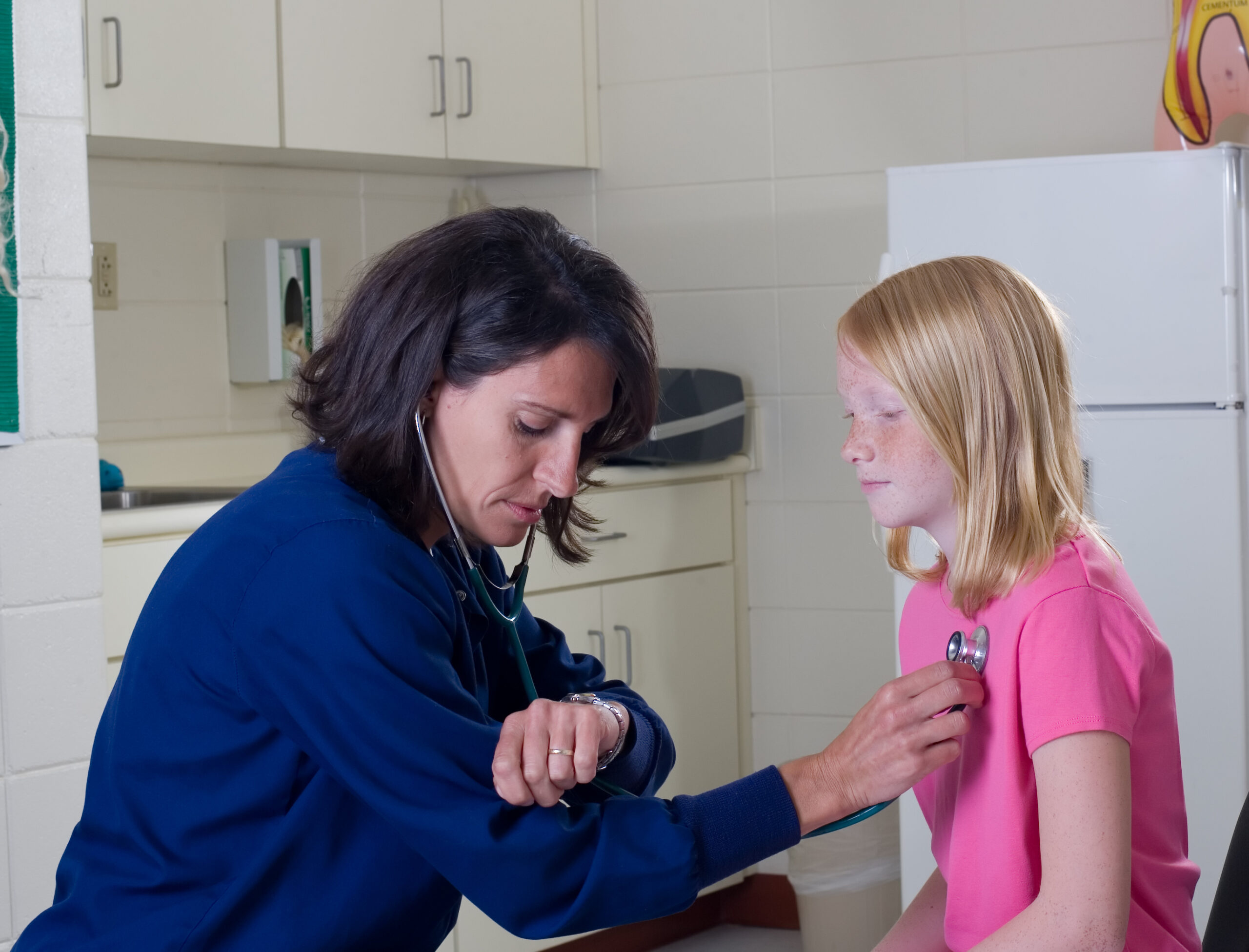

School nursing is my second career, but I wish it had been my first! It has allowed me the opportunity to use both my degrees – my Bachelor of Science in Nursing (USC) and my Masters in Public Health (UCLA). I have been a registered nurse for over 35 years, first in critical care, then administration, and for the last 8 years as a nationally certified school nurse in an elementary school with 920 K-5th grade students. I also serve on my district’s Wellness Committee, my school’s Safety Committee, Attendance Committee, Mental Health Committee, Threat Assessment/Crisis Team, and lead the Medical Emergency Response Team.
The resources and camaraderie from being a member of the National Association of School Nurses (NASN) and the Ohio Association of School Nurses (OASN) help to elevate my nursing practice. NASN’s “School Nursing Framework” (2024) and School Nursing, A Comprehensive Text (2025) have been my guides for school nursing. In addition to these resources, I recently joined ANA-Ohio and participated in the Policy Influencer Boot Camp, where I learned about advocacy with the legislative process and how they can apply to my nursing role.
The students like to call me “Nurse Chris” and I love it! My major responsibility as a school nurse is to improve health outcomes and remove academic barriers for students and families. I collaborate with parents/guardians, healthcare providers, school staff, and community partners. On any given day I may attend a meeting for a new kindergartener who will need enteral feedings every 2 hours, put together an emergency evacuation plan for a student who is in a wheelchair, monitor contagious illness cases and conduct outreach and education, use clinical judgment and critical thinking when seeing to students who have acute injuries or illnesses, develop an Individualized Healthcare Plan for a student with a complex condition like Pediatric Autoimmune Neuropsychiatric Disorders Associated with Streptococcal infections (PANDAS), administer medications, perform procedures, and advocate for a safer playground using student injury data. I perform over 600 vision and hearing screenings annually, with 88% of the students I’ve referred to an eye specialist following up with eye exams. My school is 97% compliant for school required immunizations.
I also enjoy teaching health education topics including puberty, nutrition, and handwashing. There is always a teachable moment when a student comes to see me and says, “Can I tell you something, Nurse Chris?” From there, the learning is mutual.
My best advice for nurses considering the specialty of school nursing is to realize that it is so much more than Band-Aids and ice packs. A school nurse has to develop knowledge, experience, and skills to function as an independent healthcare provider in a non-medical setting. It is vital to know the state’s Nurse Practice Act and rules regarding delegation, to adhere to the School Nursing Scope and Standards of Practice (2022), and to be aware of federal health and education laws such as Individuals with Disabilities Education Act (2004) and “Section 504 of the Rehabilitation Act of 1973” (1973).
School nursing is a specialized practice of nursing that has given me the opportunity to apply my public health beliefs—promoting health, preventing disease, and protecting well-being—within the school community to help students thrive academically and empower the families who support them.
References
National Association of School Nurses (2022). School nursing: Scope and standards of practice (4th ed.). NASN.
National Association of School Nurses. (2024). A contemporary framework update for today’s school nursing landscape: Introducing the School Nursing Practice Framework. NASN School Nurse, 39(3), 140-147. https://doi.org/10.1177/1942602X241241092
Shannon, R., & Yonkaitis, C. F. (2025). School Nursing: A Comprehensive Text. (4th ed.). F. A. Davis. Individuals with Disabilities Education Improvement Act of 2004, Pub. L. No. 108-446, 20 U.S.C. § 1400 et seq. (2004). https://www.congress.gov/108/plaws/publ446/PLAW-108publ446.pdf
Rehabilitation Act of 1973, 29 U.S.C. § 701 et seq. (1973). https://www.epa.gov/external-civil-rights/section-504-rehabilitation-act-1973














1 Comment. Leave new
Thank you for a trip down memory lane for me. I worked for 17 yrs as a school nurse doing that same long list of duties It was wonderful. I enjoyed the rapport with students and staff and miss it to this day. A cute memory: I had done some health teaching in a class and the teacher had the children (fifth graders) draw pictures and write thank-you notes. One showed an unhappy child lying on the cot with a glaring light overhead like an inquisition. The caption read, “Don’t pretend to be sick or Nurse Wald will find out!” Most kids had signed theirs but this one was anonymous. I still have it. Keep up the good work!