

A recent social media post by physician Dr. Trisha PL (dr.tpl, The Night Doctor) stated, “No one talks about how hard it is to study for years, then get your dream job, and just want to quit every day,” followed by the question of whether this reality would finally be addressed. This observation highlights a growing concern within nursing education and practice: the gap between professional preparation and the lived realities of nursing work. Increasingly, educators are recognizing the importance of preparing students not only for clinical competence, but also for the psychological and emotional demands of the profession. Nursing education must therefore acknowledge that leaving a role misaligned with one’s values is not a personal failure and that no amount of individual self-care can compensate for work environments that chronically exceed nurses’ physical and psychological limits.
Nursing education is inherently demanding. Students are expected to integrate complex theoretical knowledge while simultaneously developing psychomotor skills in high-stakes environments. These demands are frequently accompanied by significant levels of stress, anxiety, and burnout (Austin et al., 2022; Kong et al., 2023). Coping behaviors developed during training may unintentionally reinforce a survival-oriented mindset rather than fostering an expectation that professional thriving is both possible and necessary (Cox & Copeland, 2024). Such patterns may contribute to early departure from the profession and, in more severe cases, to the concerning prevalence of suicide among nurses (Lee & Friese, 2021).
In response to mounting evidence of nurse distress, healthcare organizations and academic institutions have begun to acknowledge the toll of unrealistic expectations. However, many interventions remain superficial, such as mandatory self-care modules that offer minimal depth or skill development. These approaches may inadvertently place responsibility for well-being on individual nurses while diverting attention from systemic contributors embedded within the current healthcare paradigm. As a result, opportunities for meaningful change at both educational and organizational levels are often missed.
Given the unsustainable demands placed on nurses, nursing education must critically reassess what “readiness for practice” truly entails. Preparation for professional practice must extend beyond technical proficiency to include strategies that support emotional regulation, sustained attention, and psychological resilience. This shift is reflected in the American Association of Colleges of Nursing (AACN) Essentials (2021), which identify well-being, resilience, and professional identity formation as foundational components of sustainable nursing practice.
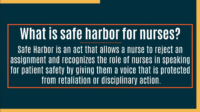
Advocacy further supports this reframing of readiness. Within the New Mexico Nursing Education Consortium curriculum, advocacy is identified as a core concept. Traditional narratives that portray nurses as endlessly self-sacrificing may overshadow the equally important expectation that nurses advocate for themselves and for safe working conditions. While the American Nurses Association Code of Ethics emphasizes advocacy for recipients of care (Provisions 2 and 3), Provision 5 affirms that nurses have ethical obligations to themselves, including the right to a safe, supportive, and health-promoting work environment (American Nurses Association, 2025).
These considerations raise an essential question: how can such values be operationalized within nursing curricula? At Western New Mexico University School of Nursing and Kinesiology, mindfulness, self-care, and attention skills are intentionally embedded throughout all five semesters of the nursing curriculum, beginning in the first level and extending through advanced clinical courses. These practices are treated as essential components of readiness for practice, based on the understanding that nervous system regulation and attentional control support clinical focus, safety, and professional sustainability.
Within foundational courses such as Professional Nursing Concepts I and a sterile skills-based laboratory, students are introduced to grounding techniques, emotional regulation strategies, and attention-setting practices. In the Professional Nursing Concepts course, students choose between developing a structured personal self-care plan or participating in sessions with a holistic nurse coach, followed by guided reflection. Weekly lectures begin with brief mindfulness practices designed to support focused attention and readiness for learning.
In the skills laboratory setting, each class session begins with instruction in mindfulness and attention skills. Students view brief instructional videos addressing grounding, attentional focus, and moment-to-moment awareness, followed by guided mindfulness practice. Throughout the semester, students also receive instruction on the neuroscience underpinning these practices, drawing on research related to attention, working memory, and mindfulness training in high-demand environments (Denkova et al., 2020; Jha et al., 2015).
Students additionally develop entrance and exit safety scripts that are incorporated into simulated and real patient care. These scripts automate safety behaviors such as hand hygiene and patient identification, while also incorporating a brief pause for grounding and centering before patient interaction. During return demonstrations, students are encouraged to notice shifts in attention when stress arises, reinforcing the relationship between mindful awareness and safe clinical performance.
In clinical settings, instructors lead brief mindfulness practices prior to unit assignments, and post-clinical reflections frequently prompt students to describe how mindfulness and attention skills were applied during patient care. By the final semester, student charge nurses assume responsibility for leading pre-clinical mindfulness practices, further reinforcing professional identity formation and leadership skills.
Over a four-year period, student and faculty responses to the integration of mindfulness and self-care practices have evolved substantially. Initial skepticism has largely given way to positive, though not universal, acceptance. Students increasingly reference these practices independently in written assignments and simulated job interviews, and faculty engagement has expanded accordingly across the curriculum.
As nursing education continues to examine what it means to prepare students for contemporary practice, it may be necessary to reconsider which skills are deemed essential for readiness. While technical competence remains critical, equal importance must be placed on the ability to regulate one’s nervous system, sustain attention, advocate for oneself, and recognize when a work environment is incompatible with professional well-being. Graduating nurses who are self-aware, grounded, and self-regulated also means graduating nurses who are less willing to tolerate unhealthy workplace cultures and more prepared to advocate for ethical, sustainable conditions of practice. In this context, integrating mindfulness, self-care, and attention training represents not an optional enhancement, but a necessary recalibration of what nursing education should expect, accept, and uphold in the years ahead.
References
American Association of Colleges of Nursing. (2021). The essentials: Core competencies for professional nursing education [e-book]. https://www.aacnnursing.org/Portals/42/AcademicNursing/pdf/Essentials-2021.pdf
American Nurses Association. (2025). Code of ethics for nurses: Provisions. Retrieved June 8, 2025, from https://codeofethics.ana.org/provisions
Austin, D., May, J., Andrade, J., & Nichols, A. (2022). Exploring barriers, motivators and solutions to achieve a healthy lifestyle among undergraduate student nurses. British Journal of Nursing, 31(4), 240–246. https://doi.org/10.12968/bjon.2022.31.4.240
Cox, A., & Copeland, D. (2024). Nursing student success. Nursing Education Perspectives. https://doi.org/10.1097/01.nep.0000000000001221
Denkova, E., Zanesco, A. P., Rogers, S. L., & Jha, A. P. (2020). Is resilience trainable? an initial study comparing mindfulness and relaxation training in firefighters. Psychiatry Research, 285, 112794. https://doi.org/10.1016/j.psychres.2020.112794
Jha, A. P., Morrison, A. B., Dainer-Best, J., Parker, S., Rostrup, N., & Stanley, E. A. (2015). Minds “at attention”: Mindfulness training curbs attentional lapses in military cohorts. PLOS ONE, 10(2), e0116889. https://doi.org/10.1371/journal.pone.0116889