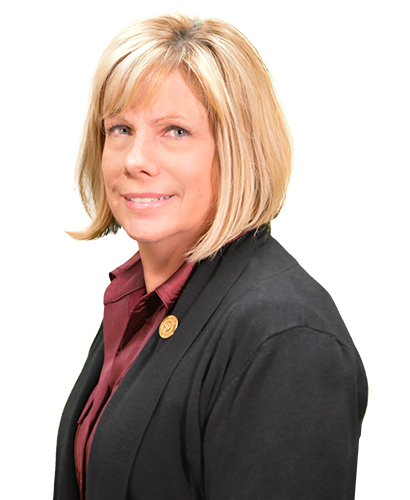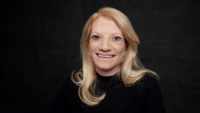

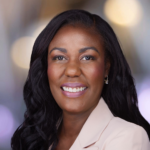
In October 2025, the National Academy of Medicine (NAM) elected 100 new members. Among those new members was one nurse: Paule Valery Joseph, PhD, MBA, MS, FNP-BC, CTN-B, FAAN. Joseph, an MNA member of District 5, is the Senior Investigator at the National Institutes of Health (NIH), Lasker Clinical Research Scholar, and co-director of the National Smell and Taste Center (NSTC), based in the National Institute on Deafness and Other Communication Disorders (NIDCD). She is also is chief of the Section of Sensory Science and Metabolism at the National Institute on Alcohol Abuse and Alcoholism (NIAAA).
NAM membership is a high honor because, as its website notes, election to the academy recognizes “individuals who have demonstrated outstanding professional achievement and commitment to service.” Current members elect new ones.
NAM highlighted Joseph’s contributions: “For advancing clinical and translational research at the intersection of chemosensory biology, human health, and disease — bringing a nursing science perspective to illuminate the roles of taste and smell in metabolic disorders, addiction, and neurological conditions, and applying these discoveries to improve patient outcomes and public health. At NIAAA and the NIH National Smell and Taste Center, she leads efforts that integrate chemosensory biology with clinical practice. During the COVID-19 pandemic, she co-founded the Global Consortium for Chemosensory Research.”
Joseph has been featured in national and international media, including NPR and The New York Times. She received her master’s of science degree as a family nurse practitioner from Pace University and an MBA from Quantic School of Business and Technology. She earned her doctorate at the University of Pennsylvania and then completed a postdoctoral fellowship at the National Institute of Nursing Research. Joseph received a Guggenheim Fellowship in 2025, making her the first nurse scientist in nearly 100 years to receive this award from the Guggenheim Foundation.
Joseph recently answered questions about the NAM honor and her work.
Q. How did you learn about your election to the academy and what was your reaction?
A. I was astonished to receive an email telling me about it. I even had my husband check the email to verify it wasn’t spam. It was totally unexpected, and I’m very grateful for the honor — not just for myself, but because it brings visibility to an area of health that nurses are uniquely positioned to champion. This recognition affirms that the questions we ask at the bedside can lead to discoveries that change how we care for patients.
Q. How would you briefly describe your work?
A. One of the areas my lab at NIAAA focuses on is understanding how smell and taste are impacted by diseases such as obesity and also by substance use. We often don’t think about how substance use impacts our sensory system and how that impact affects how we connect with the world. For example, the smell of alcohol may prompt cravings, but what else may occur in the sensory system of those who are heavy drinkers? That is the question we are answering. We are also working on parosmia, which is when people smell something pleasant, but it smells unpleasant. For example, they perceive a banana as smelling like a sewer. That really impacts a person’s quality of life. Another smell disorder we’re looking at is phantosmia, which is when you smell something that’s not there. For example, a patient might walk into a provider’s office and say they smell roses even though there aren’t any in the office.
What I’m most excited about right now is our work on the taste and smell changes that can occur during perimenopause and menopause. For example, some women may experience a bitter taste or find that food doesn’t taste the same. Others may be more sensitive to smells. These experiences are real, they matter, and they deserve scientific attention.
I’m interested in understanding these conditions and developing better tools to assess smell. The current tools take too long to be used in routine practice. I also work on translating science for the public because when people understand their health, they become partners in their care.
Science communication is extremely important for scientists and clinicians. As a nurse scientist, I am devoted to bringing science to people’s homes through many of my social media platforms because the science we do belongs to the people.
Q. How did you get interested in chemosensory disorders?
A. My curiosity started at the bedside. When I worked in a nursing home, we gave patients their medications in applesauce, and I noticed how much taste and texture mattered to them. Later, I worked with patients who had undergone bariatric surgery, and they told me that food didn’t taste the same after surgery. These observations stayed with me. As nurses, we’re trained to notice what others might miss. I couldn’t let go of the question: What happens to our taste receptors? That question led me to pursue my PhD in the genetics of taste, then expand to smell, and eventually to postdoctoral work at the NIH. When I opened my own lab here at NIH, I knew chemosensory health would be my focus. The patients I cared for early in my career set me on this path — they’re still teaching me.
Q. What are nurses and other clinicians missing about chemosensory health?
A. Most people don’t understand how vital our sense of smell truly is. Smell connects us to our emotions and memories — it’s how we recognize loved ones, enjoy meals, and sense danger. A decrease in smell is also correlated with serious health problems, including Alzheimer’s disease and Parkinson’s disease. And here’s what’s remarkable: When you explore these changes closely, you often find they started five to 10 years before more severe symptoms appeared. This is where nurses can make an extraordinary difference. We’re already asking patients about pain, mood, and function. What if we also asked about smell? We could detect changes that signal something bigger and intervene earlier. I think of chemosensory health today the way I think of pain before we recognized it as the “fifth vital sign.” We had to fight to make pain assessment routine. Nurses led that change, and I believe we can do the same for smell. Smell would be considered a vital sign and tested at every primary care visit.
Q. How do you hope to accomplish greater recognition of chemosensory health?
A. When it comes to our senses, healthcare education, whether nursing or medicine, focuses heavily on vision and touch, but smell and taste receive little attention. I’ve made it one of my goals to change that across all healthcare professions.
My vision is this: Every American should have an annual smell screening when they visit their primary care provider. If we do this routinely, we can collect baseline data and detect early signs of disease before they become irreversible.
COVID-19 showed us why this matters. Millions of people lost their sense of smell. Some “recovered,” but we don’t honestly know if they recovered fully because we had no baseline for comparison. Imagine if we had been screening all along. We would have the data to guide treatment and reassure patients.
Nurses and physicians working together have always been advocates for assessments that matter. This is the next frontier.
Q. You’re from Venezuela and your mother is a nurse. How did she affect your decision to become a nurse?
A. My mother showed me what it means to serve. She was always helping neighbors: If someone needed to be taken to the hospital, she would do it and stay with them when they were sick. She didn’t wait to be asked; she simply showed up.
I loved watching her. I saw how she made people feel seen and cared for during their most vulnerable moments. That’s the heart of nursing. Her example didn’t just influence my decision to become a nurse — it shaped the kind of nurse, and the kind of scientist, I strive to be every day.
Q. What is the Global Consortium for Chemosensory Research and how are you involved?
A. I cofounded the consortium in 2020 as a direct response to the chemosensory changes we were seeing with COVID-19. Within weeks, we brought together scientists, clinicians, and pavtients from all over the world — united by a shared urgency to understand what was happening.
What started as a crisis response has grown into something larger. We’re now conducting studies beyond COVID, including research on how cultures around the world describe sensory experiences. The consortium also provides resources for patients navigating chemosensory problems.
This work showed me the power of collaboration. When we break down silos and work across disciplines and borders, we can move science forward faster than any of us could alone.
Watch a video of Joseph’s first TED Talk Why Smell Matters More Than You Think https://www.youtube.com/watch?v=gzzEUm_78Qw, and the follow-up on smell loss and brain health on her TEDx talk Clues in Our Senses: Smell Loss and Brain Health https://www.youtube.com/watch?v=L9KLDQOC8oI .