Building Confidence, Competence, and Culture in a Rural Critical Access Hospital
Abstract
Rural emergency departments face significant challenges in trauma readiness. These include limited staff, low trauma volume, resource constraints, and isolation from advanced care. To overcome these, Conejos County Hospital (CCH), a Level IV trauma-designated critical access hospital in southern Colorado and part of San Luis Valley Health (SLVH), launched a trauma-readiness initiative. This effort centered on frontline innovation, microlearning, QR code technology, accessible simulation, and staff-driven education. Born from bedside collaboration, the initiative reflects a culture of servant leadership, mentorship, and resilience in rural nursing.
We implemented QR codes for just-in-time training on high-risk, low-frequency equipment, began weekly TNCC-based microlearning quizzes, and converted existing space into a 24/7 simulation room. By expanding RN competency in our rural dual-role setting, we improved staff engagement, confidence, pediatric readiness, and rapid trauma response. Now, our collaborative culture centers on psychological safety, ongoing learning, and frontline empowerment.
The program was internationally recognized as a finalist and second runner-up in the 2026 Rural Trauma Innovation Award for Level III, IV, and V trauma centers. Building on this recognition, this article examines how leadership philosophy, mentorship, and grassroots innovation improved trauma education and preparedness at Conejos County Hospital SLVH, resulting in increased staff competence, enhanced emergency response times, and broader community engagement. The discussion also offers practical strategies applicable across both rural and urban healthcare settings.
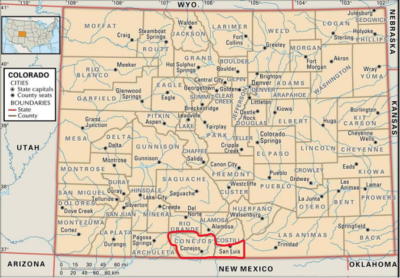
Conejos County Hospital is a 12-bed critical access hospital with 6 dedicated ER beds, and the only emergency service provider in Conejos and part of Costilla County. We are a designated Level 4 trauma center. CCH provided emergency care to 4,510 patients, including 174 trauma patients, in 2025.
CCH serves Conejos and Costilla counties, covering about 2,514 square miles. This large catchment area contributes to the logistical challenges of emergency response and trauma care.
Conejos County sits in rural southern Colorado’s San Luis Valley, the world’s largest alpine valley, and is known for its Hispanic heritage, rich history, scenic landscapes, agriculture, and outdoor recreation.
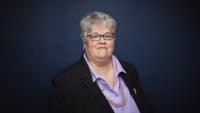
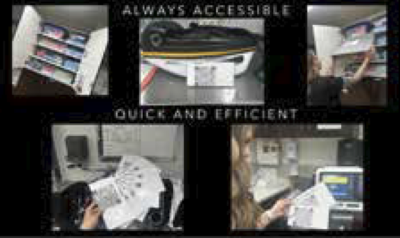
The philosophy became simple: Scan. Learn. Act. Pictured: Sarah Gilleland, BSN-RN, CEN-Trauma Nurse Coordinator, CCH)
This “embedded learning” approach matched educational evidence on point-of-care reinforcement. It also aligned with cognitive offloading strategies during high-stress clinical events. Instead of relying solely on memory, we brought education directly into the moment of need.
Introduction
The radio crackles overhead. “Level one trauma inbound. ETA ten minutes.” In many hospitals, that announcement triggers an army of specialists. Respiratory therapy arrives. Trauma surgeons gather. Additional nurses flood the room.
At Conejos County Hospital (CCH), part of San Luis Valley Health (SLVH), a 12-bed critical access hospital tucked into Colorado’s San Luis Valley, it often means something very different.
- One emergency room nurse.
- One provider.
- One charge nurse is floating between departments.
- One emergency department technician.
- One lab technician.
- One radiology technician.
- No respiratory therapist standing by.
- No trauma surgeon around the corner.
- No backup waiting in the wings.
In rural healthcare, the team in the room is the trauma team.
And in those moments, there is no time for uncertainty.
A Rural Foundation Built on Mentorship
Long before becoming a nursing director at Conejos County Hospital, San Luis Valley Health, I was a rural emergency nurse. My career began in La Junta, Colorado, at Arkansas Valley Regional Medical Center. I spent eight years there building my skills and confidence as an emergency nurse. Strong leadership during this time shaped my growth.
My mentors understood the core of emergency nursing leadership: nurses excel when supported, challenged, and trusted. They fostered a safe space for questions, learning from mistakes, and challenging growth. Their leadership balanced accountability and empathy. That culture stayed with me throughout my career.
As I moved through emergency departments. From Level I trauma centers to rural hospitals. I carried those lessons with me. Becoming Director of Emergency and Acute Nursing at Conejos County Hospital SLVH, I was drawn to the teamwork, grit, closeness, and pride of rural culture that echoed my roots.
Meeting the San Luis Valley Health team confirmed my fit. The staff clearly valued leadership and growth, investing in leaders and fostering trust, collaboration, accountability, and psychological safety. These shared values matched my vision and set the stage for our work at Conejos County Hospital. I believe sustainable culture change comes from leadership that creates space for dialogue, new ideas, and growth.
That culture became the heartbeat of our department. Not one rooted in fear.
Not one built on hierarchy. Ours is a culture built on teamwork, ownership, resilience, mentorship, growth, and family.
The Reality of Rural Emergency Nursing
Rural emergency nursing requires adaptability, autonomy, critical thinking, and procedural competency. Rural hospitals face ongoing challenges. These include workforce shortages, limited specialty support, reduced access to continuing education, and less frequent exposure to high-acuity events.
Yet trauma still arrives. Children still crash ATVs. Farm equipment still rolls. Motor vehicle collisions still happen on isolated highways hours away from tertiary care. In rural healthcare, low volume never equals low risk.
Maintaining competency for rare, life-threatening events is an ongoing challenge. Without frequent practice, emergency response skills decline. At Conejos County Hospital, nurses often fill multiple roles, including ventilator management and airway support without a dedicated respiratory therapist.
Recognizing these needs, we realized that we needed an education model tailored to our environment. Not the ideal environment. The real one.
The Spark: A Bedside Conversation
Ironically, the innovation that would later gain international recognition did not start with a grand plan. Instead, it began with something incredibly simple: a conversation.
One of our nurses at Conejos County Hospital, Kyndra, approached me with a question about how to use a specific piece of equipment. We were discussing ways to improve learning and possibly attaching instructions to the device. During that discussion, she casually said, “What if we just put a QR code on it?” That moment changed everything. No lengthy committees. No expensive consultants. No elaborate rollout strategy. Just frontline collaboration and the willingness to think differently.
That idea soon became a just-in-time learning system. QR codes link directly to videos, setup instructions, rhythm interpretation guides, procedural education, and equipment support resources.
We placed QR codes on:
- Ventilators
- Chest tube kits
- Central line kits
- Arterial line supplies
- Defibrillators
- Telemetry rhythm guides
- Massive transfusion equipment
- Many more Specialty procedural tools
Building a Culture of Constant Readiness
The QR initiative became only the beginning. At Conejos County Hospital, San Luis Valley Health, we wanted to move away from the traditional mindset of just:
- Annual education
- Skills checkoffs
- “Hope you remember.”
And instead create:
- Continuous reinforcement
- Immediate accessibility
- Staff-driven learning
- Practical readiness
To support this shift, we launched weekly TNCC-based microlearning quizzes via Google Forms. These quizzes used brief, scenario-based questions to pinpoint knowledge gaps and reinforce trauma concepts for staff. The microlearning aimed to improve retention, engagement, and satisfaction in our fast-paced emergency department. Staff feedback affirmed these positive outcomes.
For our team, the impact was immediate. The quizzes became less about testing and more about awareness. What are we forgetting?
- Where are we struggling?
- What do we need to practice next?
The data helped drive targeted education and simulation topics. This reinforced a culture in which learning became continuous rather than episodic.
The Training Room: More Than Simulation
One of the most meaningful parts of this journey was transforming unused hospital space into a 24/7 simulation and training room at Conejos County Hospital. Not a polished academic lab. A rural learning space built by frontline staff, for frontline staff.
Using older equipment and donated materials, our Trauma Nurse Coordinator, Sarah Gilleland, fostered an environment where nurses could practice, explore, fail safely, and build confidence. She embodies the future of rural trauma nursing leadership. Watching her grow reminded me of my own early career. I remembered the passion, hunger to learn, and willingness to dive in fully.
Together, we built a culture where staff requests drove education. If someone struggled with pediatric airway management, we built pediatric airway education. If someone wanted more confidence with chest tubes, we practiced chest tubes. The room became a living reflection of our team’s needs. And perhaps most importantly, it became accessible at all hours. Night shift nurses deserved the same opportunities for growth as day shift nurses.
Leadership Through Psychological Safety and Shared Ownership.
One of the greatest lessons I have learned in leadership is that people do not grow well in fear. They grow when they feel supported. In my experience as an emergency room nurse, I have seen that psychological safety in high-stress environments fosters collaboration, openness, and learning from mistakes, thereby improving team performance, engagement, and patient outcomes.
At Conejos County Hospital, San Luis Valley Health, we intentionally worked to build that kind of culture.
A culture where:
- Nurses could ask questions without embarrassment.
- Staff could suggest ideas freely.
- Innovation came from the bedside.
- Education belonged to everyone.
This initiative was never “my” project. It belonged to the team. That ownership became one of its greatest strengths.
Recognition Beyond Our Walls
In 2026, the Conejos County Hospital SLVH rural trauma readiness initiative was selected as a finalist in the Rural Trauma Innovation Award competition and recognized as second runner-up among international submissions in the Level III, IV, and V trauma center category.
But recognition was never the goal. The goal was readiness. The goal was confidence replacing hesitation. The goal was ensuring that when trauma walked through the doors of Conejos County Hospital, our patients received the very best we had to offer, regardless of zip code.
And perhaps most importantly, the goal was to share these ideas with other hospitals facing the same struggles. Rural healthcare teams are some of the most resilient, creative, and determined professionals in medicine. They simply need support, collaboration, and the freedom to innovate.
Conclusion
Rural hospitals may never have endless resources. But resourcefulness is its own kind of strength. At Conejos County Hospital, San Luis Valley Health, innovation did not begin with funding or technology.
- It began with trust.
- With mentorship.
- With bedside nurses speaking up.
- With leadership listening.
- And with a team determined to become better together.
- We may be small.
- But when trauma walks through our doors, we are not underprepared.
- We are ready.