A case study offers insight.
- The use of ketamine infusion therapy continues to grow as a treatment option for depression when traditional therapies have proved unsuccessful.
- Nurses play an essential role in maintaining patient safety during ketamine infusion therapy, including close monitoring and assessment throughout treatment.
- In addition, nurses can recognize and respond quickly to subtle or atypical patient cues, which may help prevent adverse events and improve patient outcomes.
ACCORDING TO Qu and colleagues, depression, one of the most common mental health disorders and a leading cause of disability, affects more than 21 million U.S. adults and 280 million people worldwide. Up to 25% of all U.S. veterans suffer from depression, 2% to 5% higher than nonveterans. Ruiz and colleagues note that suicide ideation and attempts occur in an estimated 12% of all veterans, underscoring the need for prompt intervention.
Commonly prescribed medications for treating depression—selective serotonin reuptake inhibitors (such as fluoxetine) and serotonin-norepinephrine reuptake inhibitors (such as duloxetine)—can take several weeks or months to achieve therapeutic effect. According to Karrouri and colleagues, ketamine infusion therapy, with its fast acting–symptom response rate, is increasingly being used as an option for treating depression, especially in the veteran population.
Treatment-resistant depression and the T-rex combination
Mr. Thomas Watson*, a 50-year-old veteran, has a psychiatric history of depression, post-traumatic stress disorder (PTSD), and substance use. His medical history includes diabetes, hyperlipidemia, hypertension, and osteoarthritis. Due to his mental health history and worsening depression, which has been unsuccessfully treated with multiple antidepressants, his primary care provider places a psychiatric consult for potential somatic therapy.
The results of the consult indicate that Mr. Watson has treatment-resistant depression (TRD). His continued lack of symptom relief after conventional therapy, such as the use of multiple antidepressants, makes him an appropriate candidate for ketamine infusion therapy. Mr. Watson meets with the psychiatric team to discuss the benefits and risks of ketamine infusion therapy; he agrees to the treatment and signs the necessary informed consent documents.
Why ketamine therapy?
According to Rawat and colleagues, one-third of patients receiving treatment for depressive disorders may be resistant to commonly prescribed antidepressants while others may wait weeks for symptom improvement. However, these same researchers note that many patients who haven’t responded well to conventional antidepressant medications, psychotherapy, or repetitive transcranial magnetic stimulation are considered excellent candidates for ketamine therapy. Although not yet approved by the FDA as first-line treatment for depression, ketamine infusion therapy, as discussed by Karrouri and colleagues and Rosenbaum and colleagues, offers fast and effective results for TRD as well as acute suicidal ideation when used in sub-anesthetic doses.
The Food and Drug Administration (FDA) originally approved ketamine in 1970 for the induction and maintenance of general anesthesia. In sub-anesthetic doses (0.5 mg/kg per 40-minute I.V.), according to Yavi and colleagues and Yip and colleagues, ketamine was found to be an effective and fast-acting treatment for depression. In 2019, the FDA approved ketamine nasal spray (intranasal esketamine) for TRD treatment.
Jha and colleagues found that patients receiving ketamine infusion therapy, compared to those undergoing electroconvulsive therapy for severe depression, experienced greater symptom improvement at an earlier stage in treatment. McInnes and Marton report that at least 50% of patients with TRD experience symptom relief at 2 weeks post-treatment. (See Initial symptom relief.)
Initial symptom relief
Studies by Jha and colleagues and McInnes and Marton found that ketamine infusion therapy, when compared to traditional treatments, provided faster relief of depression symptoms.
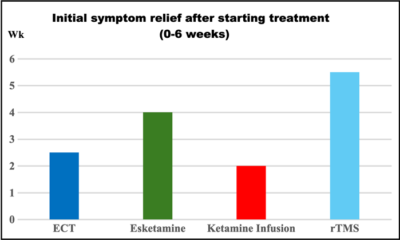
ECT = electroconvulsive therapy, rTMS = repetitive transcranial magnetic stimulation
As described by Silva and colleagues, lower doses of ketamine primarily block N-methyl-D-aspartate receptors in the brain, triggering the release of glutamate and producing both analgesic and controlled dissociative states while allowing patients to maintain protective reflexes. These effects stimulate the growth of new synapses between brain cells, reducing symptoms of depression.
According to Qu and colleagues, most nonveteran patients tolerate ketamine infusion therapy well, but reports indicate uncertainty about ketamine’s safety and effectiveness in treating patients with PTSD, indicating the need for additional research. However, Pfeiffer and colleagues found that most veteran patients with high rates of antidepressant treatment failures responded positively to ketamine infusion therapy and experienced a significant decrease in their symptoms. (See Ketamine and other conditions.)
Ketamine and other conditions
In addition to depression treatment, other off-label uses for ketamine infusion therapy may apply to clinical conditions such as acute and chronic pain and substance use disorders.
Pain management
Use of ketamine to manage acute and chronic pain, particularly in postsurgical settings, can help reduce the need for opioids. Research by Kitisin and colleagues indicates that these infusions can decrease opioid consumption by approximately 10% while reducing pain intensity by as much as 20%.
Substance use disorders
Studies by Shen and colleagues indicate that ketamine therapy can result in significant improvement in abstinence rates for individuals with alcohol and opioid use disorders, as well reduce cravings for those with cocaine use disorders. Ketamine’s rapid onset and unique mechanism of action make it especially useful when traditional treatments are ineffective.
How is ketamine administered?
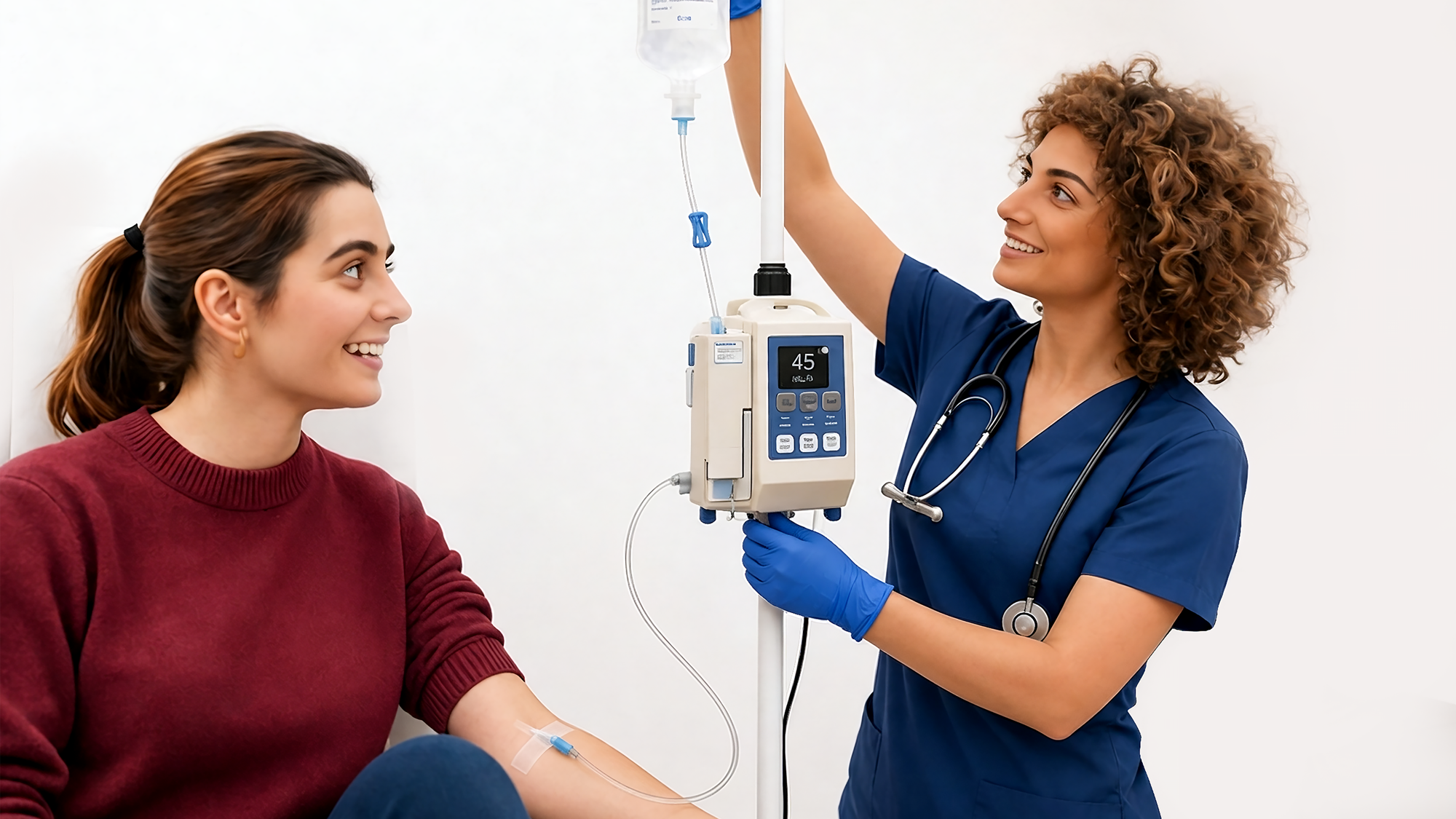
Ketamine infusions typically are administered twice weekly at a dosage of 0.5 mg/kg of body weight over 40 to 45 minutes. For optimal therapeutic effect, patients usually receive between three and six treatments over a period of several weeks. They’re initially evaluated after the first or second infusion, at which time dosing can be readjusted based on the quality of results and any side effects experienced by the patient. Factors taken into consideration when determining the number of ketamine infusions administered over time include symptom relief, infusion tolerance, and patient preference.
Infusions require careful monitoring, with specific dosing protocols tailored to the condition being treated. For patients with difficult-to-access veins or who fear needles, intranasal esketamine sprays provide another mode of delivery. Providers, however, may prefer to use I.V. ketamine to help gauge therapeutic effect and titrate dosages more accurately.
Multiple doses of ketamine, such as six I.V. dosages over 12 days, can prolong antidepressant effects. In general, according to Rawat and colleagues, most patients experience variable benefits from ketamine infusion therapy between 24 hours to 2 weeks after the infusion; these benefits frequently last up to 6 weeks. Although generally safe, Rosenbaum and colleagues note that all patients should undergo a thorough evaluation before starting treatment and receive ongoing assessments throughout the infusion process.
The nurse’s role
Two weeks after the psychiatric consultation, Mr. Watson arrives at the somatic therapy clinic for his first ketamine infusion. Maria, a trained somatic therapy nurse, verifies the infusion order and completes the facility’s standardized checklist, which includes confirming patient identification, general wellness, consciousness level, weight, allergies, medications, NPO status, alcohol/illicit drug use, responsible party for transportation to and from treatment, and pain level.
Maria also confirms that the informed consent documents are current, completed, and signed. She ensures that Mr. Watson understands the ketamine infusion treatment and has no questions or concerns. She notes that he’s been NPO for 12 hours except for taking two prescribed antihypertensive medications, atenolol and losartan, about 6 hours earlier.
Maria obtains Mr. Watson’s pre-infusion vital signs: HR 69 bpm, BP 137/88 mmHg, RR 18 breaths per minute, and O2 saturation 96% on room air. He’s alert and oriented to time, place, and person and he appears relaxed.
Per the clinic’s protocol, Maria inserts an I.V. line for ketamine administration. The attending psychiatrist assesses Mr. Watson and determines that he’s ready to proceed. The psychiatrist and Maria verify the accuracy of the ketamine dosage for his body weight. After completing the clinic’s time-out protocol for verifying patient identity (patient states their name, date of birth, last 4 digits of social security number) and procedure, the psychiatrist programs the I.V. pump and begins the infusion. Maria assesses and monitors Mr. Watson throughout the 40- to 45-minute infusion, including documenting vital signs every 10 minutes.
What are ketamine’s adverse effects and contraindications?
Although acute administration of ketamine is generally well-tolerated, Karrouri and colleagues note that patients may experience transient nausea and vomiting, headache, dry mouth, dizziness, drowsiness, a feeling of body disassociation, and slightly elevated HR and BP shortly after administration begins. As a result, careful monitoring is indicated throughout treatment. Mild symptoms typically subside without incident within 1 to 2 hours of initiating the infusion. Patients should refrain from driving or operating heavy machinery for 24 hours after a ketamine infusion.
According to Jha and colleagues, ketamine infusions are contraindicated in patients who are pregnant or who have poorly controlled cardiovascular disease, active psychosis, severe hepatic dysfunction, or conditions involving increased intracranial or intraocular pressure. Regular treatments can raise concerns about addiction or dependence; however, a systematic review by Ingrosso and colleagues found ketamine dependency to be relatively rare.
Patients receiving ketamine therapy may experience psychomimetic reactions, such as hallucinations, depersonalization, and abnormal elevations of BP, which are typically dose-dependent and more prevalent at higher dosages.
Because of the risks associated with ketamine infusion therapy, administration requires continuous monitoring of vital signs and consciousness levels by specially trained healthcare providers who can quickly recognize and manage any adverse effects.
The nurse’s role
About 25 minutes after Mr. Watson’s infusion begins, Maria notices subtle but concerning changes in the patient’s appearance and demeanor. His face appears slightly flushed, and he seems increasingly anxious, asking several times if he’s “doing okay.” Maria notes that his vital signs, taken 5 minutes earlier, were within normal parameters.
Acting on the cues she observes, Maria takes an additional set of vital signs: HR 110 bpm, BP 170/114 mmHg, RR 20 breaths per minute, and O2 saturation 95% on room air. Knowing the prescribed parameters for vital signs during infusions (maintaining BP <180/110 mmHg and HR <110 bpm), Maria discontinues the infusion and notifies the psychiatrist. Mr. Watson remains slightly anxious but in no apparent distress. Maria reassures him that she discontinued the infusion out of caution and in accordance with the clinic’s protocol.
The psychiatrist assesses Mr. Watson, who now reports a generalized headache (4/10 on the pain scale). Maria continues to take vital signs every 4 to 5 minutes and informs the psychiatrist that Mr. Watson’s BP has increased to 180/120 mmHg. The psychiatrist administers a cautionary dose of labetalol and asks Maria to monitor vital signs every 10 minutes for 1 hour to assess for potential rebound hypotension or BP elevations.
Mr. Watson’s BP stabilizes at 138/80 mmHg approximately 10 minutes after administration of labetalol. He tells Maria that he feels “relaxed” again and reports no headache. Maria sees no evidence of flushing. An hour after receiving the labetalol, Mr. Watson remains stable, so the psychiatrist restarts the ketamine infusion, which is completed without further incident.
Maria’s knowledge and early recognition of subtle cues to an adverse reaction (anxiousness and flushed face) likely averted a hypertensive crisis and ensured a successful infusion for Mr. Watson.
Knowledge and responsiveness
Ketamine infusion therapy offers a promising and effective treatment alternative for depression, including among military veterans. In addition to following ketamine infusion protocols, nurses’ knowledge of and responsiveness to subtle cues of potential adverse effects help to ensure safe and successful treatment. Taking timely and appropriate action can prevent serious adverse events, optimize safety, and ensure the best patient outcomes.
*Names are fictitious.
Disclaimer: The content of this article is solely the responsibility of the authors and does not necessarily represent the official views of the Department of Veterans Affairs.
The authors work at VA Northeast Ohio Healthcare System in Cleveland, Ohio. Selina Thornton is an assistant nurse manager for a psychiatry nursing service. Jeffrey DeCrosta Jr., Latoia Eppinger, Nina Hollopeter-Bodnar, Anthony Mendoza, Caeli Regan, and Andrea Sawyer are RN residents in the post-baccalaureate registered nurse residency program. Tracie Squire is a nurse manager for a psychiatry nursing service. S. Carlton Betts Jr. is the program director for nurse education. Laura Goliat is the program director for the post-baccalaureate registered nurse residency program.
American Nurse Journal. 2026; 21(9). Doi: 10.51256/ANJ092614
References
Ingrosso G, Cleare AJ, Juruena MF. Is there a risk of addiction to ketamine during the treatment of depression? A systemic review of available literature. J Psychopharmacol. 2025;39(1):49-65. doi:10.1177/02698811241303597
Jha M, Wilkinson ST, Krishnan K, et al. Ketamine vs electroconvulsive therapy for treatment-resistant depression. JAMA Netw Open. 2024;7(6):e2417786. doi:10.1001/jamanetworkopen.2024.17786
Karrouri R, Hammani Z, Benjelloun R, Otheman Y. Major depressive disorder: Validated treatments and future challenges. World J Clin Cases. 2021;9(31):9350-67. doi:10.12998/wjcc.v9.i31.9350
Kitisin N, Raykateeraroj N, Hemtanon N, et al. Effect of low-dose ketamine infusion in the intensive care unit on postoperative opioid consumption and traumatic memories after hospital discharge: A randomized controlled trial. Anesth Analg. 2025;141(3):598-607. doi:101213/ANE.0000000000007419
McInnes LA, Marton TF. Considering new and emerging treatment strategies for depression: Beyond STAR*D and the monoamines. Curr Psychiatry Res Rev. 2025;1(3):215-28. doi:10.2174/0126660822284575240130053259
Pfeiffer PN, Geller J, Ganoczy D, et al. Clinical outcomes of intravenous ketamine treatment of depression in the VA Health System. J Clin Psychiatry. 2024;85(1): 23m14984. doi:10.4088/JCP.23m14984
Qu Z, Wang Y, Guo D, et al. Identifying depression in the United States veterans using deep learning algorithms, NHANES 2005–2018. BMC Psychiatry. 2023;23(1):620. doi:10.1186/s12888-023-05109-9
Rawat R, Tunc-Ozcan E, Dunlop S, et al. Ketamine’s rapid and sustained antidepressant effects are driven by distinct mechanisms. Cell Mol Life Sci. 2024;81(1):105. doi:10.1007/s00018-024-05121-6
Rosenbaum SB, Gupta V, Patel P, Palacios JL. Ketamine. StatPearls. January 30, 2024. ncbi.nlm.nih.gov/books/NBK470357/
Ruiz F, Burgo-Black L, Hunt SC, Miller M, Spelman JF. A practical review of suicide among veterans: Preventive and proactive measures for health care institutions and providers. Public Health Rep. 2022;138(2):223-31. doi:10.1177/00333549221085240
Sayad R, Elsaeidy AS, Anis AM, et al. Safety considerations and risk mitigation strategies for ketamine use: A comprehensive review. Ann Med Surg. 2025;87(5):2829-37. doi:10.1097/MS9.0000000000003232
Shen MR, Campbell DE, Kopczynski A, et al. Ketamine in treating opioid use disorder and opioid withdrawal: A scoping review. Front Psychiatry. 2025;16:1552084. doi:10.3389/fpsyt.2025.1552084
Silva GN, Brandão VGA, Blum K, Lewandrowski KU, Fiorelli RKA. Ketamine’s role in neuroinflammation and neuroprotection across neurological and psychiatric disorders: A narrative review. Pharmaceuticals. 2025;18(9):1298. doi:10.3390/ph18091298
Yavi M, Lee H, Henter ID, Park LT, Zarate CA Jr. Ketamine treatment for depression: A review. Discov Ment Health. 2022;2(1):9. doi:10.1007/s44192-022-00012-3
Yip R, Swainson J, Khullar A, McIntyre RS, Skoblenick K. Intravenous ketamine for depression: A clinical discussion reconsidering best practices in acute hypertension management. Front Psychiatry, 2022;13:1017504. doi:10.3389/fpsyt.2022.1017504
Key words: ketamine, ketamine infusion therapy, major depressive disorder