Understanding the barriers can aid nursing education.
- Clear communication—among providers and with patients—is vital to healthcare.
- Nurses and nursing students may not be aware of their communication manner while wearing PPE.
- Educators can develop strategies that promote effective communication and ensure positive patient outcomes.
About PPE and communication
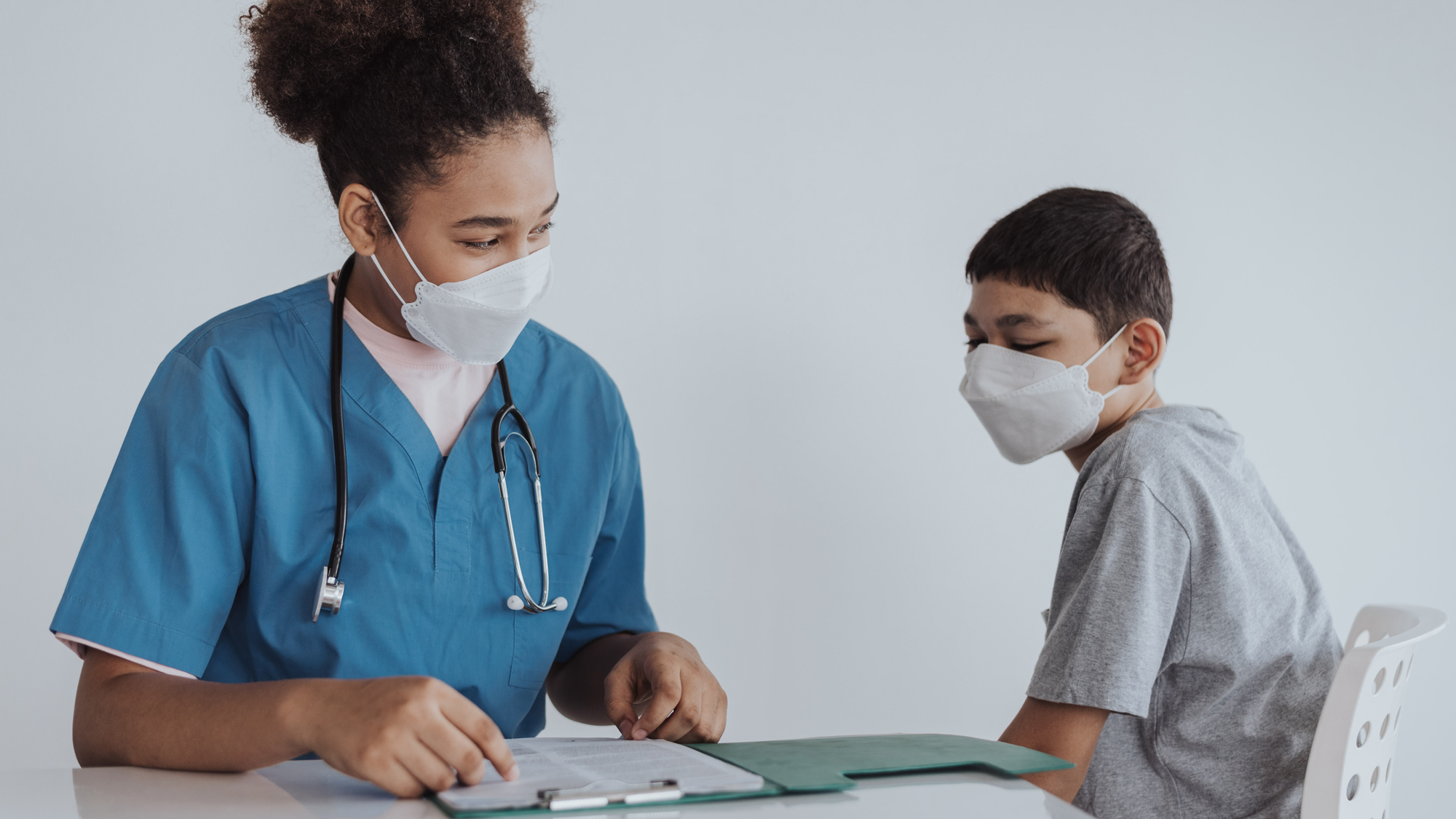
Nonverbal communication, as described by Schlögl and Jones, includes facial expressions, body posture, and hand movements to signify happiness, sadness, anger, and fear. However, Gutiérrez-Puertas and colleagues reported that personal protective equipment (PPE), specifically N95 and surgical masks, creates barriers to communication by preventing patients from seeing the healthcare provider’s face and facial expression.
Mask requirements
The Centers for Disease Control and Prevention (CDC) recommends wearing masks to prevent respiratory illness. During didactic, lab, and clinical settings at our school of nursing, nurses and students must wear surgical masks when they don’t feel well or have respiratory infection symptoms. Siegel and colleagues noted that nurses and students must wear PPE in clinical settings when caring for patients under isolation precautions as dictated by their organization and as recommended by the CDC.
PPE barriers
- Duckett reported that about 80% of communication is nonverbal; however, face masks and other PPE limit nonverbal communication.
- Freeman-Sanderson and colleagues identified that facial PPE prevents lip reading and muffles voice volume.
- In clinical settings, Hampton and colleagues found that patients may not understand what a nurse is saying, leading to misunderstandings, anxiety, mistrust, decreased quality of life, and poor outcomes.
- Gutiérrez-Puertas and colleagues described a direct correlation between effective communication and quality of care, effective treatment outcomes, recovery rates, and nurse-to-patient rapport.
- An online survey conducted by Schlögl and colleagues during the COVID-19 pandemic included responses from 226 physicians, nurses, physical therapists, and other healthcare providers. Most (98.2%) described communicating with patients while wearing a mask as unfavorable, and many (93%) reported communication challenges.
- Wittenberg and colleagues assigned online Comfort COVID-19 communication modules to 70 undergraduate nursing students to evaluate the effects of evidence-based communication training on attitudes, knowledge, and communication skills. The first module focused on PPE as a communication barrier, targeting attitudes toward being physically present with patients and their comfort using nonverbal techniques. Students’ attitudes improved from pre- to post-assessment. The second module addressed video and phone communication, targeting students’ attitudes about telehealth use to connect patients with families and support systems, which also improved from pre- to post-assessment. Students demonstrated a significant increase in communication knowledge after completing the modules, indicating they gained a deeper understanding of specific communication principles and strategies—not just a more positive outlook toward using them.
To address the communication challenges associated with wearing PPE and to identify where educational gaps exist between classroom instruction and clinical reality, we conducted a descriptive survey with a diverse cohort of students. We aimed to explore the awareness of nurses’ and nursing students’ communication effectiveness with patients while wearing PPE and to investigate perceived factors that may impede effective communication.
Understanding the problem
As noted by Sanchis-Gimenez and colleagues, key components of therapeutic communication that students learn include connecting with patients and checking for understanding, as well as awarenss that a nurse’s professional model of care influences communication. According to Hauser, nurses and nurse educators should be aware of the communication challenges that can occur when wearing PPE and how to overcome them.
Muffled speech and lack of facial cues can impede effective communication, but these factors may not be directly addressed in the classroom, in clinical settings, or during orientation. For example, during a role-play scenario in a skills laboratory at our school of nursing, faculty observed that students struggled to communicate effectively with a simulated patient because the required face mask made it difficult for the patient to hear and understand them. Although this communication challenge was evident during the scenario, it wasn’t explicitly addressed by instructors in the moment or discussed during the debriefing. PPE-related communication barriers may occur in lab and clinical settings without being incorporated into teaching, reflection, or feedback, despite their clear relevance to clinical practice.
Although an abundance of research exists regarding therapeutic communication, we found little about how PPE interferes with communication or what strategies to apply for improvement. Gutiérrez-Puertas and colleagues noted that most current education focuses on traditional verbal and nonverbal skills without consideration of the use of face masks.
The survey
We conducted our project at a large Southwestern university, with an estimated enrollment of 1,100 students, in a rural and urban delivery care area. After departmental scientific review, the university’s Institutional Review Board (IRB) deemed the project exempt. We didn’t collect personal identifiable information from respondents, thus protecting confidentiality and anonymity. We shared findings of the project with respondents, who didn’t receive compensation, along with possible applications to teaching, learning, and practice.
Using convenience sampling, we recruited undergraduate nursing students, RN-to-BSN students, and advanced practice nursing students who provided patient care while wearing PPE. The response rate to the online survey was 10% (107 participants) of the college’s undergraduate and graduate students.
We sent an initial email via nursing student listservs, maintained by the college of nursing, and one reminder 4 weeks later. Each email provided information about the project and a link to access the survey. The first survey page included IRB-approved information, which respondents had to acknowledge before beginning the survey. By proceeding with the survey, respondents acknowledged their understanding of implied consent, and by clicking the link, they were redirected to the survey in the Research Electronic Data Capture system, which collected and stored all data.
The survey included 15 questions about participants’ educational preparation, including where they learned about PPE and communication. It also asked about their level of comfort with communicating while wearing PPE, the barriers they encountered when communicating with patients, and the strategies they used to overcome communication barriers. An open-ended question allowed respondents to provide additional information.
We used the collected information to evaluate the college’s educational practices and identify areas to enhance student education and competence in effectively communicating while wearing PPE. Although past research has demonstrated communication challenges with wearing PPE, limited evidence exists regarding nursing students’ perceptions of wearing PPE while maintaining effective communication skills.
Results
Of the 107 survey respondents, 56% were undergraduate nursing students, 9% were RN-to-BSN students, and 9% were advanced practice nursing students. The remaining 25% chose not to identify their student category. Respondents reported learning about PPE and communication skills in nursing school (PPE = 33%, communication skills = 23%); at their place of employment (PPE = 7%, communication skills = 5%); or both (PPE = 53%, communication skills = 61%). However, 42% said they never learned skills focused on wearing PPE and communicating effectively.
Most respondents reported that when wearing PPE and communicating with patients, they always introduced themselves (88%), treated patients with courtesy and respect (97%), made eye contact (63%), and actively listened (90%). Although many students perceived that they always explained things in a way patients could understand (58%), they reported that their patients usually could repeat the information provided (69%). Respondents also reported usually being aware of their communication’s effectiveness (63%). These findings substantiate the concerns raised by Gutiérrez-Puertas and colleagues that, although nurses maintain their professionalism, PPE contributes to muffled speech and interferes with nonverbal communication (such as facial expressions), which impede the patient’s ability to decode certain information.
Two questions asked participants to list communication barriers they’ve encountered when wearing PPE and helpful strategies for overcoming them. Although few participants provided responses to these questions, the predominant barriers to communication included patient hearing difficulties, hidden facial expressions, and a perceived impaired ability to interact with patients.
During a post-conference after clinical practice, a student shared that wearing a mask created communication challenges during patient discharge education. The student perceived that masks lowered the sound of their voice and that they had to repeat information several times. In the survey, respondents suggested strategies to improve communication, such as speaking louder, using nonverbal communication, providing written communication, and asking patients to use the teach-back method. (See Respondent perceptions.)
Respondent perceptions
Respondents rated eight items regarding their perceptions of communicating while wearing PPE.
n (%)
n (%)
n (%)
n (%)
patients’ concerns? (n = 105)
n = number of participants who responded to the item.
Discussion
Positive patient outcomes and quality care require effective communication. As discussed by Schlögl and colleagues, by prioritizing effective communication, nursing students and nurses can build rapport, explain treatment plans, prevent adverse events, and ensure good outcomes. The majority of survey respondents reported that they were usually (63%) aware of the effectiveness of their communication while wearing PPE. Most respondents reported that patients could sometimes hear them (67%) and sometimes repeat recommendations in their own words (69%).
Alarmingly, although 58% of nurses believe they always explain things clearly, only 7% report that their patients always hear them. This suggests that current educational models regarding communication and PPE skills at our college of nursing are insufficient for the clinical realities of increased PPE use. Because awareness involves perception, comprehension, and future nursing action decisions, Scott and colleagues stress that nursing students and nurses should actively avoid distractions when communicating with patients.
Communication challenges such as background noise, cognitive workload, and environmental distractions can be further intensified for those using PPE because it narrows their visual field and impairs hearing. All participants always perceived their interactions with patients as successful. This perception coincided with frequent self-reported use of communication behaviors such as maintaining eye contact and explaining information clearly; however, fewer participants (21%) reported an awareness of always engaging in effective communication, indicating a potential gap between perceived success and reflective awareness of communication effectiveness. They may lack the awareness of the effectiveness of the communication. In a clinical setting, this gap directly threatens patient safety, particularly during high-stakes moments like medication reconciliation and informed consent.
Of all the survey respondents, 42% reported that they didn’t learn about PPE and communication skills simultaneously during their education. Currently, nursing student respondents report that they practice therapeutic communication in a lab setting, but the school of nursing doesn’t assess therapeutic and effective communication competence while one wears PPE.
Survey results point to the possible need for nursing schools to teach students how to develop communication self-awareness and share competency-based techniques to ensure effective communication while wearing PPE.
Limitations
Limitations of this project included self-report bias. The data rely on respondents’ perceptions rather than objective observations. Also, the small number of respondents within each program prevented the team from determining whether differences in perceptions existed between prelicensure students and practicing RN students. The absence of patient feedback limits the ability to verify patient comprehension and satisfaction, central outcomes for effective nursing communication.
Future nursing research should include patients’ perceptions and shift from descriptive surveys to objective interventional designs that evaluate educational practices and the effect of students wearing PPE and maintaining effective communication skills while working with patients.
Increase communication awareness
Kwame and colleagues emphasized effective healthcare communication as an active, two-way process exchanging clear, concise, accurate, timely, usable information between patients and healthcare professionals. Awareness of effective communication when discussing care plans builds rapport and improves patient health outcomes.
When face masks obscure facial cues or muffle speech, assessing the patient’s communication needs becomes paramount. Gutiérrez-Puertas and colleagues suggest using hand gestures, raising voice volume, repeating key concepts, and actively checking that patients understand.
Students and nurses learn to assess not just what they believe they said but also whether the patient received the correct information. Nurse educators should develop approaches to teaching effective communication, both in nursing schools and healthcare settings, that integrate PPE-specific training during didacticisms, simulation labs, and clinicals. Ultimately, this education will help ensure awareness of effective communication to reduce misunderstandings and improve patient outcomes.
Geraldine Guerra-Sandoval is a senior lecturer at the University of New Mexico College of Nursing in Albuquerque. Stephen H. Hernandez is a professor, associate dean of evaluation and accreditation, and Robert H. Hoy III Endowed Chair in Nursing at the University of Texas at El Paso College of Nursing. Patricia Watts Kelley is associate dean of faculty affairs and a professor at the University of Pittsburgh School of Nursing in Pittsburgh, Pennsylvania.
American Nurse Journal. 2026; 21(6). Doi: 10.51256/ANJ062611
References
Bandaru SV, Augustine AM, Lepcha A, et al. The effects of N95 mask and face shield on speech perception among healthcare workers in the coronavirus disease 2019 pandemic scenario. J Laryngol Otolo. 2020;1-4. doi:10.1017/S0022215120002108
Cooley L. Trust and communication: Responding to uncertainty. J Patient Exp. 2020;7(3):277-8. doi:10.1177/2374373520938476
Duckett K. Behind the mask: New challenges to gaining patient trust. Home Healthc Now. 2020;38(6):327-30. doi:10.1097/NHH.0000000000000940
Eldridge CC, Hampton D, Marfell J. Communication during crisis. Nurs Manage. 2020;51(8):50-3. doi:10.1097/01.NUMA.0000688976.29383.dc
Fishman J, Fisher E. Coronavirus disease 2019: Olfactory and gustatory function, negative impact of personal protective equipment on communication, and an antigen testing complication. J Laryngol Otol. 2020;134(7):565. doi:10.1017/S002221512000170X
Freeman-Sanderson A, Rose L, Brodsky MB. Coronavirus disease 2019 (COVID-19) cuts ties with patients outside world. Aust Crit Care. 2020;33(5):397-8. doi:10.1016/j.aucc.2020.08.001
Gutiérrez-Puertas L, Márquez-Hernández VV, Ortíz-Rodríguez B, Aguilera-Manrique G, Gutiérrez-Puertas V. Effective communication between nursing professionals and patients after the implementation of mask-wearing requirements in the clinical setting: A cross-sectional study. Nurs Health Sci. 2023;25(4):676-84. doi:10.1111/nhs.13061
Hampton T, Crunkhorn R, Lowe N, et al. The negative impact of wearing personal protective equipment on communication during coronavirus disease 2019. J Laryngol Otol. 2020;134(7):577-81. doi:10.1017/S0022215120001437
Harris PA, Taylor R, Minor BL, et al. The REDCap consortium: Building an international community of software partners. J Biomed Inform. 2019;95:103208. doi:10.1016/j.jbi.2019.103208
Harris PA, Taylor R, Thielke R, Payne J, Gonzalez N, Conde J. Research electronic data capture (REDCap)—A metadata-driven methodology and workflow process for providing translational research informatics support. J Biomed Inform. 2009;42(2):377-81. doi:10.1016/j.jbi.2008.08.010
Hauser JM. Walls. Hastings Cent Rep. 2020;50(3):12-3. doi:10.1002/hast.1121
Kwame A, Petrucka PM. A literature-based study of patient-centered care and communication in nurse-patient interactions: Barriers, facilitators, and the way forward. BMC Nurs. 2021;20(1):158. doi:10.1186/s12912-021-00684-2
New Mexico Nursing Education Consortium. Concepts. nmnec.org/curriculum/concepts/
Sanchis-Giménez L, Lacomba-Trejo L, Prado-Gascó V, Giménez-Espert MC. Attitudes towards communication in nursing students and nurses: Are social skills and emotional intelligence important? Healthcare (Basel). 2023;11(8):1119. doi:10.3390/healthcare11081119
Schlögl M, Jones CA. Maintaining our humanity through the mask: Mindful communication during COVID-19. J Am Geriatr Soc. 2020;68(5):E12-3. doi:10.1111/jgs.16488
Schlögl M, Singler K, Martinez-Velilla N, et al. Communication during the COVID-19 pandemic: Evaluation study on self-perceived competences and views of health care professionals. Euro Geriatr Med. 2021;12(6):1181-90. doi:10.1007/s41999-021-00532-1
Scott M, Unsworth J. Lessons from other disciplines about communication, human performance and situational awareness while wearing personal protective equipment. SAGE Open Nurs. 2020;6:2377960820963766. doi:10.1177/2377960820963766
Siegel JD, Rhinehart E, Jackson M, Chiarello L, Healthcare Infection Control Practices Advisory Committee. Guideline for Isolation Precautions: Preventing Transmission of Infectious Agents in Healthcare Settings (2007). Centers for Disease Control and Prevention. Updated 2024. cdc.gov/infection-control/hcp/isolation-precautions/index.html
Wardian JL, Peralta M, Vokoun C, Richards SE. Effect of wearing masks in the hospital on patient-provider interaction: “They (providers) need to stay safe for their family and keep us safe.” Patient Exp J. 2022;9(2):31-5.
Wittenberg E, Goldsmith JV, Chen C, Prince-Paul M, Capper B. COVID 19-transformed nursing education and communication competency: Testing COMFORT educational resources. Nurse Educ Today. 2021;107:105105. doi:10.1016/j.nedt.2021.105105
Wittenberg E, Goldsmith JV, Chen C, Prince-Paul M, Johnson RR. Opportunities to improve COVID-19 provider communication resources: A systematic review. Patient Educ Couns. 2021;104(3):438-51. doi:10.1016/j.pec.2020.12.031
Key words: PPE, communication, nursing education, patient outcomes