
Each year, the American Nurse Journal editorial team anxiously awaits the opportunity to read the All Pro Nursing Team submissions. We know that we’ll be inspired by the collaboration, clinical innovation, and empathetic patient care described in each entry. This year did not disappoint.
Patient safety played a particularly big part in many of the submissions this year, including the winning entry from UCHealth. Understanding the connection between staff and patient safety, the team of nurses from three of the systems’ hospitals worked together to redesign how they manage behavioral escalation. You’ll also read about the thoughtful expansion of a transport team, a fellowship aimed at supporting advanced practice providers, a nurse-led virtual navigation model, and a rehabilitation center’s project aimed at reducing falls and hospital-acquired pressure injuries during the night shift.
The staff at American Nurse Journal thanks all of the nurse teams that shared their work with us this year. We appreciate the time you took out of your busy schedules to tell your stories.
You may be receiving this issue of the journal during National Nurses Week. This recognition reminds us to acknowledge the tremendous work nurses perform at the bedside, in the surgical suite, via virtual care visits, in the classroom, as researchers, and as advocates for equitable access to care and the nursing profession. This work happens every day—sometimes right in front of us and sometimes out of view—and nurses deserve to be celebrated year-round.
WINNER
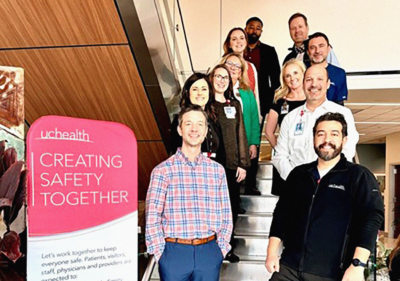
UCHealth Staff Safety Is Patient Safety
Recognizing the deep connection between staff and patient safety, this team of nurses at UCHealth Broomfield, Highlands Ranch, and Longs Peak hospitals in Colorado redesigned their approach to recognizing and managing behavioral escalation. As the team noted in their submission, “A safe, prepared workforce is essential to delivering reliable patient care.” In their own words, this is how the team described their winning project:
When frontline feedback revealed a gap between strong patient safety perceptions and lower ratings related to employee safety, speaking up, and leader responsiveness, our team partnered across disciplines to redesign behavioral escalation reaction processes.
The team implemented an evidence-based behavioral safety framework aligned with national workplace violence prevention guidance. The initiative introduced three key improvements: a frontline-informed redesign of safety workflows, a two-tier response model distinguishing behavioral escalation from active violence, and a partnership with local law enforcement to strengthen coordinated community response.
The two-tier behavioral response model aligns the level of response with the level of escalation and mirrors the tiered approach used for medical deterioration (e.g., Rapid Response and Code Blue). This structure empowers staff to call for assistance at the earliest signs of behavioral escalation while ensuring that the response matches the situation, recognizing that over-response can sometimes escalate rather than resolve events. The model represents a paradigm shift by framing behavioral escalation management as a clinical intervention rather than solely a security response.
Frontline insights were translated into practical tools that support nurses and care teams during behavioral escalation. Proactive “Stay Safe” huddles help identify risk early and align the care team before situations escalate. De-escalation training and an electronic health record violence risk prediction tool and supporting pathway enable consistent assessment and response, while standardized elopement prevention workflows and structured post-event debriefs strengthen response reliability and learning.
To sustain improvement, the team launched a facility-based Prevention of Workplace Violence Multidisciplinary Committee to strengthen metro-community regional collaboration. This feeds up to the 14-hospital system steering committee, where frontline insights inform broader workplace violence prevention strategies. Staff listening sessions ensure continued frontline engagement.
The team also launched quarterly Law Enforcement–UCHealth collaborative meetings to address prior uncertainty around roles, responsibilities, and available safety resources during behavioral emergencies. These partnerships rebuilt trust, clarified response expectations, and strengthened coordinated community responses to workplace violence. The model has expanded across the health system, supporting consistent responses to behavioral emergencies.
Across three hospital facilities, five of six Culture of Safety domains improved. “Speaking up” increased by 4.6, 6.9, and 2.5 percentage points; “Leader responsiveness” increased by 3.6, 3.7, and 5.5 points; and “Employee safety is a priority” improved by 3.1, 1.8, and 4.2 points.
Teams conducted 311 Stay Safe huddles compared with 56 behavioral escalation responses, demonstrating a shift toward identification and prevention of safety risks. Elopements declined after implementing standardized workflows.
Twelve-month voluntary turnover decreased from 16.5% to 11.9%—a 28% reduction—helping retain experienced nurses, strengthen team stability, and support continuity of patient care while remaining well below the national average of 18%.
FIRST RUNNER-UP
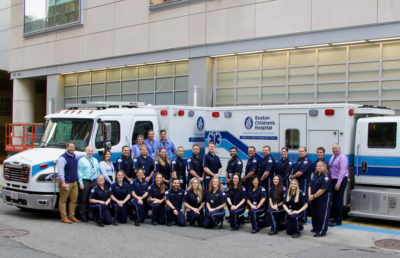
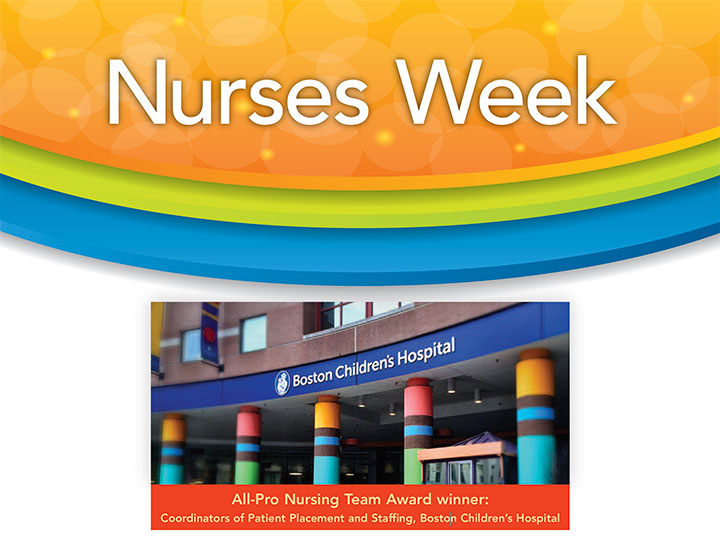
Boston Children’s Hospital Critical Care Transport Team
Boston Children’s Hospital Critical Care Transport Team provides services for 1,200 critically ill and injured children annually. The group included 10 RNs with 3 to 30 years of experience.
Recently, the team experienced more requests for transport from local community hospitals than it could accommodate. Each month, the team missed 25% of requests because it was on another transport. Boston Children’s senior leadership approved expansion of the Transport Team to 20 RNs. Challenges included avoiding preceptor burnout and offering a structured orientation to new RNs while still providing leadership mentoring for junior staff. To overcome these challenges, the team decided to onboard two RNs every 6 months until meeting the goal of 10 new nurses. The preceptor role transitioned from senior RNs to junior RNs, allowing for professional growth while still receiving senior staff support. Senior RNs oversee daily operations, duties similar to those of a charge nurse.
After orientation, senior RNs take over mentoring, which includes structured milestones at 6-month intervals: independent practice, ability to support a junior team member on transport, and preparation to function in the charge nurse role.
Feedback has been positive. Orientees feel expectations and timelines are clearly outlined. Teaching and learning to coach new staff has provided junior RNs with a sense of purpose. Senior RNs have expressed appreciation for their contribution. The workload is more evenly distributed among staff, team morale has improved across all disciplines, and staff on all levels feel supported.
SECOND RUNNER-UP

Texas Oncology Virtual Care Navigation Team
Community oncology patients prescribed oral anticancer medications (OAMs) may experience fragmented and inconsistent support compared to those receiving I.V therapies. To address these gaps, the Texas Oncology navigation team implemented a centralized, RN-led virtual navigation model to support patients with newly prescribed OAMs. The program transitioned care delivery from reactive support to proactive, task-based navigation services through structured 90-day care episodes.
Between May 2025 and January 2026, the team enrolled 740 patients initiating OAMs across 11 community-based sites, supporting approximately 40 physicians. Implementation of this model resulted in improved nursing workflow consistency and increased nurse–patient engagement. Structured navigation enabled early identification of symptoms, medication adherence challenges, and psychosocial or logistical barriers to care.
The virtual navigation model reduced variability in patient care delivery regardless of geographic location, providing patients with consistent access to nursing education, medication safety, care coordination, and adherence monitoring. By standardizing nurse-led touchpoints and leveraging virtual tools, the program supported more equitable delivery of care. As noted by the team, “At the core of this work is a shared belief that consistency is a form of equity, and that nursing plays a central role in delivering equitable care.”
THIRD RUNNER-UP
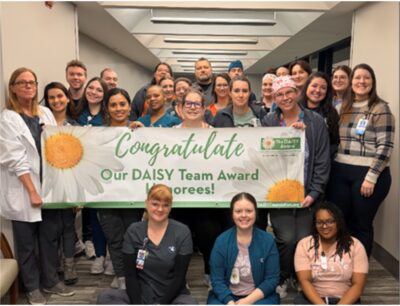
Nebraska Methodist Hospital Unit-Based Council
In 2025, the 8 South Medical–Surgical Unit at Methodist Hospital in Omaha launched an initiative to transform the patient experience while strengthening teamwork among nursing staff. The unit-based council led the work, recognizing the connection between patient perception of care and communication, responsiveness, and collaboration among the healthcare team.
Historically, the unit’s HCAHPS scores related to patient experience showed opportunity for improvement. For example, in 2022, likelihood to recommend rated in the 74th percentile, and in 2024, communication with staff rated in the 49th percentile.
The unit-based council implemented several actions designed to improve communication, teamwork, and patient-centered care. These actions included exploring an escalating call light to improve response times, creating a patient and family welcome letter to introduce the care team and set expectations for hospitalization, and providing education for staff on giving and receiving constructive feedback. In addition, the team implemented proactive rounding every hour during the day and every 2 hours overnight, and members of the unit-based council conducted proactive patient experience rounding to gather real-time feedback and identify opportunities for improvement.
HONORABLE MENTION
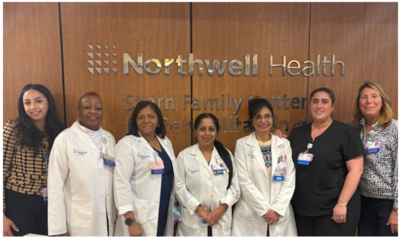
Stern Family Center for Rehabilitation Nursing Team
To enhance patient safety and skin integrity, the nursing team at Stern Family Center for Rehabilitation implemented the Alert-Wet initiative in July 2025. During the critical 7:30 PM to 7:00 AM overnight shift, the team uses specialized disposable incontinence pads equipped with sensors that detect varying levels of moisture (damp, wet, wetter, or soaked). These sensors transmit real-time alerts to a central monitor, immediately notifying staff of a patient’s need for care. The system can generate reports tracking how long a patient has been awaiting a change. This functionality provides a crucial layer of accountability, ensuring faster response times and contributing directly to the preservation of skin integrity. The initiative has resulted in zero patient falls and hospital-acquired pressure injuries during overnight shifts.
HONORABLE MENTION
Boston Children’s Hospital Nursing Professional Development Team
To ensure newly hired advanced practice providers (APPs) are fully supported, the Boston Children’s Hospital nursing professional development team created a structured fellowship designed to support their transition while building clinician confidence, professional identity, and clinical competence. Fellows participate in 10 structured learning sessions across 12 months covering three domains: clinical practice, professional development, and health systems. The fellowship includes time for reflection and peer discussion. Mentorship is central to the program. By program completion, 86.7% of fellows reported identifying a mentor they plan to continue working with, competency scores increased to a mean of 4.00 on the Novice Nurse Practitioner Role Transition Scale, and self-reported readiness to practice increased from 6.24 to 7.69 on a 10-point scale. In addition, 95% of graduates remained employed 1 year after their hire date.
HONORABLE MENTION
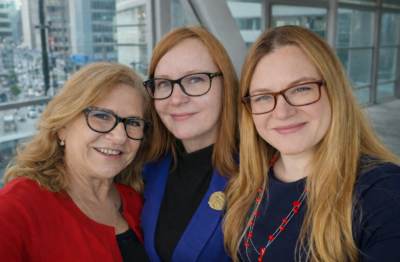
Veteran’s Administration Nurses Month Faculty Planning Team
A nurse-led program, Freedom Sings USA Nurse Mentorship Expansion—engaged Freedom Sings USA, a non-profit organization that pairs professional musicians and songwriters with veterans and nurses to transform lived experiences into original songs. The collaboration produced two albums, 23 songs, and two documentaries.
In year two, the team implemented a structured mentorship model to develop nurse veterans as storytellers and peer leaders. Three nurse mentors guided 10 participants through a formal program with a mentor-developed guidebook for the veterans, scheduled one-to-one coaching, structured group sessions, and in-person and virtual retreats. The program achieved 100% participant completion and strong engagement. Nurses reported increased confidence in public speaking, improved communication within their clinical teams, and greater willingness to engage in difficult conversations with patients and colleagues.
HONORABLE MENTION
University Health Truman Medical Center Critical Care Services
This team collaborated with pharmacy and providers to reduce variability in heparin ordering, dosing, monitoring, and handoffs. The new process included standardized infusion protocols, mandatory double-checks at initiation and rate changes, clear communication expectations, and focused staff education. Streamlined documentation and monitoring workflows ensure timely lab draws and dose adjustments. The results included reduced heparin-related medication errors, improved compliance with therapeutic lab monitoring, increased nursing confidence and consistency across shifts, and enhanced interdisciplinary communication and workflow efficiency. The project strengthened patient outcomes and the work environment by creating a safer, more reliable process for high-risk medication management.
American Nurse Journal. 2026; 21(5). Doi: 10.51256/ANJ052615



1 Comment. Leave new
Thank you for recognizing these teams for improving care in all realms of nursing. It is encouraging to read all of these teams accomplishments.