
“They Cannot Take It From Me”
One of the most common things we hear nurses say—often quietly, sometimes with real frustration—is this: “My facility will only pay me about 25 cents more an hour for my BSN. I’m not sure it’s worth it.”
If you’ve thought that, you’re not wrong for asking. Tuition is expensive. Life is full. Many nurses are carrying families, overtime, and fatigue in a healthcare system that often asks for more without giving much back. When education is framed only in terms of immediate compensation, it makes sense to wonder whether the sacrifice is justified (American Association of Colleges of Nursing, 2024).
But this question—reasonable as it is—uses the wrong yardstick.
The RN-to-BSN degree and the BSN-to-MSN pathway were never designed to be “paid back” through a small hourly differential. Their true purpose is bigger: to change what is possible for you across the span of your career—your options, your voice, your influence, your longevity, and the lives you touch through safer care and better systems (National Academy of Medicine, 2021).
Why the “25 cents” argument doesn’t hold up
Hospitals often attach modest wage differentials to the BSN. Those numbers reflect local budgets, pay structures, and reimbursement constraints—not the real value of what education produces (Missouri Hospital Association, 2025). Organizations benefit from nursing education in ways that rarely show up on a paycheck line: fewer preventable complications, fewer readmissions, stronger clinical judgment, and better coordination across complex systems.
The evidence is consistent: when hospitals increase the proportion of BSN-prepared nurses, outcomes improve—lower mortality, fewer readmissions, and shorter lengths of stay (Lasater et al., 2021). And importantly for RN-to-BSN students, outcomes improve regardless of whether the BSN is earned through a traditional pathway or an RN-to-BSN bridge (Porat-Dahlerbruch et al., 2022). In other words, your pathway is not a “less-than” route. It is a workforce solution that works.
That’s the first reframe: the BSN is not just a credential. It’s a patient safety strategy—and it strengthens you as a clinician while strengthening the system around you. Health systems across Missouri continue to face workforce instability, with hospitals reporting ongoing challenges in recruitment, retention, and turnover among nursing staff (Missouri Hospital Association, 2025). Investments in education, training pipelines, and professional development are widely recognized as essential strategies for building a stable and resilient health care workforce capable of meeting patient needs (Missouri Hospital Association, 2025).
Magnet hospitals show what it looks like when education is taken seriously
Magnet-designated hospitals are often cited as exemplars of nursing excellence. A 2023 systematic review found Magnet recognition to be associated with improved patient outcomes, including lower mortality and better safety indicators (Connor et al., 2023). Magnet standards emphasize academic progression, higher proportions of BSN- and graduate-prepared nurses, and strong professional practice environments, reinforcing the systemic value of nursing education (AACN, n.d.).
Research also shows that environments that support nurse engagement and shared governance are associated with better patient and nurse outcomes (Kutney-Lee et al., 2022). Magnet organizations don’t invest in education because it looks good on a brochure. They invest because it improves quality, retention, and resilience. They operate from a simple assumption: nurses will grow, and the system should be designed to support that growth.
RN-to-BSN is not the finish line—it’s the on-ramp
For many nurses, the BSN is the step that opens doors to what comes next: graduate education in leadership, education, informatics, public health, and advanced practice. Workforce projections show that demand for nursing instructors is expected to grow substantially in the coming decade, reflecting the increasing need for nurse educators to sustain the profession (U.S. Bureau of Labor Statistics, 2023). The most meaningful returns on nursing education often show up later—when you need options, when bedside work becomes physically demanding, when your interests evolve, or when you are ready to lead.
The National League for Nursing’s vision for nursing education centers lifelong learning, innovation, and preparation for the future of healthcare (NLN, 2026). That future needs nurse educators as much as it needs bedside nurses—because without educators, we cannot sustain the workforce. Many schools and health systems are responding with new program pathways that emphasize innovation and preparation for teaching and leadership. At Missouri Southern State University, for example, a new Nurse Educator pathway launching in August 2026—made possible through a Nursing Education Incentive Program (NEIP) grant administered by the Missouri State Board of Nursing and aligned with statewide workforce priorities identified by the Missouri Hospital Association—reflects a values-driven, immersive learning approach to preparing nurse educators who will innovate, mentor, and lead—quietly, competently, and with purpose (Missouri Hospital Association, 2025; Missouri State Board of Nursing, 2024).
Patricia Benner reminds us that nursing expertise develops over time through education, experience, and reflective practice; education doesn’t pull you away from “real nursing”—it deepens your capacity to reason, prioritize, and respond with wisdom when the situation isn’t textbook (Benner, 2021).
Lifelong learning is an ethical responsibility, not a personality trait
The American Nurses Association’s Code of Ethics makes it plain: maintaining competence requires lifelong learning (ANA, 2025). That isn’t a slogan; it’s a professional expectation (U.S. Bureau of Labor Statistics, 2023). Similarly, the National Council of State Boards of Nursing emphasizes education and accountability as central to public protection (NCSBN, 2023).
This is the second reframe: education isn’t self-promotion. It’s stewardship—of patients, of the profession, and of the next generation of nurses who will look to you as an example.
Why this matters now
Right now, nursing is navigating a complicated climate—workforce shortages, moral distress, rapid technology change, and policy debates that can either strengthen or restrict access to graduate education. National nursing organizations have raised concerns that limiting access to graduate nursing education would reduce the pipeline of nurse educators and advanced practitioners at exactly the wrong time (ANA, 2025; NCSBN, 2025). The Tri-Council for Nursing has emphasized that a highly educated nursing workforce is essential to access, quality, and effective health policy (Tri-Council for Nursing, 2024).
This is the third reframe: your education is not only about your own career. It is part of nursing’s ability to protect the public—and to protect itself as a profession.
What you are really gaining
When someone says, “It’s only 25 cents an hour,” here is the question I want you to hold instead: What does this degree make possible that wasn’t possible before?
The RN-to-BSN-to-MSN pathway expands professional mobility, credibility, and choice. It gives you the language and authority to advocate. It equips you to teach, lead, and influence systems. And it gives you something that is quietly radical in a profession that is too often undervalued: ownership of your professional identity.
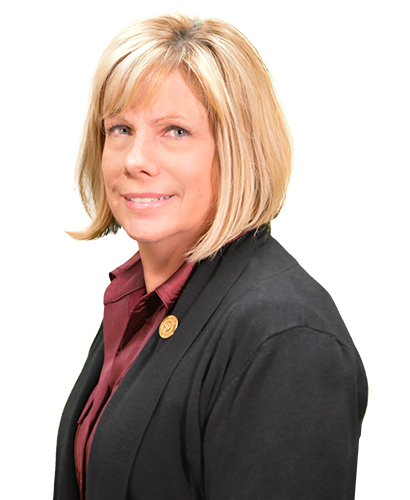
When I walked across the stage to receive my doctorate, the university president shook my hand and asked, “Dr. Brown, how does it feel?” I smiled and replied, “They cannot take it from me.”
That truth applies at every step of nursing education. A payroll table can’t measure it. A budget line can’t define it. Once you earn it—your knowledge, your growth, your authority to lead and teach—no one can take it from you.
References
American Association of Colleges of Nursing. (n.d.). Impact of education on nursing practice. https://www.aacnnursing.org/news-data/fact-sheets/impact-of-education-on-nursing-practice
American Association of Colleges of Nursing. (2024, April 15). New AACN data points to enrollment challenges facing U.S. schools of nursing. https://www.aacnnursing.org/news-data/all-news/article/new-aacn-data-points-to-enrollment-challenges-facing-us-schools-of-nursing
Connor, L., Beckett, C., Zadvinskis, I., Melnyk, B. M., Brown, R., Messinger, J., & Gallagher-Ford, L. (2023). The Association Between Magnet ® Recognition and Patient Outcomes : A Scoping Review. The Journal of nursing administration, 53(10), 500–507. https://doi.org/10.1097/NNA.0000000000001325
American Nurses Association. (2025). Code of ethics for nurses with interpretive statements. https://www.nursingworld.org/practice-policy/nursing-excellence/ethics/
Benner, P. (2021). Educating nurses: A call for radical transformation. Jossey-Bass.
Kutney-Lee, A., Germack, H., Hatfield, L., Kelly, S., Maguire, P., Dierkes, A., Del Guidice, M., & Aiken, L. H. (2016). Nurse Engagement in Shared Governance and Patient and Nurse Outcomes. The Journal of nursing administration, 46(11), 605–612. https://doi.org/10.1097/NNA.0000000000000412
Lasater, K. B., Sloane, D. M., McHugh, M. D., Porat-Dahlerbruch, J., & Aiken, L. H. (2021). Changes in proportion of bachelor’s nurses associated with improvements in patient outcomes. Research in Nursing & Health, 44(5), 787–795. https://doi.org/10.1002/nur.22163
Missouri Hospital Association. (2025, July). 2025 workforce report. https://www.mhanet.com/mhaimages/Workforce/2025/2025_WF_Report.pdf2.
Missouri State Board of Nursing. (2024). Nursing education incentive program (NEIP). https://pr.mo.gov/nursing.asp
National Academy of Medicine. (2021). The future of nursing 2020–2030: Charting a path to achieve health equity. National Academies Press. https://doi.org/10.17226/25982
National Council of State Boards of Nursing. (2023). Nursing regulation. https://www.ncsbn.org/nursing-regulation.page
National Council of State Boards of Nursing. (2025). Policy. https://www.ncsbn.org/policy
National League for Nursing. (2026). NLN Center for Innovation in Education Excellence. https://www.nln.org/education/leadership-institute/center-for-innovation-in-education-excellence
Porat-Dahlerbruch, J., Aiken, L. H., Lasater, K. B., Sloane, D. M., & McHugh, M. D. (2022). Variations in nursing baccalaureate education and 30-day inpatient surgical mortality. Nursing Outlook, 70(2), 300–308. https://doi.org/10.1016/j.outlook.2021.09.009
Tri-Council for Nursing. (2024). When nurses vote, health policy changes for the better. https://tricouncilfornursing.org/publications-%26-resources#d144b00e-aada-4149-b3f4-230ef23d0ac6
U.S. Bureau of Labor Statistics. (2023). Employment projections: Registered nurses, 2022–2032. https://projectionscentral.org/longterm
Dues Tax Deduction
The Omnibus Budget Reconciliation Act of 1993 requires MONA to notify members that the percentage of MONA/ANA dues which is allocated to lobbying expenses is not deductible as an ordinary and necessary business expense for federal income tax purposes. MONA estimates that the non-deductible portion of the 2025 MONA/ANA dues which can be allocated to lobbying expense is 41.50%. can be allocated to lobbying expense is 51.41%.