

Kangaroo Care (KC), or routine skin-to-skin contact, is a critical yet often underused intervention in the Neonatal Intensive Care Unit (NICU). Nationally, 9–13% of infants are admitted to NICUs, where families frequently experience stress, separation, and disrupted bonding (Yarlagadda et al., 2025). Limited kangaroo care (KC), often restricted by space, staffing, or policy barriers, negatively affects parental attachment and infant physiologic stability (Lisanti et al., 2021). In contrast, early and consistent KC improves thermoregulation, neurobehavior, respiratory outcomes, feeding, and weight gain (Clarke-Sather et al., 2022). KC may also strengthen maternal–infant attachment, reduce maternal stress and cortisol levels, and increase breastfeeding frequency and infant growth (Mehrpisheh et al.,2022). Collectively, these findings highlight KC as a high-value, evidence-based practice that enhances quality, safety, and family-centered outcomes in the NICU.
Review of Literature
A comprehensive literature search was conducted in collaboration with a health sciences librarian to examine the impact of kangaroo care on parent–infant bonding in the Neonatal Intensive Care Unit (NICU). The databases searched included CINAHL, Pubmed, and OVID while search terms encompassed “Kangaroo Care”, “Bonding”, “Skin-to-skin”, and “Attachment.” After evaluating a total of sixty different articles meeting the previously stated search terms, eight articles were used to formulate our final findings and guide our research study. Articles published in English and within the last five years were considered for inclusion. The search yielded systematic reviews, randomized controlled trials, quasi-experimental studies, and observational research. Studies were selected based on their relevance to kangaroo care, skin-to-skin contact, parent–infant bonding, and the NICU population. These diverse forms of evidence, ranging from level I to VI, provided a broad understanding of how kangaroo care influences both infant outcomes and the parent–infant relationship.
The findings consistently demonstrated that kangaroo care positively influences bonding between parents and their hospitalized infants. Across the literature, parents who participated in skin-to-skin contact reported stronger emotional connections, increased confidence in their caregiving abilities, and greater involvement in their infant’s care (Kulkarni et al., 2025). Several studies also found that longer durations and more frequent sessions of kangaroo care were associated with improved maternal and infant outcomes, including enhanced attachment and reduced parental stress (Kulkarni et al., 2025). Common themes identified throughout the literature included the importance of sustained skin-to-skin contact, the role of kangaroo care in promoting parental confidence and engagement, and the challenges families face in establishing bonds within the highly technological and stressful NICU environment. Overall, the evidence supports kangaroo care as a simple, cost-effective, and evidence-based intervention that strengthens parent–infant bonding while improving the experience of families navigating neonatal intensive care.
Practice Recommendations
Routine Kangaroo Care is strongly supported by evidence and requires a structured, evidence-based implementation approach to ensure consistent NICU practice. Successful adoption depends on comprehensive staff education, competency training, standardized protocols, and interdisciplinary collaboration to promote provider confidence, infant safety, and parental participation (Yarlagadda et al., 2025). Nurses play a central role by introducing Kangaroo Care early, providing hands-on guidance, assessing infant readiness, and addressing parental concerns to strengthen engagement. Protocols should clearly define eligibility, session timing and duration, monitoring requirements, documentation, and safe positioning and transfer techniques. Guided by Lewin’s Change Theory, education prepares staff for change, standardized workflows integrate Kangaroo Care into practice, and ongoing policy reinforcement, outcome monitoring, feedback, and continued training sustain long-term implementation. Clustering care activities and encouraging parental involvement promote longer skin-to-skin sessions, improving infant physiologic stability, parent-infant bonding, family well-being, shorter NICU stays, and reduced healthcare resource utilization with minimal implementation costs (Kulkarni et al., 2025).
Areas for Future Investigation
Additional information is needed to evaluate differences in outcomes between mothers and fathers as well as the long-term impacts of kangaroo care on bonding and developmental outcomes on the infant later in life. The current evidence and studies evaluated throughout research have consistently demonstrated that early, safe, and consistent implementation of kangaroo care provides meaningful benefits for both the infants and their families (Yarlagadda et al., 2025). Together, these practices help to maximize the physical, developmental, and emotional benefits of kangaroo care for the infant and their families.
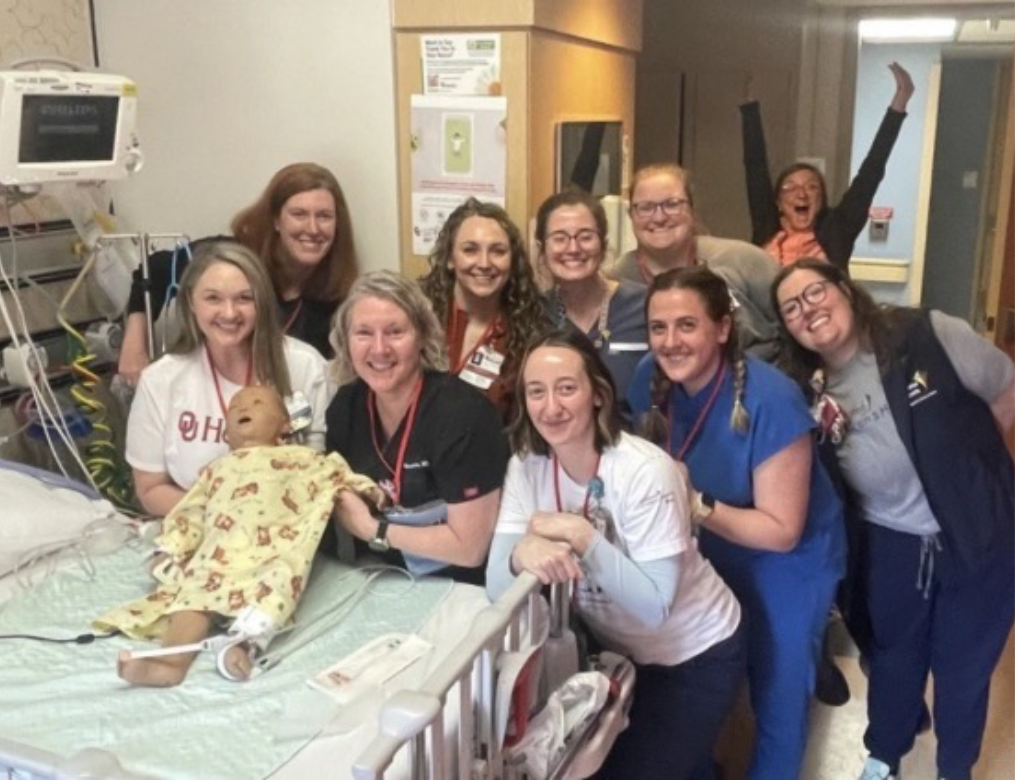
We are four recent BSN graduates united by a shared commitment to evidence-based practice and improving outcomes for infants and their families. Our clinical training shaped our deep interest in intensive care and highlighted the value of family-centered interventions, specifically, Kangaroo Care. Through this article, we sought to examine the role of Kangaroo Care in strengthening parent-infant attachment while supporting positive neonatal outcomes. As we begin our nursing careers, we hope our work contributes to the growing body of nursing knowledge and encourages the continued integration of evidence-based, family-centered care in the NICU.
References
Arslan, F. T., Kücükoglu, S., & Sahin, E. Ü. (2025). Kangaroo care practice outcome of mothers with premature infant: The effectiveness on knowledge, perception, barrier and attachment. Journal of Neonatal Nursing, 31(6), 101730. https://doi.org/10.1016/j.jnn.2025.101730
Clarke-Sather, A. R., Compton, C., Roberts, K., Brearley, A., & Wang, S. G. (2022). Systematic Review of kangaroo care duration’s Impact in Neonatal Intensive Care Units on Infant–Maternal Health. American Journal of Perinatology, 41(08), 975–987. https://doi.org/10.1055/a-2003-3935
Kulkarni R, A., Dsn, A. K., Manerkar, S., Paul, N., Gupta, A., & Mondkar, J. (2025). Impact of kangaroo mother care on mother-infant bonding in very low birth weight infants. Journal of Neonatal Nursing, 31(1), 206–209. https://doi-org.webproxy2.ouhsc.edu/10.1016/j.jnn.2024.07.013
Kurt, F., Kucukoglu, S., Ozdemir, A., & Ozcan, Z. (2020). The effect of kangaroo care on maternal attachment in preterm infants. Nigerian Journal of Clinical Practice, 23(1), 26. https://doi.org/10.4103/njcp.njcp_143_18
Lindeberg, S., Tedgård, E., Kerstis, B., Tedgård, U., Taylor, A., & Jönsson, P. (2024).
Development of the Parent-to-Infant Bonding Scale: Validation in Swedish mothers and fathers in community and clinical contexts. Child Psychiatry & Human Development. https://doi.org/10.1007/s10578-024-01699-x
Lisanti, A. J., Demianczyk, A. C., Costarino, A., Vogiatzi, M. G., Hoffman, R., Quinn, R., Chittams, J. L., & Medoff-Cooper, B. (2021). Skin-to-Skin Care is Associated with Reduced Stress, Anxiety, and Salivary Cortisol and Improved Attachment for Mothers of Infants With Critical Congenital Heart Disease. JOGNN: Journal of Obstetric, Gynecologic & Neonatal Nursing, 50(1), 40–54. https://doi-org.webproxy2.ouhsc.edu/10.1016/j.jogn.2020.09.154
Mehrpisheh, S., Doorandish, Z., Farhadi, R., Ahmadi, M., Moafi, M., & Elyasi, F. (2022). The Effectiveness of Kangaroo Mother Care (KMC) on attachment of mothers with premature infants. European Journal of Obstetrics & Gynecology and Reproductive Biology X, 15, 100149. https://doi.org/10.1016/j.eurox.2022.100149
Yarlagadda, H., Sandbulte, J., & Downs, E. (2025). Challenges and enhancement of health: a dual impact of kangaroo care on parents and infants—systematic review. mHealth, 11, 36. https://doi.org/10.21037/mhealth-24-80