


Identification of the Problem
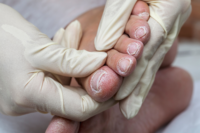
Hospital-acquired infections (HAIs) are a persistent issue for hospitals, as they can complicate a patient’s healing and carry legal ramifications for hospital systems (Hewlett et al., 2018). On average, one in 31 hospitalized patients acquired an infection during their hospital stay (Centers for Disease Control, 2025). Nurses provide direct patient care and are therefore subject to policies that specifically target the use of nail coatings such as standard and gel polishes (Blackburn et al., 2020; Dinu et al., 2022; Hedderwick et al., 2000; Hewlett et al., 2018; Moolenaar et al., 2000). Despite a thorough search of the evidence, there is a lack of consistent, current and rigorous research regarding nail coating type and the impact on bacterial growth on nurses’ hands (Arreba et al., 2024; Fagernes & Lingaas, 2011; Hewlett et al., 2018).
Review of the Literature
An integrative review was conducted with OVID Synthesis using the following keywords: “artificial nails,” “infection,” “patients,” “polish,” “bacteria,” and “nails.” Eligibility criteria included studies comparing gel polish with unpolished nails, standard polish with unpolished nails, and gel polish with standard polish. This systematic review yielded eight studies consisting of three quasi-experimental, three observational, one qualitative, two non-randomized controlled trials, and one retrospective cohort/case-control study published within the last 20 years. Four European and four American studies were found. The articles were divided over the impact of artificial and natural nails on bacterial burden, with three studies (Hedderwick et al., 2000; Moolenaar et al., 2000; Walaszek et al., 2018) recommending the prohibition of gel polish, and two other studies (Arreba et al., 2024; Blackburn et al., 2020) recommending the prohibition of standard polish. Limitations to this literature review include low levels of evidence, small sample sizes, lack of random assignment and sampling, and the inclusion of international studies, decreasing the generalizability and rigor of the available evidence. Of note, four articles (Dinu et al., 2022; Fagernes & Lingaas, 2011; Moolenaar et al., 2000; Walaszek et al., 2018) analyzed nail length as well as coating, and found that nails greater than or equal to 2 mm in length posed a greater bacterial burden risk than nail coatings.
Recommended
Intervention or Protocol
This review indicates a gap in consistent, conclusive evidence supporting the removal of nurse nail coatings. Based on the divisive nature of the evidence reviewed, policies regarding nail coverings in hospital settings should be reviewed. Current hospital policies should be reviewed, and new policies should be suspended from implementation until conclusive evidence is available. Consideration of nail length should be included in all future policies, and accountability parameters with disciplinary action should be instilled to promote adherence.
Suggestions for Further Study
Future studies focusing on the impact of nail length, jewelry, and hand hygiene could provide further insight into the quantity of bacteria acquired and their transmission to patients. These studies must be conducted in the United States and utilize random sampling and blinding to improve the evidence base and generalizability of findings. This research is necessary to draw more accurate and evidence-based conclusions regarding the multidimensional relationship between nail coatings and acquired bacteria to better prioritize the safety of both healthcare workers and patients.
Sydney Mindrum, Ella Pollard, Abigail Staley, and Jenavieve Young, graduated May 14th, 2026, with Bachelor of Science in Nursing degrees from the Fran and Earl Ziegler College of Nursing at the University of Oklahoma Health Sciences and will begin their careers in Ambulatory Oncology, Step Down ICU, ED, and Post-Surgical units, respectively. As part of their studies, they examined the impact of various nail coatings on bacterial growth in hospital settings, given the range of protocols and adherence levels observed in clinical practice.
They would like to give a special thanks to both Dr. Fisher and Professor Dunnavan for their guidance and consistent support throughout their nursing school journey. Professor Jenna Dunnavan, MSN, RN, is an instructor at the Fran and Earl Ziegler College of Nursing and brings her experience from Medical-Surgical, Postpartum, and Pre-Operative settings into the classroom. Dr. Mark Fisher, PhD, RN, CNE, is an assistant professor at the Fran and Earl Ziegler College of Nursing with over 20 years of nursing experience focused on pediatric clinical education, parent-advocacy, and student advocacy in nursing education.
References
Arreba, P. et al. (2024). Gel nail polish does not have a negative impact on the nail bacterial burden nor on the quality of hand hygiene with an alcohol-based hand rub. Journal of Hospital Infection, 157(2025), 40-44. https://www.doi.org/10.1016/j.jhin.2024.12.006
Blackburn, L. et al. (2020). Microbial growth on the nails of direct patient care nurses wearing nail polish. Oncology Nursing Forum, 47(2), 155–164. https://doi.org/10.1188/20.onf.155-164
Centers for Disease Control and Prevention. (2025, June 27). About HAIs. Healthcare Associated Infections (HAIs). https://www.cdc.gov/healthcare-associated-infections/about/index.html
Dinu, E., Repanovici, A., Nemet, C. (2022) Study about using of polymeric materials for improving hand hygiene quality for healthcare staff. Macromolecular Symposia, 404(1), 1-4. https://doi.org/10.1002/masy.202100426
Fagernes, M. & Lingaas, E. (2011). Factors interfering with the microflora on hands: A regression analysis of samples from 465 healthcare workers. Journal of Advanced Nursing 67(2), 297-307. https://doi.org/10.1111/j.1365-2648.2010.05462.x
Hedderwick, S. A. et al. (2000). Pathogenic organisms associated with artificial fingernails worn by healthcare workers. Infection Control and Hospital Epidemiology, 21(8), 505–509. https://doi.org/10.1086/501794
Hewlett, A. L. et al. (2018). Evaluation of the bacterial burden of gel nails, standard nail polish, and natural nails on the hands of health care workers. American Journal of Infection Control, 46(12), 1356-1359. https://doi.org/10.1016/j.ajic.2018.05.022
Moolenaar, R. L. et al. (2000). A prolonged outbreak of Pseudomonas aeruginosa in a neonatal intensive care unit: Did staff fingernails play a role in disease transmission?. Infection control and hospital epidemiology 21(2), 80-85. https://doi.org/10.1086/501739
Wałaszek, M. Z. et al. (2018). Nail microbial colonization following hand disinfection: A qualitative pilot study. Journal of Hospital Infection, 100(2), 207-210. https://doi.org/10.1016/j.jhin.2018.06.023