


Introduction
Early palliative care involvement in the intensive care unit (ICU) is strongly associated with better symptom control, enhanced communication, and better alignment of treatment with patient values (Haroen et al., 2025; Temel et al., 2010); yet, in many ICUs, palliative care referrals remain inconsistent and often occur late in the admission. Referral patterns frequently depend on individual provider discretion, variable comfort of providers with palliative principles, and the absence of a standardized process to identify patients with unmet palliative needs.
At a community hospital in Ohio, these inconsistencies led to fluctuating consult volumes, missed opportunities for goal-concordant care, and uncertainty among clinicians about when to engage the palliative care specialists. These issues mirror broader statewide and national trends (Courtright et al., 2024; Gesensway, 2016), in which ICU teams balance high acuity, rapid decision-making, and complex family dynamics without a reliable framework to guide timely palliative involvement.
In response, the Palliative Care Nurse Practitioner team developed and implemented a quality improvement initiative to standardize palliative care referral practices. The goal was to create a standardized, practical, evidencebased process that would support ICU clinicians and nurses, improve identification of patients with palliative needs, and enhance the overall quality of care for critically ill patients and their loved ones.
Methods and Interventions
To achieve a highly standardized process, the Lean Six Sigma DMAIC framework (Define, Measure, Analyze, Improve, Control) was chosen (The Council for Six Sigma Certification, 2026). This was considered an internal quality improvement initiative and IRB approval was not required. No protected health information was collected.
 A process and variations analysis was conducted through observation and internal review of perceived patterns followed by a qualitative data collection through targeted conversations and an anonymous survey for gap analysis. The team then identified stakeholders and process barriers. The main themes that emerged were gaps in provider knowledge of processes and resources, fluctuating language and communication practices, team expectations, and varying assessment approaches of patient palliative care needs including timing, frequency, and factors considered. Three key stakeholders were evident: patients and their families, the ICU provider and nursing team, and the Palliative Care team. To address all stakeholders’ needs, the team designed several multi-dimensional interventions.
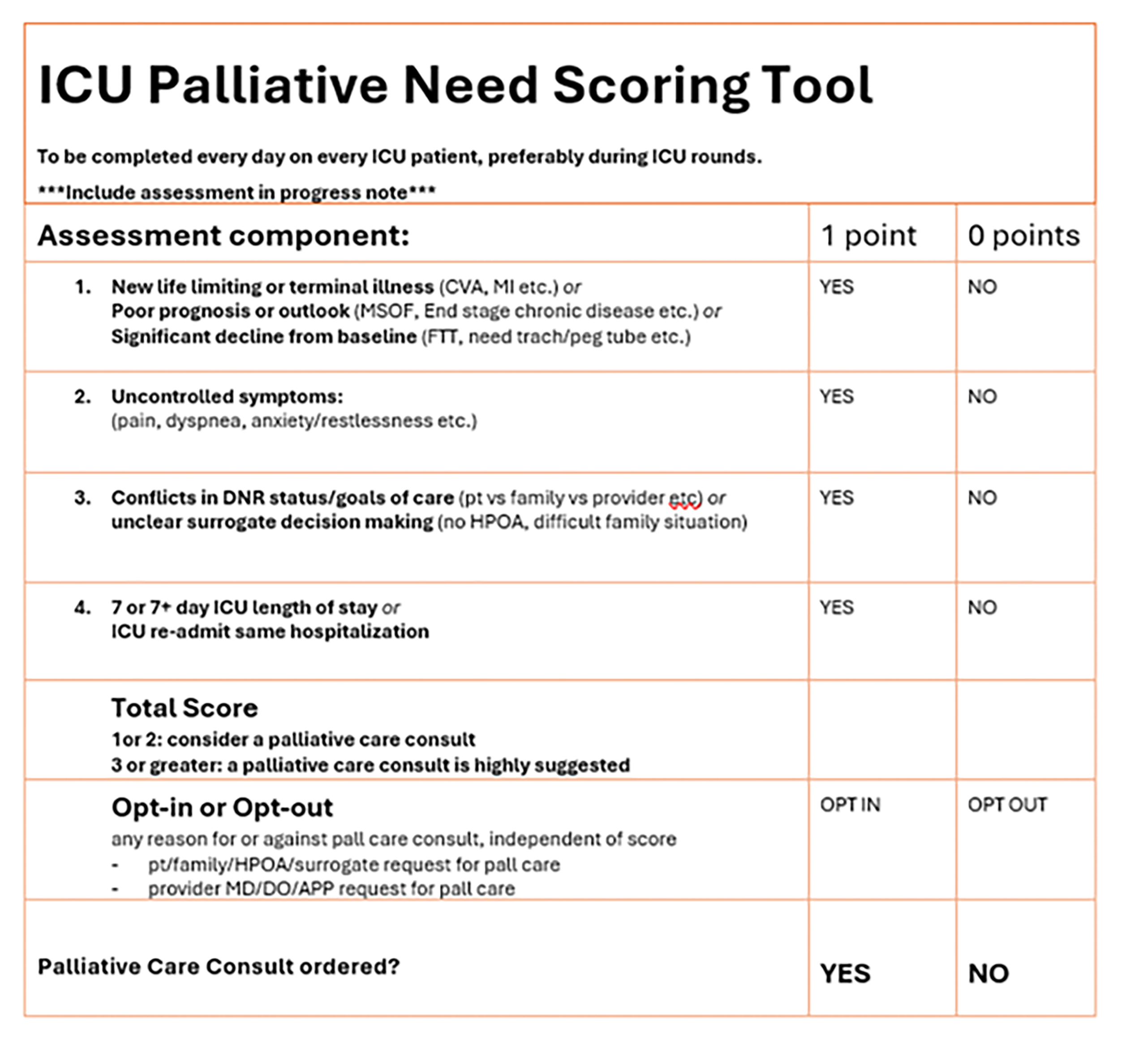
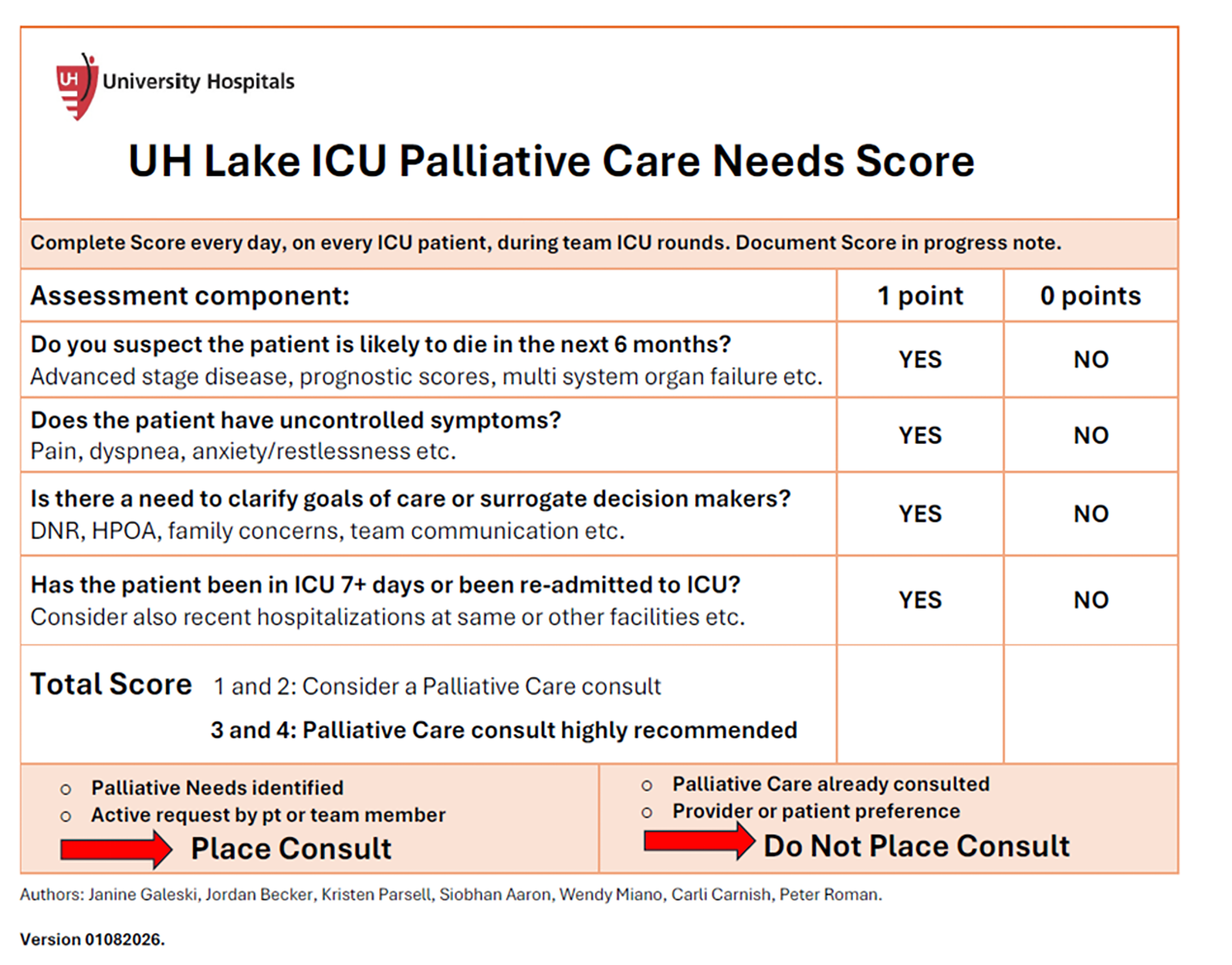
The first intervention developed was a scoring tool based on standardized referral criteria as suggested by literature review and already existing scoring tools (Nelson et al, 2010; Nelson et al, n.d.; LifeChoices Program of Palliative Care, n.d.; Stratis Health, n.d.). The four criteria included end-stage disease or near-end-of-life status, symptom burden, length of stay, and unclear goals of care (Figure 1). The tool allows caregivers to quickly answer four yes-or-no questions, yielding scores from 0 to 4. A higher score indicated greater palliative care needs and prompted the user to consider referral for scores of 3 and 4. To test the potential impact of the Scoring Tool on referral practices, quantitative baseline data was collected before its implementation. Each occupied ICU room was scored using the tool to determine whether a palliative care consult had been placed on that patient.
This was followed by training the provider and nursing team on the Quality Improvement initiative, content on the areas with identified knowledge gaps, and on the purposes and implementation processes surrounding the scoring tool. This training was mandatory for providers and voluntary for nursing and provided continuing education credit to entice participation. The event was recorded and made available for those who could not attend live as well as to serve as a resource by ICU team members.
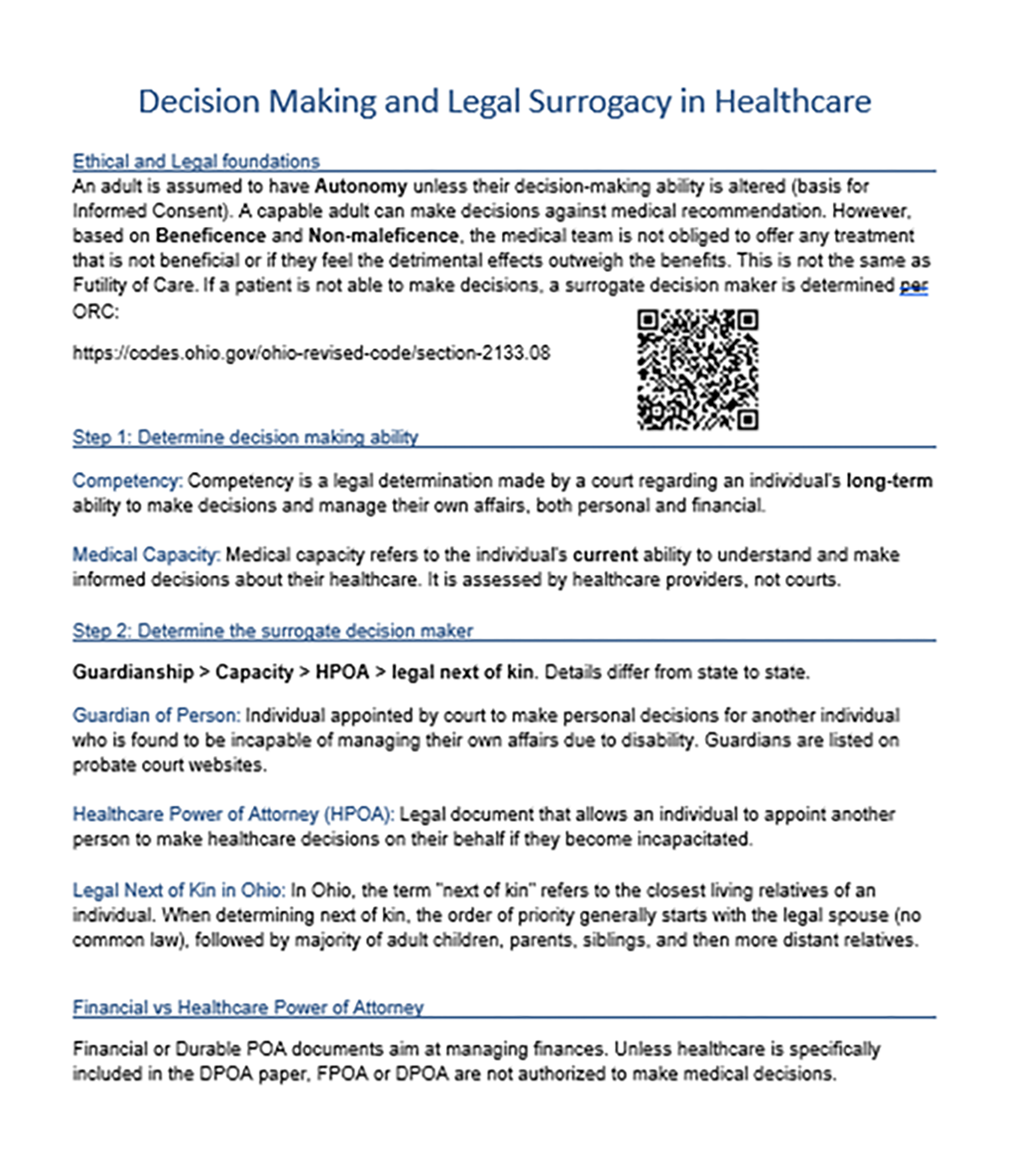
The second intervention aimed at standardizing the knowledge and language used by providers and nurses when addressing the most common palliative care topics, such as end of life and surrogate decision making. A reference card with the Advanced Care Planning principles, including a QR code to the relevant Ohio Revised Code section, was posted at all provider and nurse ICU workstations (Figure 2).
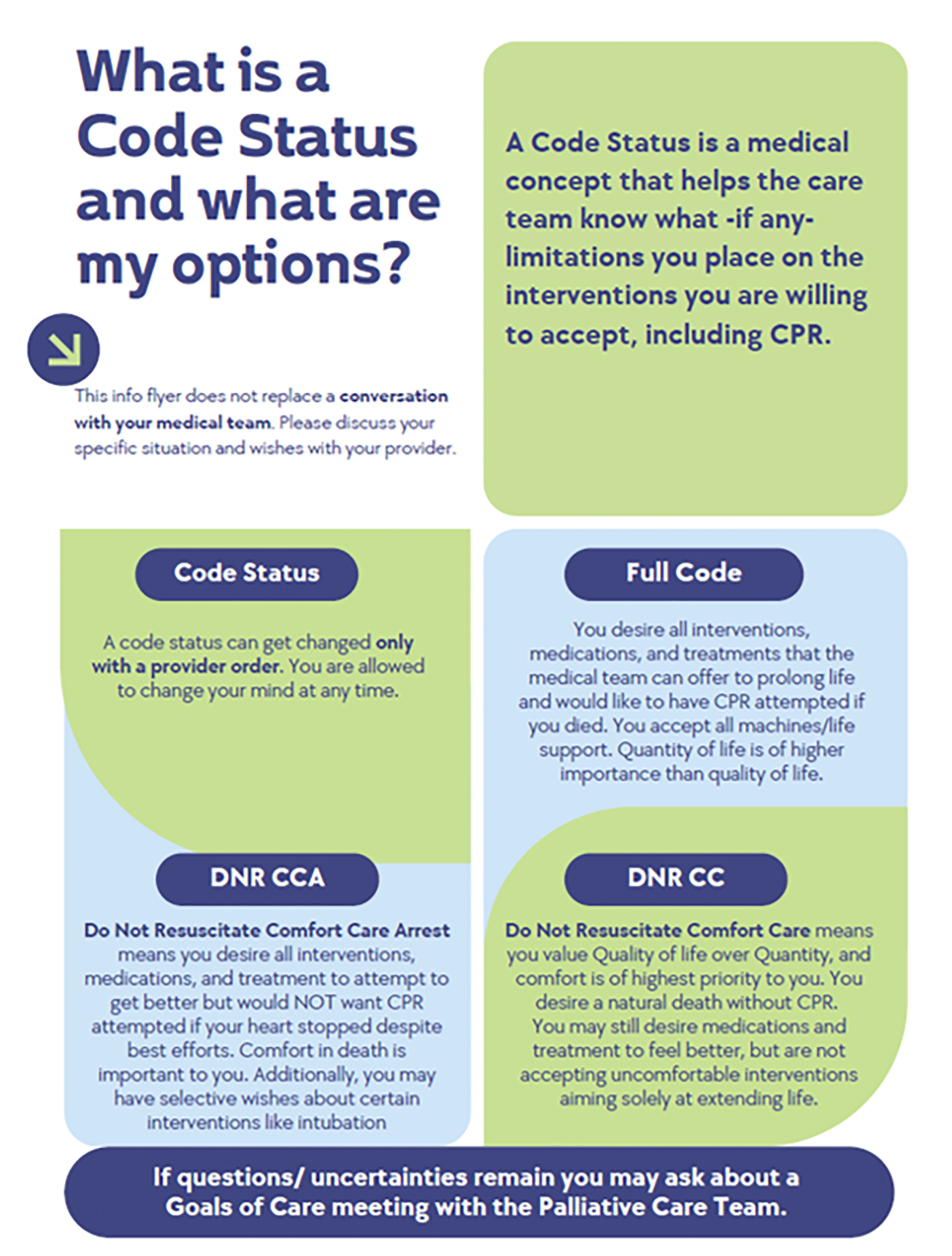
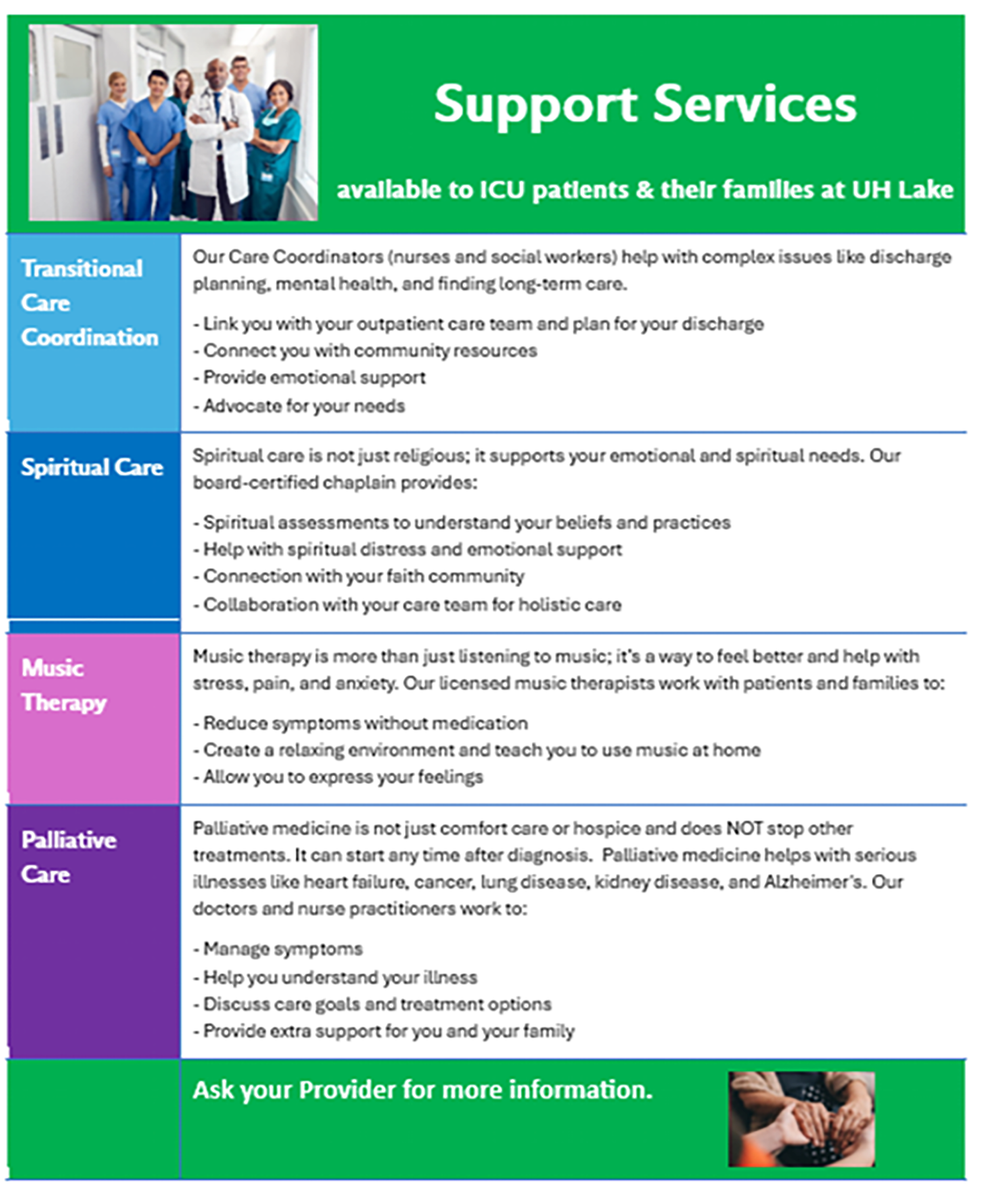
 The team then designed two types of educational materials for patients that were placed in patient ICU welcome folders and could readily be referenced in conversations with the medical and nursing team. One handout included information about options and language regarding Code Status (Figure 3) and the other about available ICU resources and services, including ways to access palliative care services (Figure 4).
Finally, the scoring tool was implemented for use at ICU team rounds for four weeks: for every patient, every day. Post-intervention, data about patient scores in occupied ICU rooms was collected. Parallel to this, qualitative data was collected through surveys and targeted conversations throughout this timeframe. At the end of the trial period, the scoring tool results and feedback on the interventions were presented to senior hospital and ICU leadership. The process and the scoring tool were refined based on feedback and handed off to the ICU team as permanent process owners.
Results
Implementation of the Code Comfort interventions led to measurable improvements in the identification of ICU patients with unmet palliative care needs. During the four-week pre-intervention period, the 21-bed ICU recorded 241 patient days (beds occupied), of which 44 were palliative patient days (beds had a palliative referral in place), averaging 1.7 palliative patients per day. Scoring was completed by bedside nurses, and patients with palliative referrals in place were also scored by the palliative care nurse practitioner. This allowed at least partial validity testing of the tool. Results showed wide variation in how palliative needs were assessed, with some patients having a score that was as much as 3 points lower when scored by the nurse than by the palliative care nurse practitioner.
In the four weeks following implementation, 223 patient days were recorded, including 59 palliative patient days, increasing the daily average to 2.36 palliative patients per day. This represents a 34% increase in patients with palliative consults. Throughout this timeframe, primary scoring was completed by ICU providers during daily rounds and although variation persisted, the range narrowed, suggesting improved consistency in the application of criteria. While the average palliative score per patient did not increase, more patients were recognized as meeting referral criteria, indicating that the intervention improved detection even though it has to be noted that unless the patient was deemed end-stage disease or being near the end of life, they still were not referred to palliative care even if they met the other three criteria.
Qualitative feedback reinforced these findings. In the post-intervention survey (N=14), which included all members of the ICU team, 100% of respondents agreed that the scoring tool and its associated materials were beneficial and 50% reported experiencing less moral injury and distress now (Table 1). The ICU team confirmed enhanced communication, stronger collaboration between ICU and palliative teams, and a clearer appreciation of palliative care beyond endoflife discussions. Participants also identified opportunities for future refinement, including integrating the scoring tool into the electronic medical record and ensuring consistent use during rounds.
Interpretation
The Code Comfort initiative demonstrated that a structured process can meaningfully improve ICU teams’ identification of patients with unmet palliative care needs. The decreased moral distress in nursing and provider staff speaks to the ability to better address human suffering and to treat patients holistically, meeting ICU team members’ and patients’ needs. Although the average palliative score per patient did not increase, the number of patients recognized as appropriate for referral rose by more than onethird. This suggests that the intervention improved detection. The narrowing of scoring variation indicates that shared language, education, and standardized criteria helped clinicians apply the tool more consistently during daily rounds.
Qualitative feedback reinforced these quantitative gains. The ICU team reported clearer expectations, improved collaboration with the palliative care team, and a broader understanding of palliative care as supportive care rather than solely endoflife planning. These cultural shifts are essential for sustaining practice changes in highacuity environments. At the same time, persistent reliance on terminal status as the primary trigger for referral underscores the need for ongoing education and reinforcement of upstream palliative principles.
Limitations and Discussion
 This project was conducted as a singlesite quality improvement initiative, and its findings are therefore specific to the workflow, culture, and staffing patterns of one ICU. Data were collected anonymously, “per bed,” rather than patient-specific, in accordance with non-IRB QI standards. Hence, the team was unable to analyze patient-specific scoring trends or determine how individual clinicians scored or otherwise adapted their practice over time. Variation among attending physicians persisted, suggesting that personal clinical style continues to influence referral decisions despite standardized criteria.
Additionally, the scoring tool was not integrated into the electronic medical record, limiting automation and potentially affecting consistency during rounds. While early outcomes are promising, longerterm effects, such as changes in length of stay and patient experience, were beyond the scope of this initial project and warrant future evaluation.
Conclusion
Adapting elements of QI and process management to hospital-based referral processes is a viable approach to conducting gap analyses, identifying key stakeholders, clarifying process ownership, and standardizing language and workflow. To advance generalized knowledge on this topic, multi-site implementation with IRB approval and the ability to track individualized data would be beneficial. Overall, the multidimensional interventions throughout this project targeted the needs of patients, the ICU team, and the palliative team: they strengthened collaboration, improved recognition of patient needs, and laid the groundwork for a more reliable and equitable referral process across the institution.
References
Courtright, K. R., Madden, V., Bayes, B., Chowdhury, M., Whitman, C., Small, D. S., Harhay, M. O., Parra, S., Cooney-Zingman, E., Ersek, M., Escobar, G. J., Hill, S. H., & Halpern, S. D. (2024). Default palliative care consultation for seri-ously ill hospitalized patients: A pragmatic cluster randomized trial. JAMA, 331(3), 224–232. https://doi.org/10.1001/jama.2023.25092
Gesensway, D. (2016). Bringing palliative care consults to the ICU. Today’s Hospitalist. https://todayshospitalist.com/bringing-palliative-care-consults-icu/
Haroen, H., Maulana, S., Harun H., Mirwanti, R., Sari, C. W. M.,Platini, H., Aravah, N. I., Padila, P., Amirah, S., & Pardosi, J. F. (2025). The benefits of early palliative care on psychological well-being, caregiver burden, and quality of life: A systematic re-view and meta-analysis. BMC Palliative Care, 24:120. https://doi.org/10.1186/s12904-025-01737-y
LifeChoices Program of Palliative Care (n.d.). How long can a person live on palliative Care? Understanding Life Expectancy. https://www.mylifechoice.org/blog/how-long-can-a-person-live-on-palliative-care
Palliative Performance Scale (PPSv2) version http://www.victoriahospice.org/sites/default/files/imce/PPS%20ENGLISH.pdf. Pal-liative Performance Scale (PPSv2) version 2. Medical Care of the Dying, 4th ed; p.120. ©Victoria Hospice Society, 2006. Copy-right Victoria Hospice Society: www.victoriahospice.org
Nelson, J. E., Bassett, R., Boss, R. D., Brasel, K. J., Campbell, M. L., Cortez, T. B., Curtis, J. R., Lustbader, D. R., Mulkerin, C., Puntillo, K. A., Ray, D. E., & Weissman, D. E. (2010). Models for structuring a clinical initiative to enhance palliative care in the intensive care unit: A report from the IPAL-ICU Project. Critical Care Medicine, 38(9), 1765–1772. https://doi.org/10.1097/CCM.0b013e3181e8ad23
Nelson, J. E., Campbell, M. L., Cortez, T. B, Curtis, J. R, Frontera, J. A, Gabriel, M., Lustbader, D. R., Mosenthal, A. C., Mulkerin, C., Puntillo, K. A., Ray, D. E., Bassett, R., Boss, R. D., Brasel, K. J., Weissman, D. E. (n.d.). Implementing ICU screening criteria for unmet palliative care needs: A guide for ICU and palliative care staff. Center to Advance Palliative Care. https://media.capc.org/filer_public/80/be/80be3587-6ca1-4eb8-93f0-7fa0e30cd153/76_66_ipal-icu-implementing-icu-screening-criteria-for-unmet-palliative-care-needs.pdf.
Stratis Health (n.d.). Palliative care screening tool. https://www.yumpu.com/en/document/view/26801946/palliative-care-screening-tool-stratis-health
Temel, J. S., Greer, J. A., Muzikansky, A., Gallagher, E. R., Admane, S., Jackson, V. A., Dahlin, C. M., Blinderman, C. D., Jacobsen, J., Pirl, W. F., Billings, J. A., & Lynch, T. J. (2010). Early palliative care for patients with metastatic non–small-cell lung cancer. New England Journal of Medicine, 363(8), 733–742. https://doi.org/10.1056/NEJMoa1000678
The Council for Six Sigma Certification. (2018). www.sixsigmacouncil.org