
When a child experiences a medical emergency, every second matters. Clinical expertise is essential, but so are teamwork, communication, leadership, and the ability to respond effectively under pressure. At Oklahoma Children’s Hospital, nursing leaders, providers and educators are using innovative in-situ simulation to strengthen workforce readiness, improve emergency response, and proactively identify patient safety risks before they affect care.
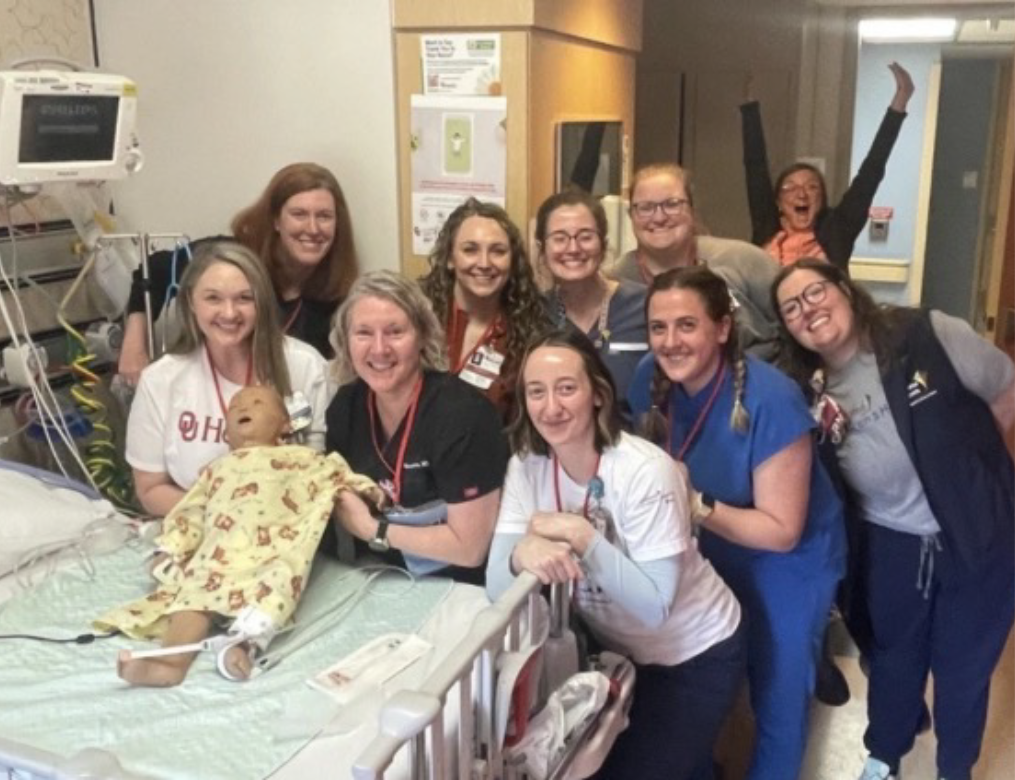
Unlike traditional simulation conducted in dedicated training centers, in-situ simulation takes place directly in patient care areas using the same equipment, workflows, and interdisciplinary teams involved in real emergencies. These unannounced mock code events create realistic learning opportunities while allowing teams to evaluate how people, processes, technology, and the environment function together during high-risk situations.
The nurse-led program brings together nurses, physicians, respiratory therapists, pharmacists, technicians, residents, students, and supports staff in low-dose, high-frequency simulation experiences conducted during routine operations. Scenarios are designed around pediatric resuscitation principles and Team STEPPS® communication strategies, allowing participants to practice emergency response activation, leadership, role clarity, escalation of care, and closed-loop communication in real time.
What makes the program unique is its focus on more than clinical skill development. Following each simulation, facilitators lead structured debriefings using the Gather-Analyze-Summarize (GAS) framework. These conversations create a psychologically safe environment where frontline team members can openly discuss what worked, identify opportunities for improvement, and raise concerns about system vulnerabilities.
The simulations have uncovered valuable insights related to equipment accessibility, communication processes, emergency workflows, role clarity, and reliability of care delivery systems. Findings are shared with organizational leaders and integrated into education, quality, safety, and operational initiatives, transforming frontline learning into meaningful system improvements.
Participants consistently report increased confidence in responding to emergencies, improved understanding of interdisciplinary roles, and greater comfort speaking up during high-stress events. More importantly, the program creates a sustainable mechanism for identifying latent safety threats before they reach patients, helping advance the organization’s commitment to high reliability and zero harm
The success of this initiative highlights the vital role nurses play in connecting education, patient safety, and operational excellence. Nursing leaders and educators collaborated closely with interprofessional partners to design, implement, and continuously improve the program. Through shared learning and structured reflection, teams are not only enhancing emergency preparedness but also strengthening a culture of collaboration, continuous improvement, and psychological safety.
As healthcare organizations continue to navigate increasing complexity, innovative approaches such as in-situ simulation offer practical and scalable strategies for preparing teams to perform at their best when it matters most. By bringing learning directly to the bedside and proactively testing systems in real-world environments, nurses are leading the way in building resilient, confident, and highly reliable teams ready to provide exceptional care for every child and family.
Cherrylene Montano, BSN, MHA, CCRN, NE-BC, CE-NP, Associate Vice President, Pediatrics, Oklahoma Children’s Hospital
Mikayla Gathers, BSN, RN, Clinical Education Manager, Oklahoma Children’s Hospital
Lauren Leuck, MSN, RN, Clinical Nurse Educator, Oklahoma Children’s Hospital
Spencer Fangman, BSN, RNC-OB, Clinical Nurse Educator, Oklahoma Children’s Hospital
Amy Sparkman, MD; Assistant Professor of Pediatrics, Associate Program Director Pediatrics Residency., Medical Director, CSETC