

Peer Reviewed
Central-line associated bloodstream infections (CLABSIs) represent a significant category of healthcare-associated infections (HAIs), which are among the most common and potentially life-threatening. A CLABSI is diagnosed when pathogenic microorganisms are isolated from a patient’s blood culture or the catheter tip of a removed central venous access device (CVAD), and these pathogens are not related to an infection at any other body site. CLABSIs can also manifest as localized infections at the insertion site of the CVAD, characterized by clinical signs such as induration, erythema (redness), localized heat, pain, or the presence of purulent drainage (Inamdar et al., 2018). Patients who are treated in the intensive care unit (ICU) are particularly vulnerable to acquiring HAIs, including CLABSIs, due to the severity of their underlying medical conditions, and many times, their CVADs are inserted during emergent or urgent clinical situations.
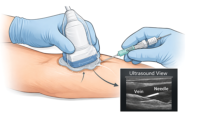
CVADs are specialized intravenous catheters that are inserted into a large vein in the body, typically in the upper arm, mid-upper chest, or the side of the neck, with the distal tip of the catheter threaded to a position close to the heart. These small and flexible tubes are essential for patients who require frequent or prolonged venous access for various medical needs. These needs include administering multiple intravenous (IV) medications, such as antibiotics or chemotherapy agents, the infusion of nutritional IV fluids, the transfusion of blood products, the continuous monitoring of central venous pressures, and/or the need for multiple venous blood withdrawals for diagnostic testing. Compared to peripheral IV lines placed in the hands or lower arms, CVADs can remain in place for longer durations and can support the infusion of more significant fluid volumes.
The importance of systematically evaluating the quality of nursing practice has long been recognized. Florence Nightingale, a pioneer in nursing, defined the nurse’s role as integral to providing high-quality healthcare. Her early work involved utilizing statistical measures to correlate patient outcomes, effectively laying the foundation for the principles of evidence-based practice (Montalvo, 2007).
The National Database of Nursing Quality Indicators™ (NDNQI®) serves as a national benchmark for assessing nursing care quality at the unit level by regularly reporting outcome indicators. The prevention of CLABSIs is a key indicator rigorously tracked within the NDNQI framework (Montalvo, 2007; NDNQI, 2015). The benchmark goal for healthcare organizations reporting to NDNQI is a CLABSI rate of 0.765. In the United States, the estimated national average CLABSI rate within ICUs for 2020 was 0.87 per 1000 central line days (Toor et al., 2022). Within the context of a Midwest urban community hospital, the reported CLABSI rate by the Infection Prevention Department in June 2019 was 0.7 per 1000 central line days. However, this rate alarmingly doubled during the subsequent COVID-19 pandemic to 1.41 per 1000 central line days. This increase coincided with a significant decline (31.6%) in nurses’ adherence to evidence-based activities specifically designed to prevent CLABSI, suggesting a potential link between compliance and infection rates. It is important to acknowledge that the extraordinary demands placed on healthcare professionals during the pandemic, significantly limited the time nurses could dedicate to direct bedside care (Woods-Hill et al., 2021). Consequently, achieving and maintaining optimal compliance with established CLABSI prevention bundles was a persistent challenge.
To address the ongoing threat of CLABSIs, the Infection Prevention and Control Department, the hospital implemented specific evidence-based measures. These included daily discussions regarding the continued necessity of each CVAD, routine dressing changes every seven days (and immediately if the dressing becomes soiled or partially removed), scheduled IV line tubing changes every 96 hours, the consistent use of needleless access devices, and the strict protocol of vigorously scrubbing the hub of the access device before each use. Furthermore, hospital nurses must complete an annual competency checklist focused on central venous catheter management. At the beginning of 2021, the hospital’s overall compliance rate with these critical measures was a concerning 31.6%. This low baseline was further complicated by severe disruptions in the supply chain, affecting the availability of essential central line care products, and an increased reliance on travel and agency nurses who were not initially mandated to complete the hospital’s central line bundle competency assessments.
Implementation Science and the COM-B Model
This study adopted the principles of implementation science to effectively address these multifaceted challenges and ultimately improve CLABSI prevention efforts. Implementation science (IS) is the study of methods to promote the integration of research and evidence-based practice into healthcare policy and practice (Roberts, Young, & Duff, 2023). Facilitating changes in nursing practice requires individual behavior change and the sustained continuation of those new behaviors. We utilized the IS Capability, Opportunity, Motivation, equals Behavior (COM-B) model as its theoretical framework to understand the factors influencing these behavioral shifts and to guide the development of effective and sustainable interventions. The COM-B model posits that for a behavior to occur, an individual must possess the psychological and physical ability (Capability), have the social and physical circumstances that enable the behavior (Opportunity), and experience the desire or need to perform the behavior more than other competing activities (Motivation; Michie, van Stralen, & West, 2011; Murphy et al., 2023). These three core components interactively and dynamically influence one another (McDonagh et al., 2018; West & Michie, 2020). Specifically, capability and opportunity can act as facilitators or barriers that significantly influence motivation translation into actual behavior. It is theorized that a sufficiently impactful change strategy can influence nurses’ underlying determinants of behavior, leading them to prioritize the new, evidence-based behaviors over existing practices, thereby reinforcing long-term adoption (McDonagh et al., 2018; West & Michie, 2020). The Woods-Hill et al. (2021) tool was an investigator-developed survey for assessment of CLABSI, and the questions were not validated using psychometric tests. If our study results are positive, we plan to conduct a larger study and obtain psychometric results.
Research Purpose and Question
Building upon this theoretical foundation, utilized by Woods-Hill et al. (2021) study, we used the COM-B framework survey to assess nurses’ knowledge of CLABSI bundle performance and to identify specific barriers to compliance. The specific research question guiding this investigation was: will the administration of the COM-B survey to nurses, identify issues surrounding compliance with the CLABSI bundle and increase CVAD dressing change skill technique result in decreased CLABSI rates and increase compliance rates?
METHODS
This cross-sectional study design was conducted through an academic-practice partnership between a Midwest School of Nursing and an urban community hospital, an initiative to foster new knowledge through research and evidence-based practice projects (AACN, 2012). The primary investigator (PI), a member of this partnership, provided overall study oversight. Each participating unit (the Cardiovascular Recovery [CVR], Progressive Care Unit [PCU], and Hemodialysis [HD] units) had a nurse serving as a Co-PI assisting with participant recruitment and survey administration online. Outcomes to be measured by COM-B results and comparison of compliance and CLABSI rates 3 months after survey intervention. These units were chosen because of increased number of patients with CVAD.
Participation in the study was voluntary, and flyers with study information were posted in all participating units. The eight-question COM-B survey was administered online, and it was accessible via a QR code or direct web link. The survey also collected the following demographic information from participating nurses: primary shift, highest level of education, professional certifications, and years of experience as a registered nurse. The study was approved by Institutional Review Board of a Midwest hospital and was funded by the hospital’s Foundation. The authors certify that they have No Conflict of Interest in the subject matter or materials discussed in this article.
RESULTS
A total of 42 nurses completed the survey with average years of experience 14, 72% with BSN degrees, and 71% worked on day shift.
- Capability (knowledge, memory, attention, decision process; physical capacity): All nurses (100%) completed an annual central line competency. In the survey, 88% of nurses reported psychological capability to complete dressing changes.
- Opportunity (environment, resources, social influence): Seventy-nine percent (79%) of nurses stated they had the opportunity to complete dressings despite clinical demands, 88% reported they could ask for help if needed, and 69% indicated that supplies were available.
- Motivation (professional role/identity, beliefs about consequences): Most of the nurses (80%) felt self-motivated to perform the tasks. Nurses reported being motivated by the understanding that non-compliance could lead to infection and poor patient outcomes. A key barrier identified was the lack of a shared understanding of CLABSI bundle care among nurses (Woods-Hill et al., [2021]; Table 1).
- COM-B = Behavior (optimal CLABSI Bundle Performance): The hospital’s overall Infection Prevention compliance rate for the CLABSI bundle increased significantly from 31.6% in 2021 to 98% by 2023 after implementing multifaceted interventions emphasizing compliance (Woods-Hill et al., 2021).
During the six-month study period, there were two potential CLABSI events, both occurring in post-operative open-heart surgery patients who underwent aortic dissection repair. Deep dive assessments were performed in both situations, which is an in-depth evaluation of the events beginning at admission, then up to the event. The deep dive assessments of both patients’ electronic medical records (EMRs) were accomplished by an interdisciplinary team, including the facility’s quality and safety specialist (Gaughan et al., 2024). The team concluded that these infections originated from other sources and were not related to the CVAD or insertion site. Retrospective audits of unit compliance rates during the study period revealed a 96% adherence to CLABSI prevention bundles.
DISCUSSION
This study aimed to understand the factors influencing nurses’ compliance with CLABSI prevention bundles in a Midwest urban community hospital, utilizing the COM-B model as a theoretical framework. The findings revealed nurses’ high self-reported psychological capability to perform dressing changes, supported by the 100% completion rate of return demonstrations during annual competencies. Nurses also expressed strong motivation rooted in their understanding of the detrimental consequences of CLABSIs. However, challenges related to opportunity were identified, particularly concerning the impact of clinical demands and occasional limitations in the availability of necessary supplies. The hospital significantly increased overall CLABSI bundle compliance rates from 31.6% in 2021 to 98% by 2023, coinciding with multi-intervention efforts.
Opportunity as a Barrier to Compliance
Despite nurses reporting high levels of capability and motivation, the identified challenges related to opportunity highlight a critical area for intervention. The constraints of clinical demands and intermittent supply shortages resonate with existing literature on barriers to evidence-based practice implementation. The impact of the COVID-19 pandemic likely exacerbated these opportunity barriers, as evidenced by the initial decrease in compliance observed in this study, mirroring broader trends reported in Abubakar et al. (2023), Peconi et al. (2025), and Ismaeil et al. (2023) highlighting the impact of the COVID-19 pandemic on healthcare-associated infections or adherence to preventive measures. Woods-Hill et al.’s (2021) study in a pediatric ICU also highlighted the strain of the pandemic on nurses’ ability to perform bundle elements consistently.
The strong self-reported motivation among nurses, driven by their awareness of the adverse patient outcomes associated with CLABSIs, highlights the importance of professional role identity and beliefs about consequences, as outlined in the COM-B model. This intrinsic motivation can be a powerful driver for behavior change, as supported by McClung et al. (2017) and Ayed et al (2024). However, the identified barrier of a lack of a common definition of CLABSI bundle care among nurses (as also noted in Alqalah et al., [2024]) suggests that even with high motivation, a lack of shared understanding and clarity regarding specific expectations can hinder consistent implementation.
Impact of Multi-Intervention Strategies
The significant increase in overall hospital CLABSI bundle compliance rates to 98% by 2023 suggests that the multi-intervention emphasis on compliance was effective. This improvement likely reflects a combination of factors, including education and competency initiatives, increased awareness, and potentially improved resource availability over time. This aligns with the principles of implementation science, which emphasizes using systematic approaches to integrate evidence-based practices into routine care (Chays-Amania et al., 2024; Nilsen, 2015; Oermann et al., 2022; Tucker et al., 2021).
Implications for Nursing Practice
This study has several strengths, including its application of the COM-B model to understand the behavioral factors influencing CLABSI prevention, its focus on multiple nursing units within a real-world clinical setting, and its collection of both survey data and observational compliance rates. However, it also has limitations. The sample size for the COM-B survey, while providing valuable insights, was relatively modest. The reliance on self-reported data introduces the potential for social desirability bias. While indicative of trends, the observational compliance data does not establish a direct causal link between specific interventions and CLABSI rates. Furthermore, the study was conducted within a single urban hospital, which may limit the generalizability of the findings to other settings. The COM-B is widely recognized in both public health literature as providing the foundation for understanding behavior change. More research is needed for psychometric statistics (Keyworth, et al., 2020; Michie et al., 2011).
The identified opportunity barriers highlight the need for ongoing efforts by nursing leadership and hospital administration to optimize workload, ensure adequate staffing, and maintain consistent access to necessary supplies. Unit Nursing Administration created and dissemination flyers with the items of the CLABSI bundle to instruct the nurses. The nurses identified that there was no didactic area for documenting abnormal changes of the CVAD and site to the electronic medical record. The nursing educator demonstrated to staff how to add additional written information with the check boxes. We continue to monitor nursing compliance with the CLABSI bundle.
Future research should consider larger studies to more definitively evaluate the effectiveness of specific CLABSI prevention strategies using the COM-B, while controlling for other potential confounding factors. Qualitative studies could provide richer insights into nurses’ experiences, perceived barriers, and facilitators to CLABSI bundle compliance.
CONCLUSION
Hospital-acquired infections, particularly CLABSIs, represent a preventable cause of morbidity and mortality. Nurses at the patient’s bedside have daily opportunities to adhere to facility-wide preventive bundle activities to optimize patient outcomes. Addressing nurses’ attitudes and behaviors contributed to improved performance. Effective teamwork and consistent care delivery across all nursing units are crucial. This study represents an initial step in applying implementation theory and evidence-based interventions to reduce CLABSI rates by assessing nurses’ capability, opportunity, and motivation to comply with bundle care. Multiple factors, including the availability of supplies, contributed to the observed increase in CLABSI Prevention Bundle rates. Future efforts should focus on fostering nursing advocacy for quality patient outcomes as a major contribution toward achieving the goal of zero CLABSI rates.
References
Abubakar, U., Awaisu, A., Khan, A. H., & Alam, K. (2023). Impact of COVID-19 pandemic on healthcare-associated infections: A systematic review and meta-analysis. Antibiotics, 12(11), 1600. https://doi.org/10.3390/antibiotics12111600
Alqalah, T. A. H. (2024). Mitigating risks in central line-associated bloodstream infection: A comprehensive insight into critical care nurses’ knowledge, attitudes, barriers, and compliance. BMC Nursing, 23(1), 497. https://doi.org/10.1186/s12912-024-02168-5
American Association of Colleges of Nursing. (2012). The guiding principles to academic-practice partnerships. https://www.aacnnursing.org/Academic-Practice-Partnerships/The-Guiding-Principles
Ayed, A., Ejheisheh, M. A., Salameh, B., et al. (2024). Insights into the relationship between professional values and caring behavior among nurses in neonatal intensive care units. BMC Nursing, 23(1), 692. https://doi.org/10.1186/s12912-024-02343-8
Chays-Amania, A., Schwingrouber, J., & Colson, S. (2024). Using implementation science to implement evidence-based practice: A discursive paper. Journal of Advanced Nursing. https://doi.org/10.1111/jan.16571
Gaughan, A. A., MacEwan, S. R., Gregory, M. E., Eramo, J. L., Rush, L. J., Hebert, C. L., & McAlearney, A. S. (2024). When infections are found: A qualitative study characterizing best management practices for central line-associated bloodstream infection and catheter-associated urinary tract infection performance monitoring and feedback. Nursing Reports, 14(2), 1058–1066.
Inamdar, D. P., Taklikar, S., & Baveja, S. (2018). Universal precautions in preventing central venous catheter-associated bloodstream infections: A study of “central line bundles” in MICU. International Journal of Current Microbiology and Applied Sciences, 7(1), 2484–2491. https://doi.org/10.20546/ijcmas.2018.701.298
Ismaeil, R., Nahas, A. R. F., Kamarudin, N. B., et al. (2023). Evaluation of the impact of COVID-19 pandemic on hospital-acquired infections in a tertiary hospital in Malaysia. BMC Infectious Diseases, 23, 779. https://doi.org/10.1186/s12879-023-08770-3
Keyworth, C., Epton, T., Goldthorpe, J., Calam, R., & Armitage, C. J. (2020). Acceptability, reliability, and validity of a brief measure of capabilities, opportunities, and motivations (COM-B). British Journal of Health Psychology, 25(2), 474–501. https://doi.org/10.1111/bjhp.12417
McClung, L., Obasi, C., Knobloch, M. J., & Safdar, N. (2017). Health care worker perspectives of their motivation to reduce health care-associated infections. American Journal of Infection Control, 45(10), 1064–1068. https://doi.org/10.1016/j.ajic.2017.05.002
McDonagh, L. K., Saunders, J. M., Cassell, J., Curtis, T., Bastaki, H., Hartney, T., & Rait, G. (2018). Application of the COM-B model to barriers and facilitators to chlamydia testing in general practice for young people and primary care practitioners: A systematic review. Implementation Science, 13(1), 1–19. https://doi.org/10.1186/s13012-018-0821-y
Michie, S., van Stralen, M. M., & West, R. (2011). The behaviour change wheel: A new method for characterising and designing behaviour change interventions. Implementation Science, 6, Article 42. https://doi.org/10.1186/1748-5908-6-42
Montalvo, I. (2007). The National Database of Nursing Quality Indicators™ (NDNQI®). Online Journal of Issues in Nursing, 12(3).
Murphy, K., Berk, J., Muhwava-Mbabala, L., Booley, S., Harbron, J., Ware, L., … Levitt, N. S. (2023). Using the COM-B model and Behaviour Change Wheel to develop a theory- and evidence-based intervention for women with gestational diabetes (IINDIAGO). BMC Public Health, 23(1), 894. https://doi.org/10.1186/s12889-023-15586-y
National Database of Nursing Quality Indicators. (2015). NDNQI. Retrieved December 4, 2022, from https://www.healthlinks.me/web/ndnqi.html
Nilsen, P. (2020). Making sense of implementation theories, models, and frameworks. In Implementation Science 3.0 (pp. 53–79). Springer International Publishing. https://doi.org/10.1007/978-3-030-03874-8_4
Oermann, M. H., Reynolds, S. S., & Granger, B. B. (2022). Using an implementation science framework to advance the science of nursing education. Journal of Professional Nursing, 39, 139–145. https://doi.org/10.1016/j.profnurs.2022.01.014
Peconi, C., Martini, E., Sarti, D., & Prospero, E. (2025). Impact of the COVID-19 pandemic on healthcare-associated infections and multidrug-resistant microorganisms in Italy: A systematic review. Journal of Infection and Public Health, Article 102729. https://doi.org/10.1016/j.jiph.2025.102729
Roberts, N. A., Young, A. M., & Duff, J. (2023). Using implementation science in nursing research. Seminars in Oncology Nursing, 39(2), Article 151399.
Toor, H., Farr, S., Savla, P., Kashyap, S., Wang, S., & Miulli, D. E. (2022). Prevalence of central line-associated bloodstream infections (CLABSI) in intensive care and medical-surgical units. Cureus, 14(3).
Tucker, S., McNett, M., Melnyk, B. M., Hanrahan, K., Hunter, S. C., Kim, B., … Kitson, A. (2021). Implementation science: Application of evidence-based practice models to improve healthcare quality. Worldviews on Evidence-Based Nursing, 18(2), 76–84. https://doi.org/10.1111/wvn.12495
West, R., & Michie, S. (2020). A brief introduction to the COM-B model of behaviour and the PRIME theory of motivation (Version 1). Qeios. https://doi.org/10.32388/WW04E6
Woods-Hill, C. Z., Papili, K., Nelson, E., Lipinski, K., Shea, J., Beidas, R., & Lane-Fall, M. (2021). Harnessing implementation science to optimize harm prevention in critically ill children: A pilot study of bedside nurse CLABSI bundle performance in the pediatric intensive care unit. American Journal of Infection Control, 49(3), 345–351. https://doi.org/10.1016/j.ajic.2020.08.019