

A Role Built for This Moment
The alert fired quietly on the screen. A child had arrived in triage, fever, tachycardia, lethargy. The new pediatric sepsis screening tool flagged it, the bedside nurse paused, and within the hour, that child was receiving IV fluids and antibiotics. That moment didn’t happen by accident. It happened because someone spent months earning the trust of skeptical nurses, redesigning clunky workflows, and teaching teams to see an alert as a partner in clinical reasoning.
Artificial intelligence and advanced clinical technology are reshaping care delivery, nowhere more urgently than in pediatric emergency medicine, where seconds matter and diagnostic complexity is high. The Clinical Nurse Specialist (CNS) who serves as a direct care provider and clinical informaticist occupies a uniquely influential position in this landscape.
This dual role creates a continuous feedback loop: what is learned at the bedside informs how technology is designed, and what is built into the system directly shapes what happens in the exam room. For Oklahoma, where nursing shortages, geographic barriers, and high patient acuity challenge care daily, this integrated role isn’t a luxury, it’s a necessity.
Two Roles, One Mission
As an advanced practice provider, the CNS evaluates acutely ill children and delivers family-centered care in one of healthcare’s most demanding environments. As a clinical informaticist, this same nurse leads clinical decision support initiatives and ensures that the tools placed in front of clinicians actually work, for the patients they serve and the staff who use them.
This value became clear during implementation of a pediatric sepsis screening workflow. Alert fatigue was high, engagement was minimal, and resistance was real. Rather than pushing through with a top-down mandate, the approach was deliberate: identify nurses willing to help solve the problem, then make them co-designers. That revised tool reduced unnecessary alerts, improved interprofessional communication, and contributed to significant reductions in time-to-treatment. The outcome wasn’t just a better workflow; it was a team that trusted the technology because they helped build it.
Three Spheres of Impact
The CNS role amplifies impact across all three NACNS spheres of influence. At the bedside, the CNS bridges the gap between the alert and the action, contextualizing data within the full picture of a child’s presentation. In nursing practice, where Oklahoma vacancies stretch emergency departments thin, reducing alert fatigue is a workforce issue, the CNS designs smarter tools and builds competency that makes technology feel empowering. At the systems level, the CNS participates in governance decisions about which tools are adopted and whether they perform equitably, precisely where nursing’s voice is most often absent, and most needed.
An Opportunity Oklahoma Cannot Afford to Miss
Healthcare AI is already here. The question isn’t whether nurses will be affected, it’s whether nurses will be at the table when those tools are built and governed.
That child in triage deserves a system that catches what an exhausted clinician might miss at 3 a.m., and a nurse who knows how to act on what the system finds. The CNS at the intersection of bedside practice and clinical informatics is uniquely equipped to build that system. The role is demanding. The impact is undeniable.
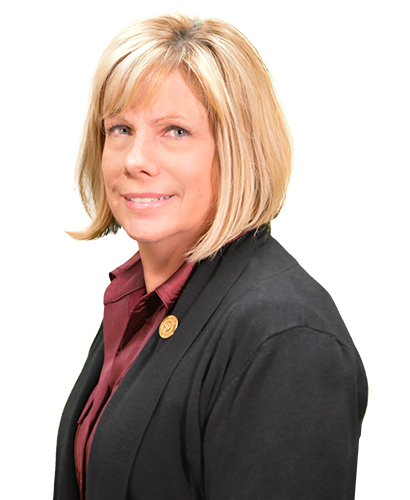
Karen A. Genzel, DNP, APRN, ACCNS-P, CPEN, is a Clinical Informaticist at OU Health and a Clinical Nurse Specialist in the pediatric emergency department and Child Protection Team at Oklahoma Children’s Hospital. She also serves as Adjunct Clinical Faculty at the University of Oklahoma Health Sciences Center Fran and Earl Ziegler College of Nursing. Dr. Genzel earned her BSN from Jacksonville University, her MSN from Old Dominion University, and her Doctor of Nursing Practice from the University of Oklahoma Health Sciences Center. Her work focuses on improving pediatric symptom recognition and healthcare delivery through clinical decision support, quality improvement, and machine learning.
Dr. Genzel leads and collaborates on initiatives to improve patient safety, sepsis recognition, interprofessional collaboration, and clinical outcomes. She is actively involved in professional nursing organizations and frequently shares her work at regional and national conferences.
References
American Association of Colleges of Nursing. (2021). The essentials: Core competencies for professional nursing education. https://www.aacnnursing.org/Portals/42/AcademicNursing/pdf/Essentials-2021.pdf
Char, D. S., Shah, N. H., & Magnus, D. (2018). Implementing machine learning in health care — Addressing ethical challenges. New England Journal of Medicine, 378(11), 981–983. https://doi.org/10.1056/NEJMp1714229
National Association of Clinical Nurse Specialists. (2019). Statement on clinical nurse specialist practice and education (3rd ed.). https://nacns.org/resources/practice-and-cns-role/cns-competencies/
Oklahoma Hospital Association. (n.d.). Healthcare workforce. https://www.okoha.com
Ronquillo, C. E., Peltonen, L. M., Pruinelli, L., Chu, C. H., Bakken, S., Beduschi, A., Cato, K., & Topaz, M. (2021). Artificial intelligence in nursing: Priorities and opportunities from an international invitational think-tank of the Nursing and Artificial Intelligence Leadership Collaborative. Journal of Advanced Nursing, 77(9), 3707–3717. https://doi.org/10.1111/jan.14855
Topol, E. J. (2019). High-performance medicine: The convergence of human and artificial intelligence. Nature Medicine, 25(1), 44–56. https://doi.org/10.1038/s41591-018-0300-7