

Background
Community. The single word evokes emotions of support and belonging. When the terms ‘community’ and ‘nursing’ are combined, the idea of home health and public health immediately comes to mind. Upon adding ‘nursing education’ to the collection of words, the picture that emerges is broader in the scope of care, yet more clearly defined in our culture today. There is a growing demand for nursing in community settings today as hospital resources are decreasing and the nursing shortage continues (Speroni, 2024). To meet this exigency, schools of nursing are invited to provide clinical experiences that prepare students for care delivered in the community.
The United States is identified as an “aging nation” with the national median age rising in 85% of the nation’s metro areas from 2020 to 2024 while the under-18 age population is falling (Anderson, 2025). Older adults outnumber children in eleven states, up from only three states in 2020 (U.S. Census Bureau, 2024). As adults are living longer, the care is moving from hospitals to homes and community settings including options such as long-term care, hospice, ambulatory care, respite care, and residential care. Care is also shifting to include nursing care provided in schools, community centers, outpatient centers, infusion centers, and wound clinics. Nursing education is increasingly called upon to prepare the next generation of nurses to care for older adults and must expand learning opportunities into the community settings “beyond the walls of acute care hospital settings” (Jeffrey et al., 2024, p.381). Schaffer and Hargate (2021) highlight that integrating community engagement into nursing education fosters a commitment to service and social responsibility, while also preparing students to care for patients in community settings, work with diverse populations, and understand the benefits and challenges of community-based nursing. This manuscript describes an initiative developed and implemented by the Johns Hopkins School of Nursing (JHSON) to create an “outside track,” in which the clinical training of nursing students is centered in community settings in Maryland, offering a focused experience in community-based nursing to a select group of students each semester.
Gap in Education
Since the 1990’s the use of community-based sites has been growing (Seyedfatemi et al., 2024). As the population of aging individuals has grown and physical health is more complex in the United States, more Americans are having their healthcare needs managed in outpatient settings within their communities (Seyedfatemi et al., 2024). There are challenges to our healthcare delivery which include suggested shorter hospital stays, fewer nurses in hospitals, and shrinking acute care facilities which leave individuals with only their communities to find support and care (Hudson et al., 2025; Kalantar-Zadeh et al., 2020; Mistri et al., 2023). The options found in communities are home health options, ambulatory clinics, long-term care facilities, respite homes, and residential homes. The need is to educate nurses and leaders who will understand the challenges of community nursing care.
The American Association of Colleges of Nursing (2021) identified gaps in education within areas such as chronic care, restorative and regenerative care as well as hospice and palliative care. Schools of nursing can help close this gap by offering structured community-focused clinical experiences that prepare nurses to work effectively in outpatient, ambulatory, and community settings (Mistri et al., 2023). This includes care coordination, management, and navigation of resource constraints while learning the impact of all aspects of community nursing.
The Inception of the Outside Track
The Outside Track, an initiative designed to engage students in community-based nursing, was launched in the summer of 2024 with a cohort of eight students, following the Dean’s vision to establish a dedicated community track for nursing students. It was created to expose students to the breadth of nursing practice in the community and outpatient settings. It provides students with another option for identifying and pursuing a nursing specialty in community nursing, a critically needed career path in our society. In the Outside Track, students become exposed to various populations and engage with nursing in a setting outside of the acute care setting that occurs in place of their traditional adult care clinical rotation, but is equally as valuable in terms of skills, techniques, procedures and policies involved in practice.
Program Design
The MSN Entry into Nursing at JHSON is a five-semester program. Semesters one through three are part of adult health nursing, with specialty areas provided in semesters three and four. The fifth semester is for students to choose their desired placements as they rank clinical sites for their first through fifth choices. In the Outside Track, students attend clinical sites such as wound care, elder care, assisted living, long term care facilities, and heart failure clinics. In the third semester, sites include an oncology infusion center, hospice, and outpatient clinics. Specialty sites in the third and fourth semesters include outpatient psychiatric day clinics, inner city schools, fetal testing centers for high-risk pregnancies, and outpatient community sites.
Within this community-based program, participants engage in clinical experiences across diverse practice settings in Maryland. As an initial step in launching the program, placements were concentrated in Johns Hopkins Hospital ambulatory and outpatient sites, as well as selected private sites. The long-term plan is to broaden partnerships and expand the use of clinical sites across Maryland in order to enhance these learning opportunities.
To identify the group of students who would like to participate and will be part of the community track through their graduation date, all students from the first semester cohort are invited to attend an information session if interested. Once the information is shared and questions are answered, students will submit their names and written intent to be part of the Outside Track to the Associated Director of Clinical Practice, who plans and coordinates the community and ambulatory sites. As mentioned before, students apply at the end of their first semester to begin their community participation in the second semester with their adult health rotation. Students are responsible to provide their own transportation, if needed, and they commit to accomplish the remaining semesters in the community setting. Opting out of the Outside Track is permitted but only at the end of the semester.
The inaugural group of the Outside Track, consisting of eight selected students, has successfully graduated in August 2025. The second cohort will graduate in May 2026. There are five cohorts in total currently, each group has an average of 8-10 participants.
The Impact
Students who have participated in the Outside Track have gained valuable learning through their community clinical experiences in the Baltimore region. Initial outcomes suggest that the Outside Track has had a positive impact on students, ambulatory and outpatient sites, preceptors, and the MSN Program at JHSON.
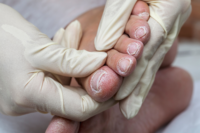
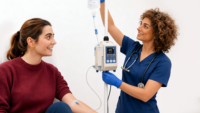
For students, the Outside Track provides meaningful opportunities to participate in nursing care within community-based programs and to learn about nursing practice beyond traditional acute care settings. Key learning domains have included clinical skills and procedures specific to community practice, such as wound care and infusion therapy. Exposure to care management and discharge planning across settings has also been influential. Students benefit from seeing interprofessional collaboration and teamwork in action across community agencies and from practicing clinical judgment and decision making in real time, often in settings with limited resources. Hudson et al. (2025) noted that such experiences help develop a collaborative mindset, deepen appreciation for teamwork, and strengthen understanding of contemporary healthcare delivery.
For ambulatory and outpatient sites, the Outside Track offers an opportunity to contribute to nursing education while fostering greater interest in nursing practice within neighborhoods and community settings. These sites play an important role in exposing students to the realities of community-based care and in expanding where nursing education takes place.
For preceptors and nurse educators, the Outside Track creates opportunities for direct involvement in student learning through both group-based and one-to-one teaching models. Although some sites continue to use the traditional model of one instructor with six to eight students, other sites rely on individual preceptors or nurse educators who work one-on-one with students in the clinical setting. In some cases, the identified preceptor is also the nurse educator responsible for providing both education and clinical experience. Students have especially valued the focused mentoring they receive from preceptors and educators. Nurses in these settings bring real-world knowledge of community practice and are essential to bridging the educational gap.
For the MSN Program at JHSON, the Outside Track aligns with the school’s mission to serve the community and has drawn attention to the importance of preparing nursing students to learn about community nursing. It also supports the broader goal of increasing the number of nurses who may choose to work in ambulatory, outpatient, and community settings after graduation.
In summary, the Outside Track is thriving and making significant contributions to students and their nursing education by providing clinical experiences that are community or outpatient based within Baltimore and around Maryland. While the Outside Track at JHSON is growing, there is a need for more nursing schools to expand their programs to include community nursing tracks to impact the entire state of Maryland and eventually the United States. These experiences assist with filling the gap in education by teaching nursing students how to provide care to those in need in the community as our population continues to age and seek healthcare from agencies close in proximity to their homes. As acute care settings decrease, the community and outpatient settings continue to expand. Nursing will be ready to meet the needs as we cultivate the educational requirements for clinical education.
References
Anderson, B. (Jun 27, 2025). U.S. median age hits new record high of 39.1 while under-18 population falls, finds new U.S. Census Bureau data. Cited March 18, 2026. https://401kspecialistmag.com/u-s-median-age-hits-new-record-high-while-under-18-population-falls/
Hudson, K. W., Muratore, L. G., & Lucas, L. S. (2025). Outside track: A new alternative for prelicensure nursing clinical. Journal of Nursing Education and Practice, 15(11), 46. doi:10.63564/jnep.v15n11p46
Kalantar-Zadeh, K., Wightman, A., & Liao, S. (2020). Ensuring choice for people with kidney failure-dialysis, supportive care, and hope. The New England journal of medicine, 383(2), 99-101. doi: 10.1056/nejmp2001794
Mistri, I. U., Badge, A., & Shahu, S. (2023). Enhancing patient safety culture in hospitals. Cureus, 15(12), e51159. doi: 10.7759/cureus.51159
Jeffrey, C., Quayle, T., & Rindlisbacher, D. (2025). Harnessing the untapped potential of ambulatory clinical placements in prelicensure nursing education. Journal of Nursing Education, 64(6), 381-384. https://doi.org/10.3928/01484834-20240429-03
Schaffer, M. A., & Hargate, C. (2022). Moving toward reconciliation: Community engagement in nursing education. Journal of Community Engagement and Scholarship, 8(1). doi: 10.54656/PFQK9362
Seyedfatemi, N., Peyrovi, H., Goharinezhad, S., & Oghli, S. H. (2024). Barriers and facilitators of community-based nursing development: A scoping review. Journal of Education and Health Promotion, 13(1), 488. doi: 10.4103/jehp.jehp_1329_23
Speroni, K.G. (2024). Overview and summary: Today’s nursing shortage: Workforce considerations. OJIN: The Online Journal of Issues in Nursing, 29(2). doi: 10.3912/OJIN.Vol29No02ManOS
United States Census Bureau (2024). [cited March 18, 2026] Retrieved from https://www.census.gov/library/stories/2025/06/metro-areas-median-age.html