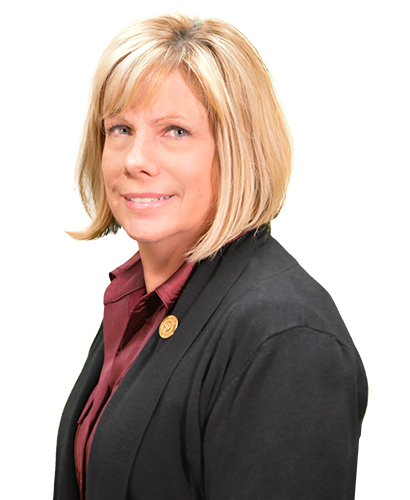

Yvette Conyers, DNP, RN, FNP-C, CTN-B, CFCN, CFCS, CNE, FADLN, CWCN-AP,
Associate Dean of Strategic Impact and Engagement at the University of
Maryland School of Nursing
Q: Congratulations on your recent induction into the National Academies of Practice. You’ve said that your passion centers on “meeting communities where they are and building trust-driven solutions to improve health equity.” Can you share an example of that work in action?
A: As President of the Rochester Black Nurses Association, I collaborated with physicians from the Black Physicians Network Rochester to create an initiative called Community Fighting COVID.
At the time, COVID-19 disparities among Black and Brown communities were painfully clear, specifically when it came to education, testing, and vaccination access. We knew trust had to be at the center of any solution, so we built a cross sector team of volunteers that included nurses, physicians, pharmacists, and even public transportation partners.
We converted city buses into mobile testing and vaccination units, then drove them to empty parking lots and other accessible locations within the community. People would enter through one door, receive education, testing, or vaccination, and exit through another. The presence of trusted Black and Brown clinicians made a real difference. Between 2021 and 2023, this model significantly improved testing and vaccination rates in the communities we served.
Q: You also played a key role in the passage of Maryland House Bill 783, which established one-time structural racism training for licensed health professionals. Tell us more about that initiative.
A: This work was grounded in collaboration at every level. Without the leadership of Dr. Lou Bartolo, past president of the Maryland Nurses Association, and the broader call to action from the American Nurses Association, this effort would not have happened.
Dr. Bartolo had the idea to move beyond implicit bias training and focus on structural racism in healthcare. He connected with the leadership at the University of Maryland School of Nursing, and my name was brought forward as a subject matter expert. Together, we worked to clarify the distinction between implicit bias and structural racism and explain why this education matters for all health professionals.
Despite significant national pushback against initiatives focused on diversity, equity, and inclusion at the time, Maryland was highly supportive. I developed a structural racism training that is currently being vetted through nursing and state regulatory channels.
The goal of the training and the legislations is to help clinicians understand that structural racism significantly impacts health, whether it’s housing, segregation, transportation, or access to care. And while we all have biases, many of those biases are rooted in long-standing systems and structures that influence how care is delivered today.
Q: Describe a defining moment in your career that shaped the nurse you are today.
A: Early in my career, I worked as a home care nurse, and that experience profoundly shaped how I understand health and nursing. Being inside people’s homes exposed me to the social determinants of health in very real ways. For example, insurance coverage, access to food assistance, and housing conditions directly affected whether someone could manage their illness or remain well.
I began to see that people’s health often depended less on individual choices and more on social and political structures. I wanted to meet people in their own spaces, in their own worlds, and address those upstream factors.
Later, those experiences led me into nursing education. I found that I loved teaching, mentoring, and guiding others, and I wanted to help future nurses understand concepts like health equity, diversity, inclusion, and cultural humility. Academia became the place where I could blend my clinical experience with teaching and advocacy.
Q: In your current role, what does mentoring and supporting other nurses mean to you?
A: I have had strong mentors throughout my career, and I knew I needed to pay it forward. The work of mentoring was more formal when I served as President of the Rochester Black Nurses Association. Now, however, mentoring looks a little different. It’s often more informal. In my role as a leader, I’ve learned that representation and visibility matter just as much as direct mentorship. I’m also interested in knowing the barriers that keep nurses from pursuing either formal or informal mentorship. I am committed to making the experience of mentorship and sponsorship more accessible, especially for nurses who may feel unsure about stepping forward.
Q: As a member of MNA, what would you like other Maryland nurses to know?
A: My colleague Dr. Danielle McCamey often says: “Your network is your net worth.” Networking opens doors to jobs, promotions, collaborations, and partnerships you didn’t even know existed. It’s important to get involved in whatever way feels meaningful to you. Whether your passion is policy, pediatrics, LGBTQ+ health, disability advocacy, or another area entirely, there is space for you within MNA. Getting involved may require you to say “yes” before everything is fully built, but it’s about leaving the organization better than you found it. And when it’s time for you to step back, you pass the baton to the next person knowing you helped create impact along the way.