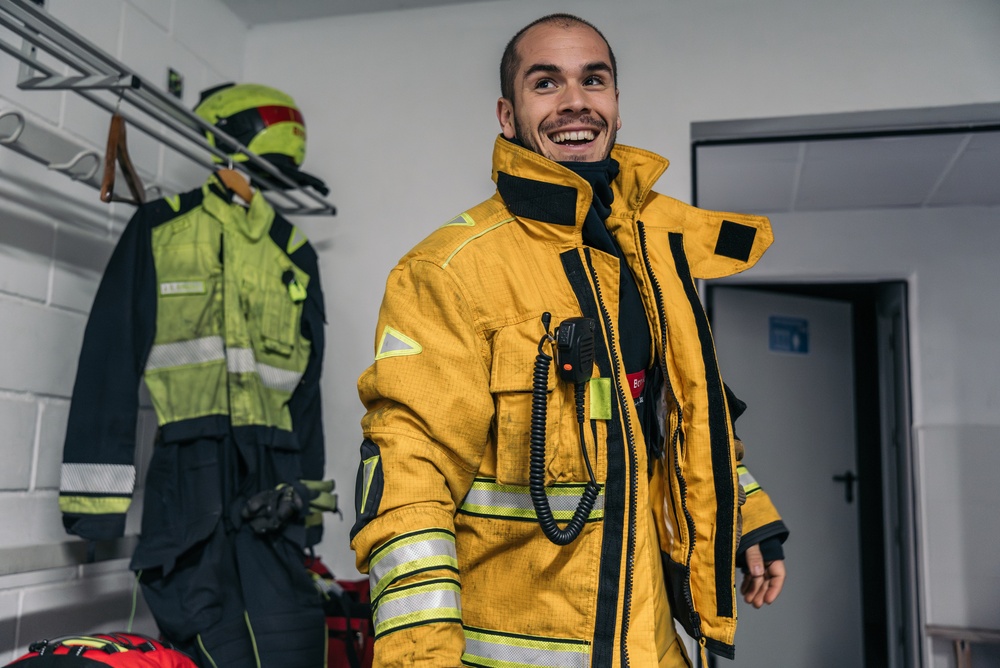
Firefighters enter homes, schools, highways, and businesses when communities are most vulnerable. They respond not only to fires but also to cardiac arrests, overdoses, behavioral health crises, injuries, hazardous exposures, and disasters. Their readiness is therefore a community health asset. Yet firefighter health is often separated from broader public health planning. Nursing can close that gap.
A community health issue
Firefighters face repeated smoke and chemical exposures, cardiovascular strain, disrupted sleep, extreme heat, heavy exertion, injury, and traumatic events. Occupational exposure as a firefighter is classified as carcinogenic to humans, and research by Horan and colleagues, the International Agency for Research on Cancer, and others also documents cardiovascular, sleep, and behavioral health concerns. These risks can be compounded by a culture that prizes toughness, reliability, and self-reliance and may make help-seeking more difficult.
When a firefighter delays care for hypertension, chest discomfort, depression, a changing skin lesion, or symptoms of sleep apnea, the consequences can extend to the family, crew, department, and public. Illness and injury may contribute to disability, staffing shortages, overtime, higher costs, and reduced operational readiness. Protecting firefighter health is therefore a form of community protection.
Why nurses should lead
Nurses combine clinical knowledge with prevention, education, care coordination, relationship-building, systems thinking, and advocacy. We also understand that identifying risk is not enough. People need a trusted pathway to understand results, obtain appropriate care, overcome barriers, and remain engaged. The fire station is a natural setting for this work, especially in rural and underserved communities where the fire service may be among the most visible and dependable public-safety resources.
Build with the fire service
A successful partnership begins with listening, not with a predetermined screening event or lecture. Nurses can ask firefighters, chiefs, union or association representatives, peer-support members, safety officers, and retirees which health concerns matter most, which services they trust, and what prevents follow-through. Volunteer and career departments may have very different needs and resources.
Trust is itself a nursing intervention. Before collecting health information, nurses can clearly explain who can see individual results, how records will be protected, what may be reported to leadership, and how clinical care differs from research, program evaluation, occupational screening, and fitness-for-duty examinations. Aggregate findings can guide department planning without exposing individual participants. Consistency also matters: nurses can return results, answer questions, and help address the barriers the partnership identifies.
Five connected actions
- Assess together. Combine available department data with confidential surveys, listening sessions, and firefighter experience. Select a small number of priorities jointly rather than assuming every department needs the same program.
- Bring prevention closer. Offer services that match local needs, such as blood pressure checks, cardiovascular risk review, sleep and behavioral health screening, vaccination education, cancer-screening navigation, or exposure-reduction education. Station-based care, telehealth, mobile services, and protected wellness time can reduce scheduling and geographic barriers. National NIOSH resources also can support firefighter safety, health, and cancer surveillance.
- Create confidential referral pathways. Before screening begins, identify realistic options for primary care, cardiology, sleep medicine, behavioral health, rehabilitation, and cancer screening. Account for cost, insurance, distance, wait times, shift schedules, and a firefighter’s preference for care outside the department’s immediate community.
- Make education operationally relevant. Connect hypertension, sleep, mental health, and cancer prevention to readiness, recovery, family life, and service. Peer supporters can normalize help-seeking and connect colleagues with care, while nurses provide the clinical structure and clear boundaries that keep the role safe.
- Measure and sustain the work. Track participation, identified risks, completed referrals, time to follow-up, screening completion, satisfaction, and confidence in seeking care. Longer-term indicators may include fewer preventable absences, stronger wellness policies, improved retention, and better coordination between health and public-safety systems. Avoid promising savings before the data support that conclusion.
Extend the partnership
Schools of nursing can contribute expertise in primary care, public health, mental health, occupational health, education, data analysis, and implementation science. Under supervision, students can support needs assessments, evidence reviews, education, resource mapping, and quality improvement. Firefighters must be partners—not simply research participants—and should help shape questions, recruitment, interpretation, interventions, and dissemination.
Families also matter. With firefighters’ support, nurses can help family members recognize warning signs, understand confidentiality, locate resources, and encourage care without making them responsible for diagnosis or treatment. Nurses also can convene health systems, public health agencies, community groups, municipal leaders, and philanthropic partners so that separate resources become one coordinated pathway.
Start with one relationship
A nurse doesn’t need a large grant or formal occupational health program to begin. Start with one fire department, one trusted relationship, and one achievable priority. Listen. Clarify confidentiality. Build a practical pathway. Measure what changes. Return the findings to firefighters, then expand based on what the partnership learns.
A healthier firefighter is better prepared to respond, recover, and remain in service. A resilient fire department strengthens the resilience of the entire community. That’s nursing’s power beyond the clinic: seeing the connection between individual health and community well-being—and acting on it.
Julian L. Gallegos, PhD, MBA, FNP-BC, NREMT, FAUNA, FADLN is Assistant Professor/Assistant Head for Graduate Programs at Purdue University, West Lafayette, IN.
Community impact in action: Questions for nurse leaders
- What health and access challenges do local firefighters identify?
- Are confidential referral options available for shift workers and first responders?
- How can nurses, students, faculty, and public health partners collaborate?
- Which individual, family, workforce, and community outcomes should be measured?
- How will firefighters participate in planning, evaluation, and dissemination?
References
Horan KA, Marks M, Ruiz J, Bowers C, Cunningham A. Here for my peer: The future of first responder mental health. Int J Environ Res Public Health. 2021;18(21):11097. doi:10.3390/ijerph182111097
International Agency for Research on Cancer. Occupational Exposure as a Firefighter. IARC Monographs on the Identification of Carcinogenic Hazards to Humans. 2023;132. ncbi.nlm.nih.gov/books/NBK597253/
Jeung DY, Hyun DS, Kim I, Chang SJ. Effects of emergency duties on cardiovascular diseases in firefighters: A 13-year retrospective cohort study. J Occup Environ Med. 2022;64(6):510-4. doi:10.1097/JOM.0000000000002490
Khoshakhlagh AH, Al Sulaie S, Yazdanirad S, Orr RM, Dehdarirad H, Milajerdi A. Global prevalence and associated factors of sleep disorders and poor sleep quality among firefighters: A systematic review and meta-analysis. Heliyon. 2023;9(2):e13250. doi:10.1016/j.heliyon.2023.e13250
National Institute for Occupational Safety and Health. Center for Firefighter Safety, Health, and Well-being. December 3, 2025. cdc.gov/niosh/centers/firefighter-safety-and-health.html
National Institute for Occupational Safety and Health. National Firefighter Registry for Cancer. December 9, 2025. cdc.gov/niosh/firefighters/registry/index.html
Ras J, Kengne AP, Smith DL, Soteriades ES, Leach L. Association between cardiovascular disease risk factors and cardiorespiratory fitness in firefighters: A systematic review and meta-analysis. Int J Environ Res Public Health. 2023;20(4):2816. doi:10.3390/ijerph20042816
Wright HM, Fuessel-Hermann D, Pazdera M, et al. Preventative care in first responder mental health: Focusing on access and utilization via stepped telehealth care. Front Health Serv. 2022;2:848138. doi:10.3389/frhs.2022.848138