Nurse leadership, an innovative nursing model, and valuing ourselves
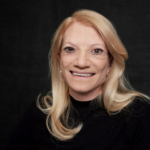
I recently sat down with a mentor and friend of mine, living legend Dr. Joyce Fitzpatrick. Dr. Fitzpatrick is the Elizabeth Brooks Ford Professor of Nursing and a Distinguished University Professor at Case Western Reserve University’s Frances Payne Bolton School of Nursing where she serves as the director of the Marian K. Shaughnessy Nurse Leadership Academy. She’s globally renowned for being a thought leader advancing our profession through research, mentorship, and numerous publications.
PS: Joyce, tell me about the exciting work that’s happening at the Marian K. Shaughnessy Nurse Leadership Academy!
JF: The foundation of everything we do at the Marion K. Shaughnessy Nurse Leadership Academy is built on our understanding that every nurse is a leader. And what we need to do as leaders at all levels is to empower nurses to view themselves as leaders. We do that in a number of ways. One is teaching them the knowledge, skills, and attitudes about leadership at the point of care as well as at the executive level. We’re all leading in different ways, and collectively, we could do more if we understood the power we have in healthcare. Think about the fact that there are 30 million nurses in the world….30 million nurses globally who are providing the majority of healthcare. And yet, we often aren’t viewed as leading healthcare and frequently, we, as nurses, don’t view ourselves as leading healthcare. We have to change our perspective on who we are and how we lead care, whether it’s at the bedside or at the healthcare policy table. Also, it’s not enough to be at the table, but you must be engaged at the table.
Through the Shaughnessy Academy, we’re building partnerships with other nursing organizations because no single organization can do everything. It’s all about relationships. For example, we recently embarked on a major leadership development and mentorship collaboration with nurses in Hong Kong. It’s exciting work. We also have different fellowship programs through the Academy for nurse leaders and nurse executives to help advance leadership acumen and trajectory. We’re here to support anyone who’s interested in advancing their self-leadership and leadership skills, attitudes, and behaviors.
PS: You’ve put some great pieces out lately that introduce the concept of a new nursing model or the idea of outsourcing nursing. This is fascinating because our world has changed and we can’t expect to solve new problems with old methods. Can you elaborate?
JF: We all know the potential of nurses and the untapped potential in care delivery. One of the major constraints is that nurses are employees of institutions. As we know, there’s no good way to cost out the work that we nurses do because it gets embedded in other costs within acute care facilities. If we could contract our professional nursing practice services to institutions, then we would control our work. We would be able to do only professional nursing work.
Because nurses are working 24 hours a day within acute care facilities, and no other professional group is available during some of those hours, nurses end up doing a lot of non-nursing tasks. Nurses know these tasks are important for patient care, so they do them. So, rather than restructuring the relationship with the organization, we kind of “fill in all the blanks.” Whenever nurses do non-nursing work, it’s usually because they believe it’s to the benefit of the patient. For example, if a patient needs to be transported immediately to get an x-ray or CT scan, a nurse will do it because they want to enhance the quality of care.
However, if we restructured our relationship to the organization and positioned ourselves as not employees but instead as owning our work, things could change. I think we missed an opportunity to strategically structure ourselves in relation to hospitals and healthcare institutions, similar to what physicians have done.
My premise is this: Why don’t we outsource all nursing care and create an organization, a corporation, a professional practice group, or whatever we call it, that’s specifically controlled by nurses, that only provides nursing services. And then we can get reimbursed for the care we provide. We just need to find bright innovative nurse leaders to implement this change.
PS: As we take stock of where the world is, within nursing and externally, and recognize how the world has drastically changed, what’s a big fear you have, both in nursing education and in nursing practice?
JF: I wouldn’t say I have any fears because I trust that we’re preparing enough front line and top-level nurse leaders to make changes. It’s a ripple effect. If you prepare one nurse as a leader and they touch the lives of 100 more patients, and 1,000 patients, and they tell the story of the value of nursing, we’re doing the right thing. All of us must tell people our value. It’s not enough to just do good work.
We must make sure that we translate our value to the public, because the public doesn’t really understand the work that nurses do. They still see us as low-level professional workers. A patient at an acute care facility doesn’t see all of what a nurse does. The patient doesn’t really understand that if a nurse isn’t monitoring every change that’s occurring, their health is going to be compromised. But we often don’t tell the patients what we’re doing. We need to say to them, “I’m your nurse, I’m going to be monitoring your health in these ways….”
Patients see nurses doing tasks but they don’t see the intellectual work that goes into every minute. That’s one thing I want to make sure we all do, tell our story to the public. I’m not fearful, but I urge us to make sure that in education and practice, nurses understand the value they bring and translate that into their interactions with patients and with the public.
If you want to learn more about how you can be a part of the international work of the Marian K. Shaughnessy Nurse Leadership Academy, please reach out to Department Assistant Lara Hamo at lxh639@case.edu or Director of the Global Nurse Leadership Program Christa Rubbelke at cxr436@case.edu. For more information about the education programs offered by the Academy, click this link: Education Programs | Frances Payne Bolton School of Nursing.
Dr. Fitzpatrick has been such a positive inspiration to me and to countless others. Specifically, she has helped quiet the negative talk that enters my brain and heart spaces and to manage any inner saboteurs (thank you RuPaul for this concept) that may say “I can’t” or “I’m not powerful enough” or “I don’t belong”… Even today in this conversation, Dr. Fitzpatrick shared the importance of understanding that all nurses are leaders and we must understand and own our value. After all, if we don’t value ourselves, who will?

Peter Stoffan, DNP, MPA, RN, CCRN, NEA-BC, CPXP is a Nurse Leader in the New York City Greater Metro Area. His passions in nursing include creating healthier work environments, inspiring current and future nurses to be involved in quality and performance improvement initiatives, and advancements in nursing research and nursing education.