As I enter my 28th year of nursing, I can confidently say I’ve seen the gamut of nursing onboarding. I’ve participated in orientation from many sides, including as a novice nurse, a critical care nurse, an advanced practice nurse, and a nurse educator. I’ve planned and developed orientation for both experienced and inexperienced nurses, and the digital shift we’re seeing now is uncharted territory for a Gen X nurse like myself.
As a clinical nurse specialist (CNS), I’ve spent a significant amount of time reflecting on how we onboard our newest colleagues. Our nursing workforce is evolving more rapidly than ever before. Gone are the days of checklists, orientation binders, and in-person learning. Although these traditional methods of learning are still somewhat intertwined in our onboarding processes, we must now attempt to bridge the gap between the newer learning preferences of Gen Z nurses and younger Millennials (digital natives) and those of Baby Boomers and Gen X. This means adopting new learning methods such as artificial intelligence (AI), simulation, and centralized electronic learning with on-demand feedback into the onboarding blueprint. Without shifting our mindset, hospitals are slowly putting retention at risk.
Modernizing the onboarding toolkit
So how do we pivot? It starts by meeting the newest generation where they are.
Let me be clear, this isn’t hand-holding or coddling. I’m talking about understanding a generational mindset and their learning preferences and adapting or revisiting current strategies so that we can speak to and encourage the next generation.
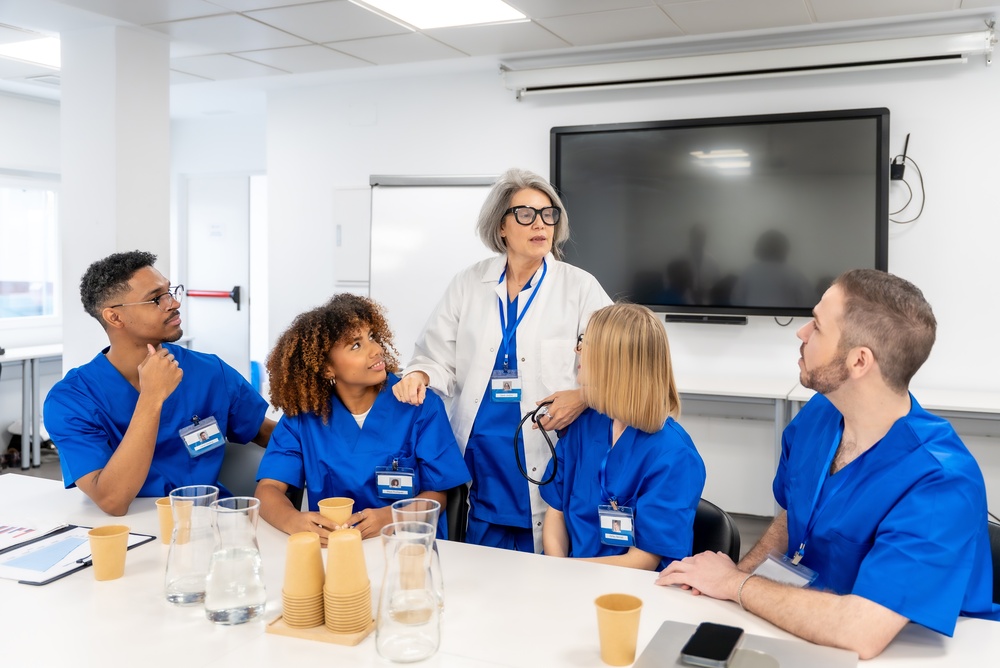
For example, at our hospital we’ve traded paper checklists for electronic repositories which the entire nurse leadership team has access to, not just the nurse educator. We’ve enhanced our transition to practice in specialty areas (such as med-surg to critical care) to include self-learning modules in addition to traditional in-person classes. Google Classroom was added as an enhancement to in-person learning. Since digital natives value real-time feedback and validation, additional in-person meetings are scheduled with the preceptor, educator, and the orientee to discuss feedback and track orientation milestones. “Safe places” to discuss progression are important, and new nurses are encouraged to share what’s working for them and what isn’t.
We’ve also begun to integrate AI into our professional development workflow, not as a shortcut but as a supporting factor. We’ve integrated it into our medical record, including everything from summarizing policy to calculating fall risk for high-risk patients. In addition, we’re teaching newer nurses to use AI to break down complex pathophysiology concepts or generate practice-based scenarios (we do this in our certification prep classes as well). When we teach them to use these tools ethically and effectively, we’re empowering them to take ownership of their own learning journey.
Mentoring has changed. You don’t have to.
Perhaps the most important shift is the mindset of the preceptor or mentor. If you’re a Boomer or Gen X nurse reading this, I challenge you to change up your teaching approach. For instance, instead of focusing on what the new graduate doesn’t know, try looking for a fresh perspective. Something as simple as saying, “I would love to hear why you chose to prioritize this task in this way.” Then follow up with listening, validating, and leaning into the teaching moments.
At the end of the day, new nurses don’t want to be treated like children; they want to be treated as equals. Much in the same way we did when we first started our nursing careers. When we shift our mentorship approach to focus on mutual respect and open inquiry, we invite fresh perspectives into the onboarding culture. Treating new graduates as valued colleagues fosters a genuine sense of belonging and professional alignment, which can ultimately lead to greater nurse retention.
The path forward
Tried-and-true experience as a nurse will always remain valuable and one of the biggest benefits when precepting a newer nurse. What is changing is how we translate that wisdom into meaningful conversations and language our newest nurses can understand. By blending the wisdom of our veteran nurses with the digital fluency of the next generation, we can create a workplace that isn’t just surviving a generational shift, but is thriving because of it.
Jennifer Dorman is a clinical nurse specialist in quality improvement at Jersey Shore University Medical Center in Neptune.
References
De Gagne JC. The state of artificial intelligence in nursing education: Past, present, and future directions. Int J Environ Res Public Health. 2023;20(6):4884. doi:10.3390/ijerph20064884
Dodson TM, Thompson-Hairston K. A scoping review of Gen Z nursing students: Learning preferences and educator strategies. Teach Learn Nurs. 2025;20(1):85-90. doi:10.1016/j.teln.2024.11.007