Social determinants of health (SDOH) are the conditions in which people are born, grow, live, work, and age, as well as their access to power, resources, and opportunities. These forces profoundly influence health outcomes and contribute to the inequities we see within and across communities. If we are to truly understand health and illness, SDOH must become the lens through which we view life, suffering, and human flourishing.
Nursing students often are taught about SDOH through lectures, readings, and case studies. While these approaches are important, they can only approximate the lived realities behind the concepts. The historical roots of health inequities can’t be fully appreciated from a classroom seat. One of the most powerful ways to understand SDOH is to encounter people where they live—or where they once lived. We learn a great deal about health when we learn how people make homes, earn a living, raise families, and endure hardship.
Museum as classroom
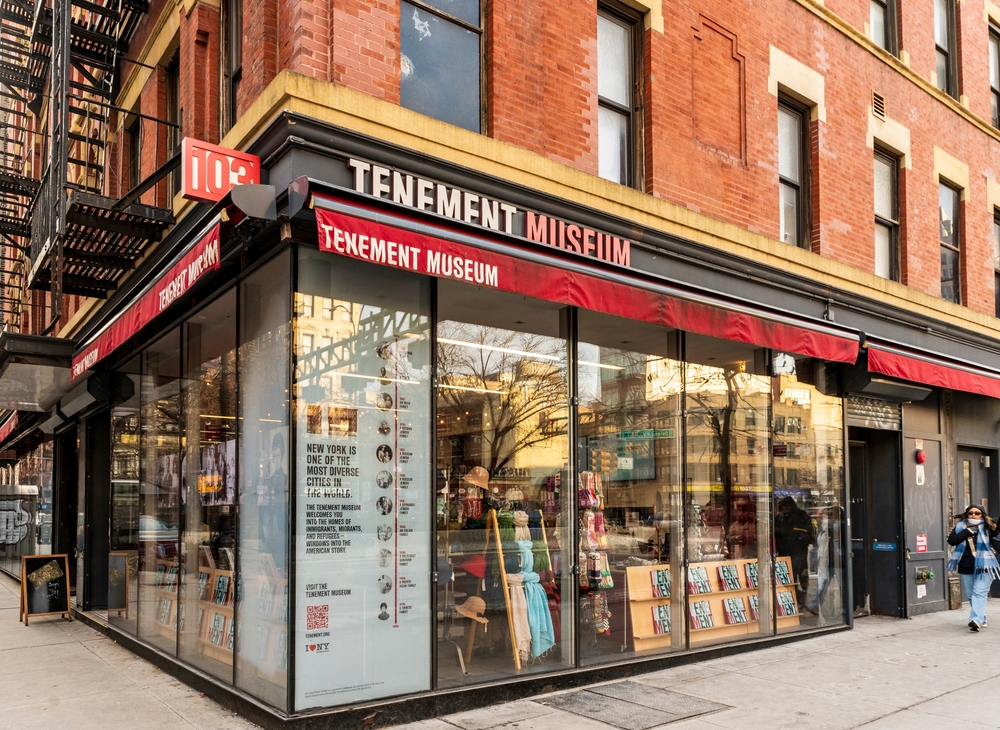
Recently, I took a group of undergraduate nursing students on a guided tour of the Tenement Museum in New York City. For 90 minutes, we stepped into the lives of immigrant families whose stories transformed abstract concepts into lived realities. Whether she realized it or not, our exceptional tour guide did more than help us imagine life in a crowded tenement; she quietly taught us the art of slow looking—a much-needed antidote to the hurried, smartphone-driven pace of modern life. By inviting us to pause, observe, and reflect, she helped us see beyond artifacts and into the human experiences they represented. Through the stories of Natalie Gumpertz and Mrs. Wong, women who lived nearly a century apart, we witnessed how economic hardship, migration, grit, and hope transcend generations.
We began in the recreated 1880s apartment of the Gumpertz family. After the Panic of 1873, the family’s primary breadwinner disappeared, leaving Natalie to support her children through garment work and extraordinary perseverance. We then entered an interactive 1980s Chinatown garment shop, where the memories of Mrs. Wong, her children, and her coworkers illuminated the experiences of more recent immigrants navigating work, family, and belonging in New York City.
One story lingered in my mind. During the process of becoming a U.S. citizen, Mrs. Wong struggled to provide fingerprints because decades of garment work had worn them away. Her fingerprints had vanished, but her story left a moving impression on our hearts. It was a powerful reminder that labor leaves traces beyond what can be blotted with ink and that every patient carries a history etched into their social and spiritual genome.
The students’ reflections revealed how deeply these stories invited reflections.
One student, the child of immigrant parents, observed that the struggles faced by the Gumpertz and Wong families remain strikingly familiar today. Both women worked in garment factories to support their families and create opportunities for future generations. The student connected these experiences to her own grandmothers, who also had labored in garment factories after immigrating. The visit reinforced the ethical responsibility nurses have to advocate for immigrants in pursuit of health equity.
Another student reflected on the impact of standing inside an original tenement apartment. Reading about overcrowded housing is one thing; experiencing the cramped space firsthand is another. Learning about the Chinese Exclusion Act of 1882 and its effects on immigrant families deepened the student’s appreciation for the historical forces that continue to shape health and opportunity. Mrs. Wong’s story, in particular, served as a testament to sacrifice and determination.
A few students noted how the physical environment directly affected health. One remarked on the absence of a sink in the apartment and how a single bucket of water was used for cooking, cleaning, and bathing. The observation highlighted the challenges of maintaining hygiene and infection control under such conditions. For others, the visit reinforced the importance of individualized care. A first-generation college student noted that immigration experiences shape how people understand health and healthcare. Appreciating those diverse backgrounds is essential for providing meaningful and culturally responsive nursing care.
Stories make better nurses
Perhaps the most profound insight came from a student who was inspired by the museum’s commitment to tracing family histories across generations. Learning not only about the residents’ struggles but also about their descendants reminded the student to always look beyond the immediate clinical encounter. Every patient has a story that extends far beyond a diagnosis or medical record number. “You’ll never know who will inspire you when you walk into the hospital that day,” the student wrote.
The museum itself offered an important lesson: knowing our history helps us understand who we are. Our guide followed the lineage of families across generations, demonstrating how hardships evolve and how fortitude is inherited. We’re all part of an ongoing drumbeat of whispers and shouts of stories, fables, anecdotes, and songs that began long before us and will continue long after we’re gone.
Learning about immigrant narratives, I recognize myself, because I, too, am an immigrant from the Philippines. The poverty, uncertainty, and aspirations that shaped the lives of the Wongs and the Gumpertzes feel familiar. The personal and shared stories we create and tell are the indelible fingerprints we leave behind. When patients share their stories and bare their souls to us, what are they asking? Is it a cry for help? An invitation to connect? A search for understanding? Perhaps it’s something simpler and instructive: “I hope you are listening.”

Fidelindo Lim, DNP, CCRN, FAAN is a Clinical Associate Professor New York University Meyers College of Nursing.