
In alignment with a federal ruling, the Department of Education has designated nursing a “professional degree,” opening up federal student loan access for students up to $50,000 annually and $200,000 over a lifetime.
Although the department called the ruling a “temporary change,” it’s an encouraging sign in an ongoing debate about student loan access. HR1 eliminated the Grad PLUS loan program and originally capped nursing student loans at $20,500 annually and $100,000 over a student’s lifetime. These changes represent the most significant restructuring of federal graduate student lending since 2005—fundamentally changing how students can finance advanced education.
As stakeholders continue this debate, it’s important to remember that student aid policy is also workforce policy. And that’s important because of the role nurses play in both the American labor market and the U.S. healthcare system.
Nurses make up roughly 20% of the healthcare workforce at a time where the healthcare workforce accounts for nearly 15% of total U.S. employment. Demand for nurse practitioners, nurses with advanced training who can diagnose, treat, and manage patient care, is projected to grow by 35% to 46% over the next decade, fueled by physician shortages, an aging population, and increasing demand for accessible primary and mental health care. Nurse practitioners and physician associates already provide roughly one-quarter of all primary care visits in the United States, accounting for nearly one billion patient visits each year.
Graduate nursing education prepares not only nurse practitioners and nurse leaders, but also the faculty who educate future nurses. Yet more than 80,000 qualified applications were turned away from U.S. nursing schools in 2024 because they lacked the faculty and resources needed to educate additional students, according to the American Association of Colleges of Nursing
All of this is occurring at a transformational time in healthcare, when healthcare policy is beginning to reflect that our health isn’t dependent on medical care alone but on the conditions and context of our lives. Things like whether we have access to healthy food, feel safe in our communities, or can afford to pay the bills. Nurses are uniquely positioned to meet this moment because nurse education is grounded in a whole-person approach to care and problem solving based on the full picture of someone’s life.
Americans are seeking care sooner, addressing challenges such as obesity, diabetes, heart disease, and other chronic conditions before they become more serious and more costly for both individuals and the healthcare system. People are looking for care that helps them stay healthy, manages chronic conditions, and that enables them to stay connected to their homes and communities.
Borrowing limits are still up for debate, so we must continue to challenge this policy. When the Department of Education implemented the One Big Beautiful Bill, advanced nursing programs were excluded from the professional degree category designation. Johns Hopkins and other institutions submitted formal comments during the federal rule making process. Then, 24 states and multiple national nursing organizations filed lawsuits seeking to overturn the department’s interpretation and restore professional-degree status for advanced nursing education.
Last week, nursing advocates won a temporary block of the department’s use of the “professional degree” definition to justify lower student loan limits. This week, the department updated their rule to designate nursing as a professional degree, but they’re still calling it a temporary change. In June, however, the House Appropriations Committee approved bipartisan language that would classify advanced nursing degrees as professional programs, which would confirm student loan protections. As of July 2026, that proposal isn’t yet law, but its inclusion reflects broad and bipartisan recognition that nursing is essential to healthcare access, workforce development, and meeting the nation’s growing demand for care.
Student loan limits are intended to address a real challenge: the rising cost of graduate education and the growing debt many students carry long after completing their degrees. As nursing institutions, we have a responsibility to examine costs, improve efficiency, and create pathways that help students succeed without taking on unnecessary debt.
Many programs are exploring ways to reduce time to degree without compromising quality. Others are adopting competency-based approaches that allow students to progress based on demonstrated knowledge and skills rather than fixed time spent in a classroom. Flexible pathways, hybrid learning models, novel clinical settings, and expanded use of simulation technologies are helping students get the training they need to prepare for modern, real-world scenarios.
We must focus on the path forward. There is simply no pathway for most graduate nursing students to finance their education, pay tuition, and support themselves and their families on $20,500 per year. We cannot risk reducing the supply of nursing faculty who educate future nurses, advanced practice nurses who expand access to care, and the broader workforce needed to support a healthier nation.
At a moment when healthcare is shifting toward prevention, wellness, and community-based care, we should be removing barriers to nursing education—not creating new ones.
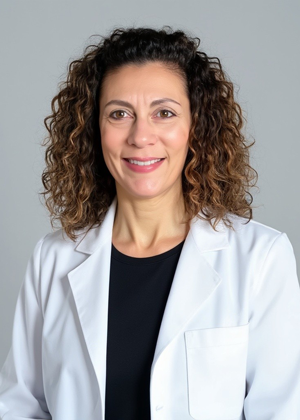
Sarah Szanton, PhD, RN, FAAN is Dean of the Johns Hopkins School of Nursing in Baltimore, MD.
References
American Association of Colleges of Nursing. Nursing faculty shortage fact sheet. February 2026. aacnnursing.org/news-data/fact-sheets/nursing-faculty-shortage
DePillis L. Health care has become the lifeblood of the labor market. The New York Times. March 6, 2026. nytimes.com/2026/03/06/business/economy/health-care-hiring-labor-market.html
Healio. Nurse practitioners, physician assistants now manage one-quarter of US health care visits. September 25, 2023. healio.com/news/primary-care/20230925/nurse-practitioners-physician-assistants-now-manage-one-quarter-of-us-health-care-visits
U.S. Bureau of Labor Statistics. Nurse anesthetists, nurse midwives, and nurse practitioners. Occupational Outlook Handbook. August 28, 2025. www.bls.gov/ooh/healthcare/nurse-anesthetists-nurse-midwives-and-nurse-practitioners.htm