A new academic year is upon us. A familiar lament among educators is, “Nursing education isn’t what it used to be.” But then again, what is? Healthcare has changed. Universities have changed. Students have changed. Technology has transformed nearly every aspect of teaching and learning. It would be unreasonable to expect nursing education to remain untouched by these forces. The real question is not whether nursing education has changed, but whether it still knows what it’s trying to accomplish. Increasingly, nursing education has become synonymous with preparing students to pass the NCLEX. Licensure examination establishes an important standard for safe entry into practice. But passing an examination should never become the primary purpose of nursing education.
The true measure of nursing education isn’t what graduates know on commencement day but who they become years later. The seeds planted in school frequently take root long after the diploma is framed. We may never know which lesson, clinical experience, or faculty conversation shapes a nurse’s most important decision decades into practice. Still, there are reasons for reflection.
Hands up for hands on education
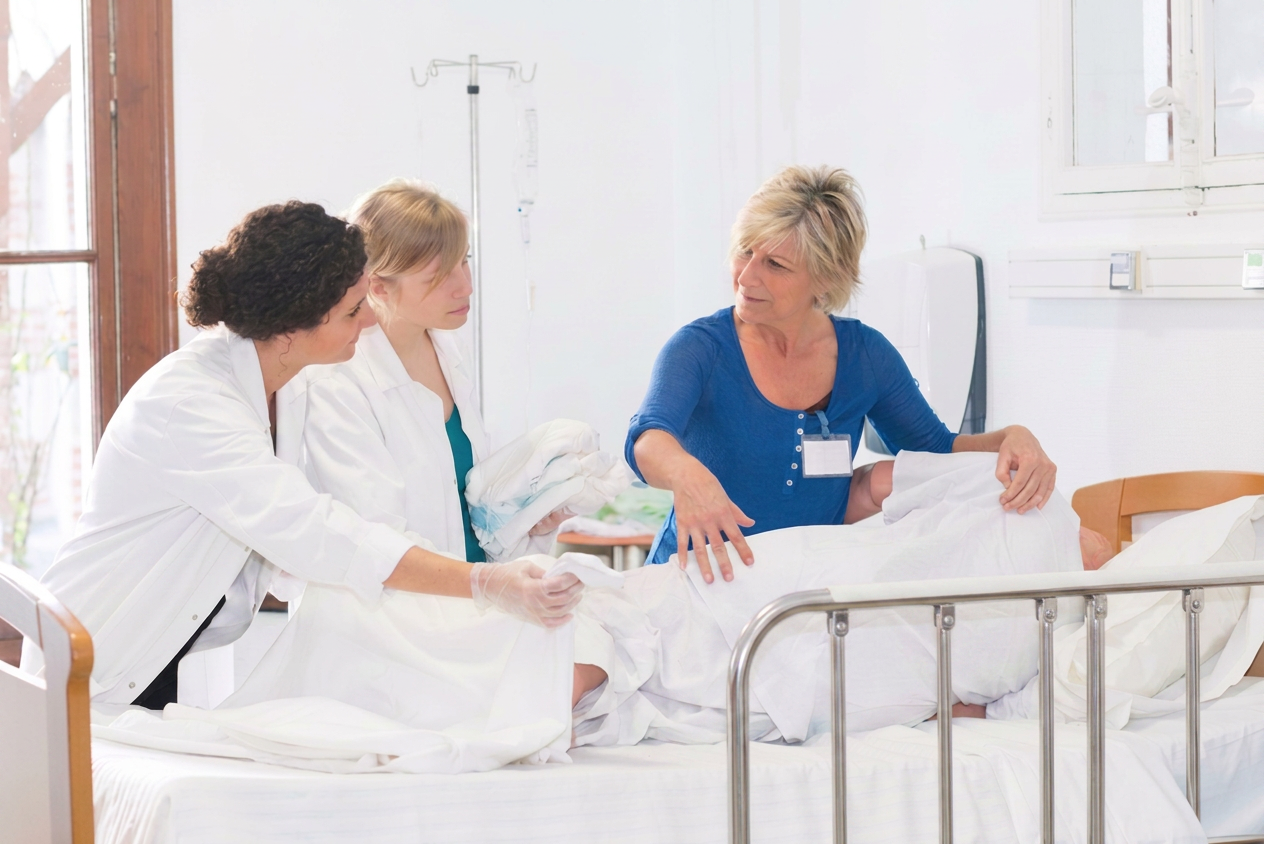
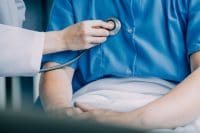
A typical clinical practicum for prelicensure students is an 8-hour clinical day each week caring for a single patient under close faculty supervision. After graduation, those same individuals may be responsible for four or five medically complex patients during a 12-hour shift. This theory and practice disconnect largely determines the perineal unpreparedness of new grad nurses. To build the requisite cognitive, emotional, and physical stamina for bedside nursing, nursing students should spend more clinical hours in real-time, not virtually.
Clinical simulation has transformed nursing education, but it can’t fully replicate the uncertainty, emotional complexity, and human relationships that define real patient care. We need large longitudinal studies on the impact of simulation education on patient outcomes, professional identity, and psychomotor proficiency compared with live, in-person clinicals.
Nursing education itself has become compressed. Some accelerated programs prepare students for entry into professional nursing in as little as 11 months. Many graduates from these programs become outstanding clinicians. Nevertheless, one can’t ignore an uncomfortable question: As patients become older, sicker, and medically more complex, are we expecting students to master increasingly sophisticated competencies in progressively less time? Time alone doesn’t guarantee learning, but meaningful learning requires time and focused attention, for reflection, for practice, for mistakes, and for growth.
What competency-based education?
The profession continues to embrace competency-based education (CBE). Its promise is compelling: students should advance by demonstrating competence rather than simply completing required hours. The focus shifts from teaching to learning and from process to outcomes. Yet despite frequent references to CBE in curriculum documents, its implementation frequently remains opaque and superficial. Many faculty members are still grappling with what CBE actually entails, and how best to evaluate complex abilities such as clinical judgment, communication, teamwork, and ethical reasoning. CBE risks becoming another educational buzzword rather than a true transformation of how nurses are educated.
So far removed from practice
Medicine has long embraced a model in which physician faculty simultaneously teach and actively care for patients. This isn’t so in nursing. Many full-time prelicensure nursing faculty members have long since stopped clinical practice. For example, I have almost two decades of staff nursing experience, but the last time I worked as a staff nurse was in 2008. Although I have a good grasp of pathophysiologic processes, I lack the authentic appreciation of current bedside nursing workflow and the regulatory benchmarks for safe practice. Nursing education may benefit from exploring stronger partnerships that allow more faculty to remain clinically engaged throughout their academic careers.
Then came generative artificial intelligence
Perhaps no technology has disrupted education more swiftly and spectacularly than generative AI. It has become academia’s stress test. Faculty increasingly question whether submitted written work reflect student thinking or the hollow algorithmic echo of savvy prompting. Essays and papers, once considered windows into a student’s intellect, now provide far less certainty. There are worse transgressions than outsourcing cognitive work. One of them is passing them off as one’s own. For anyone who aspires to write—for school or publication—consider Herman Melville’s maxim: “It is better to fail in originality than to succeed in imitation.” In short, when in doubt, cite. Properly.
A study by Rismanchian has shown that AI allows students to work faster but learn less. Educators must rethink learning assessments. Experts have called for more oral exams and presentations, case analyses, and authentic demonstrations of clinical reasoning for meaningful assessments. It’s time for faculty development to prioritize AI literacy that teaches them how to optimize the use of gen AI technologies in the salient aspects of the scholarship of teaching, discovery, application, and integration.
Despite these challenges, I remain optimistic. Every generation has believed nursing education was at a crossroads. Disruptive innovations raise concerns before becoming standard practice. Today’s AI challenges are no different. Nursing academia has the will and obligation to adapt while remaining faithful to its mission: preparing nurses who are competent and ethical.
The future of nursing education doesn’t lie in returning to an imagined golden age. It lies in reclaiming what has always mattered most. We must balance scientific knowledge with moral formation, competency with character, and technology with human connection. Most importantly, we must remember that education is an act of hope. Educators rarely witness the full harvest of what they’ve planted. Years after graduation, I imagine my former students comforting a grieving family, advocating for a voiceless patient, mentoring a struggling colleague, or making a life-saving clinical decision. And if someday I’m a recipient of excellent nursing care, I might even recognize myself.

Fidelindo Lim, DNP, CCRN is a Clinical Professor at New York University Meyers College of Nursing.












3 Comments. Leave new
Indeed nursing education should go more to what matters, and should accommodate the dynamic of technology and new scientific era in the field of medicine. An educator who is also practical become a good teacher for students. Students should balance between class work theory and real life practices in the hospital. This will sharpen not only their skills but also clinical judgment and critical thinking.
Good write up, let’s shape our Nursing today
Dear Colleague, I take issue with your article. Regards, Dr. Patricia Adler