Making change happen…
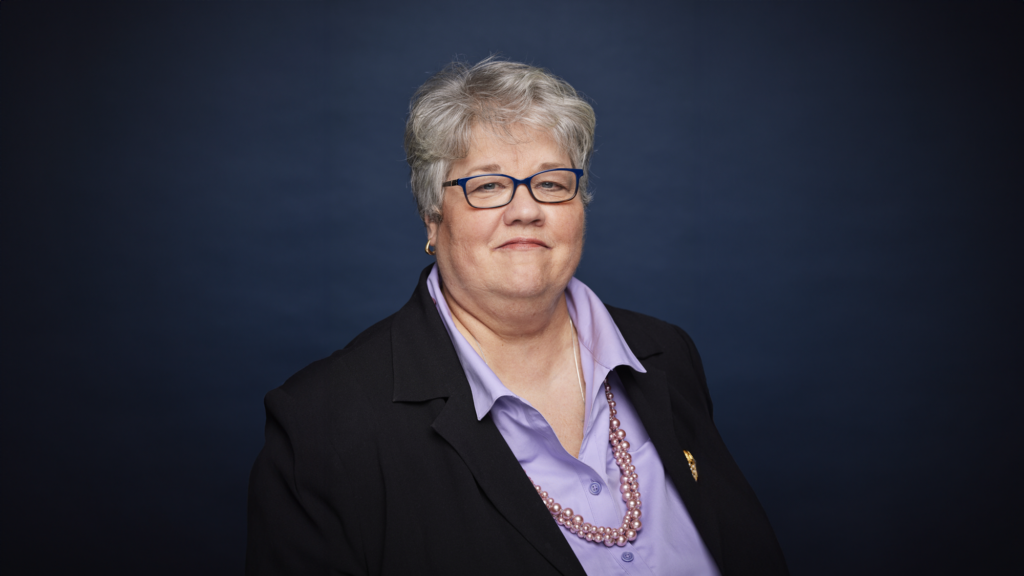
Dr. Rebecca M. Patton, or “Becky” as she often prefers to be called, is a major player in the nursing world. She’s an esteemed professor at Case Western Reserve University’s Frances Payne Bolton School of Nursing, an alma mater of mine, and serves as a mentor to me among many others. I chose to chat with Becky because of her strong belief and vast experience in the policy world. Being involved in policy and advocacy work is something that I mostly shy away from, regrettably, at least in the nursing world… for now. It always seems like getting involved in a political or advocacy sphere seems too convoluted so why should I even try, let alone not being sure what sphere to enter (local government? state nursing association? national association?).
As a past president of our American Nurses Association (ANA) (she served two terms during the Obama administration and was instrumental in passing the landmark Affordable Care Act), Dr. Patton has incredible perspective on the importance of nurse involvement in policy work at every level.
As a former student council–obsessed high schooler and current social equity–driven human, I hoped that talking to Becky about her past, current, and future work would instill a revived passion for this line of thinking and work. I wasn’t disappointed.
PS: I understand you’re the current president of the ANA state association affiliate ANA-Ohio. Can you tell me more about ANA-Ohio, its history, and your work with the group?
RP: I’ll start by highlighting that Ohio is an interesting state. What’s probably not well known outside of Ohio is the caliber and number of prominent nurse leaders who are from Ohio or went to school in Ohio or lived/live in Ohio. And part of that has to do with the prominent educational institutions, Case Western Reserve University is one, that have been around for more than 100 years. Many nurse leaders are associated with our university. In fact, the very first ANA president was Isabel Hampton Robb, who served as the matron of Lakeside School of Nursing, which ultimately became Case Western Reserve Frances Payne Bolton School of Nursing. There are three other ANA presidents who were/are associated with our school. Elizabeth K. Porter, Barbara Nichols (the first African-American ANA president), and me. And Ohio still has an active pool of nurses who are committed and involved.
So back to ANA-Ohio’s origin. The original state affiliate of ANA, the Ohio Nurses Association, was disaffiliated from ANA for multiple reasons. So, when this happened, there was already a core group of active nurses and past presidents of the former association who were trying to make it work. This group focused on creating a new organization that would respect individuals, create the state environment to support nurses, and develop programming. The goal of the new organization is to again allow nurses to develop themselves and be recognized on federal, legislative, and/or non-legislative platforms to contribute to making the world a better place. This new organization, ANA-Ohio, nominated me to be the president of the group as they felt it would help accelerate our development because of my leadership experience and the relationships I have. We’ve done incredibly well. At our 3-year mark, we have over 3,000 members. I’m incredibly proud of this group!
We have a great structure in place. We have a very strong public policy committee and excellent programming. We held the first nurse hackathon in the United States and had legislators attend. At the hackathon, we challenge teams to come up with solutions to tough questions, which then leads the winning teams to go to our state capitol to meet with legislators and sit in on committee hearings.
We continue to be innovative with how we engage our members. We also have a foundation, thanks to an extremely generous donation by Ella Kick, which gives us the ability to provide grants, scholarships, and have future programming for our members, including our retired nurses.
PS: I’m sure other state associations could take some lessons from what’s happening in Ohio. Could you talk about why nurses in all states should belong to their state nursing associations/organizations?
RP: There are so many reasons why people should belong to their professional association. You know, it’s in our Code of Ethics for Nurses. If you consider yourself a professional, then you need to be responsible for your profession. ANA has made me a stronger and better nurse. It opened the door to meeting the people who write the textbooks. These people inspire me. In ANA and state associations, I’m exposed to people and topics on the cutting edge of positive change. It’s important to be in the know and help drive this change.
PS: When you think about change—as an educator, leader, policymaker, author, and all-around excellent human—what worries and excites you about what the future?
RP: What worries me is that I perceive that some people feel disconnected from professional associations. But what gives me hope is when I see younger and newer nurses engage with these associations and never walk away. I’m seeing more diverse populations engage with ANA and other organizations… and this is necessary! We need to keep opening doors for all.
Dr. Patton is a visionary! She talks the talk and walks the walk when it comes to nurses being policy makers and remains a motivator for me and I hope you. Let’s get more involved. Dr. Patton reminds me why I’m a nurse and why it’s important to be curious. As professionals we must remain curious about what’s happening at every level, whether it’s our unit-based councils, organization-wide committees, state and national associations, and state and national capitals.
Without getting informed and asking to be part of the groups that are making decisions on our behalf, do we have the right to complain about things when they don’t go our way? The same goes for celebrating those wins, big and small. Doesn’t it feel sweeter when we’re part of the team that drives positive change?

Peter Stoffan, DNP, MPA, RN, CCRN, NEA-BC, CPXP is a Nurse Leader in the New York City Greater Metro Area. His passions in nursing include creating healthier work environments, inspiring current and future nurses to be involved in quality and performance improvement initiatives, and advancements in nursing research and nursing education.