
I don’t know why, but lately, in those quiet moments when I’m alone with my thoughts, or just before sleep settles in, I find myself returning to my earliest memories as a pupil. There is Mrs. Buenaseda, my first-grade teacher, standing beside me, gently guiding my uncertain left hand as I learned to hold a pencil properly and copy the cursive Aa, Bb, Cc … displayed across the top of the blackboard. I remember the sense of wonder I felt when I looked at my work—not so much because of what I had done, but because I was amazed by what Mrs. Buenaseda had made possible. To my 5-year-old self, she was something like a magician, a keeper of mysteries, transforming an illiterate child into a tiny person who suddenly imagined he possessed the power to write, and, soon, to read.
The noblest profession
Growing up, I often heard that teaching was the noblest of professions (the medical profession makes a similar claim). I’ve never been quite sure where the idea of teaching as a “noble” profession originated. Perhaps it’s because teachers, particularly those in the early grades, have such a formative influence on a child’s acquisition of the three Rs: reading, writing, and (a)rithmetic, the familiar expression relying on phonetics rather than spelling. But perhaps there’s something deeper to the idea of nobility. Teaching is an act of investing in another person’s becoming. A teacher does more than impart information; a teacher recognizes potential before the learner can recognize it in themselves, cultivates curiosity, builds confidence, and opens doors to possibilities that may not yet be visible.
Perhaps, too, the notion of teaching as a calling rests on the belief that those who enter the profession are motivated by something beyond financial reward: a commitment to do good, for the good of others. This may be an idealized view. Teachers, like everyone else, have bills to pay and deserve fair compensation, but it captures something enduring about the profession. Teaching asks us to give something of ourselves so that another person can eventually stand on their own.
The social value accorded to professions can be seen, albeit imperfectly, in Gallup’s annual survey of public perceptions of honesty and ethical standards. In its 2026 report, nurses remained the profession most highly regarded for honesty and ethics. High-school teachers are ranked fifth. These numbers don’t establish what makes a profession noble, of course. But they do offer a glimpse into the public trust placed in people whose work fundamentally depends on serving others. Perhaps this is what my 5-year-old self understood before I had the words for it: A teacher’s greatest work isn’t what the teacher puts into a child, but what the teacher makes possible for that child to become.
Then came the internet and ChatGPT
For centuries, teachers and professors were regarded as the font of knowledge, the well to which learners came to drink, and sometimes bathe, in the waters of wisdom. The teacher stood at the center of learning. They were the keeper of knowledge, the interpreter of difficult ideas, and the person to whom students turned when they wanted to know not only what something meant, but why it mattered.
The fear that technology might displace the teacher from this honored position isn’t new. It surfaced with the rise of the internet and, more visibly, with the emergence of Wikipedia, when information that once required a teacher, a library, or an expert suddenly became available with a few keystrokes.
Today, however, we’re confronting something qualitatively different. With the extraordinary capabilities of artificial intelligence (AI) and large language models (LLMs), the concern is no longer simply that machines can retrieve information faster than humans. Increasingly, AI can explain, synthesize, generate, tutor, translate, simulate, and provide individualized feedback—tasks once considered distinctly human domains of teaching. There’s growing speculation that increasingly autonomous AI could eventually match or exceed human performance across fields ranging from medicine and law to education.
The asymmetry is unsettling: AI capabilities are improving at remarkable speed, while educators may face the unintended consequence of deskilling as we increasingly outsource cognitive tasks to machines. At the same time, students’ growing reliance on LLMs may further erode the perceived need for a teacher who’s physically present, relationally engaged, and accountable for the learner’s development.
So, what becomes of the teacher?
Perhaps the more consequential question isn’t whether AI will replace teachers, but whether we’ve mistakenly defined teaching as the delivery of knowledge in the first place. If information is no longer scarce, and has become instantaneous, the teacher’s value can’t rest solely on being the person who knows the answer. The enduring work of teaching may lie elsewhere. It may lie in helping learners determine which questions are worth asking, distinguish knowledge from plausible nonsense, wrestle with ambiguity, develop judgment, and understand the human consequences of what they learn.
A machine can curate an answer, but it doesn’t care. Only people do. The value of the teacher rests, in part, on our capacity to create moments of care and connection with our students. We’ve embraced AI, but it doesn’t give one a hug. This is why I show up in the office. This is why my door is always open.
ChatGPT and its ilk have become the performance-enhancing drug used by both students and faculty. We’re all learning, teaching, and living under the influence of AI. If faculty are no longer the primary source of learning, then perhaps our task isn’t to defend that old position, but to redefine it. What should students be able to expect from a teacher when knowledge is abundant but wisdom and human connection remain scarce? And what are our obligations as educators, not simply to deliver a curriculum, but to uphold our part of the social contract that entrusts us with the formation of the next generation?
The question before us may not be how to reclaim our place as the font of knowledge, but how to become something even more consequential—guides who help learners make meaning and remain fully human in an age when machines can increasingly do the knowing for them.
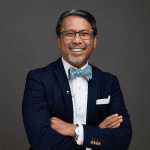
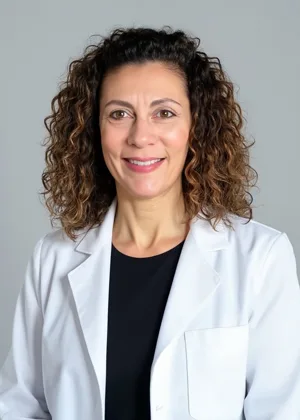
Fidelindo Lim, DNP, CCRN, FAAN Clinical Associate Professor New York University Meyers College of Nursing