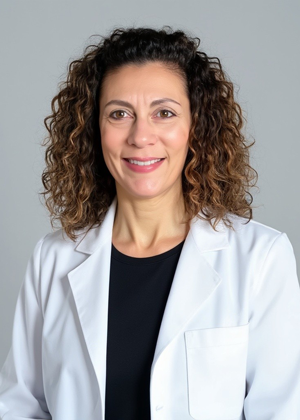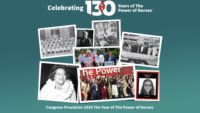
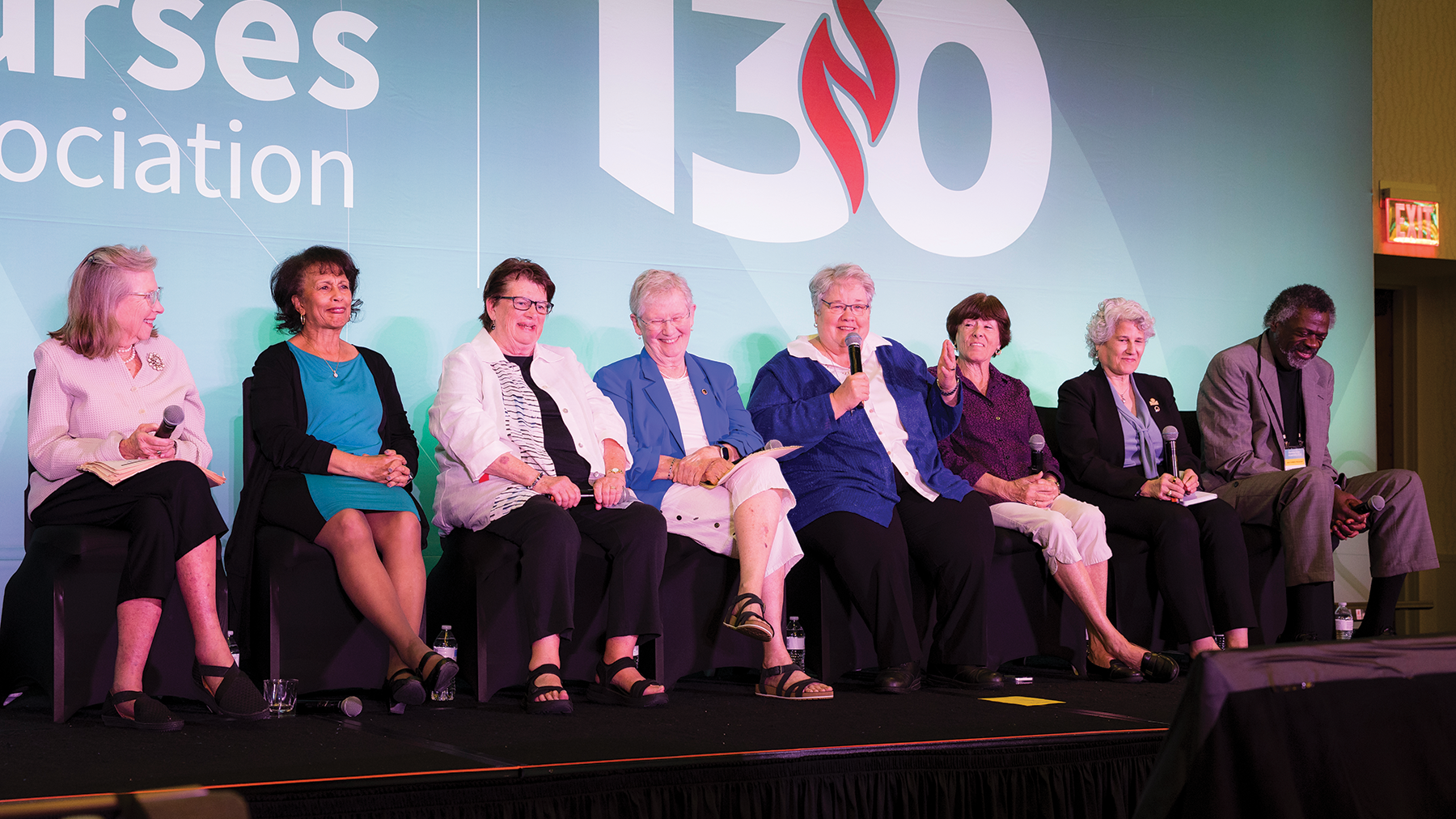

[Pictured Above: Former ANA presidents brought the association’s history to life and imagined the future: (L-R) Virginia Betts, Beverly Malone, Mary Foley, Barbara Blakeney, Rebecca Patton, Karen Daley, Pamela Cipriano, Ernest Grant.] Marking the American Nurses Association’s (ANA’s) 130th anniversary, eight former presidents brought the association’s history to life through an insightful panel discussion during Membership Assembly in June 2026. A range of themes emerged from the discussion, highlighting nurses’ influence on public policy, crisis leadership, workforce health and safety, and professional unity. The leaders acknowledged how each presidency carried forward the work of the one that came before. Welcoming the panelists and guests, ANA President Jennifer Mensik Kennedy, PhD, MBA, RN, NEA-BC, FAAN, described the gathering’s twofold purpose. “Today’s luncheon—Presidential Perspectives: Legacy, Leadership, and Shaping the Future of Nursing—is about turning reflection into action. It’s about honoring the leaders who brought us here while looking clearly at what nurses and patients need now, and what leadership must look like for the future.” Dr. Mensik Kennedy moderated the discussion and posed the central theme: “Tell us about a major milestone or inflection point that was significant to ANA during your presidency.” Before beginning, Dr. Mensik Kennedy recognized two former presidents not in attendance who shared their voices in recorded remarks.Former ANA presidents reflect on pivotal moments, shaping the future
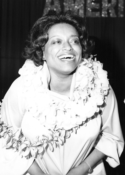
Barbara NicholsBarbara L. Nichols, DL(h), DSc(h), PedD(h), MSN, RN, FAAN, who served as ANA president from 1978 to 1982, became the first Black president of ANA, noting both support and opposition surrounding that milestone. Sadly, ANA and the nursing community are mourning the loss of Dr. Nichols, who died on July 22. A trailblazing and visionary leader, Dr. Nichols will be remembered for her courage, conviction, and clarity that transformed the profession and paved the way for generations of nurses.
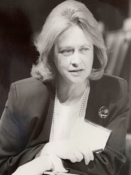
In her recorded message, Lucille A. Joel, EdD, RN, FAAN, who led the association from 1988 to 1992, cited the importance of navigating nursing through diagnosis-related groups used for Medicare hospital reimbursement, and advancing greater appreciation of cultural diversity among nurses.
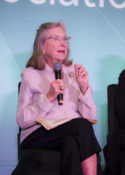
Continuing in the room, Virginia Trotter Betts, JD, MSN, RN, FAAN, president from 1992 to 1996, stepped into leadership at a time when ANA was prepared to meet a changing political moment. Nursing’s Agenda for Health Care Reform, she noted, was ready for the 1992 presidential, Senate, and House elections, and 68 nursing organizations signed on in support. That unified agenda helped elevate nursing’s influence, opening opportunities with media and policymakers and helping nurses gain visibility in federal roles. “Nurses became a political tour de force,” Betts said, reflecting on the profession’s growing policy influence.

That growing influence continued during the presidency of Beverly Malone, PhD, RN, FAAN, from 1996 to 2000. ANA was “right in the middle of everything” for national healthcare reform discussions, she said, and described how nursing’s presence in national quality conversations helped define future patient safety and quality improvement efforts. Dr. Malone emphasized the importance of ANA membership, and that an investment in the association has lasting impact.

National crises tested the association’s ability to pivot, lead, and maintain credibility. Mary Foley, PhD, RN, FAAN, who became president in 2000, inherited urgent issues around patient safety, quality, and a resurging nursing shortage. Dr. Foley told how a gathering focused on the Nursing Agenda for the Future was overtaken by the attacks of September 11, 2001, and how nurses responded by returning to their communities, supporting relief efforts, and helping ANA adapt its message for a changed national environment.
For Barbara Blakeney, MS, RN, FNAP, president from 2002 to 2006, the aftermath of September 11 also defined early priorities. She described ANA’s work during concerns over smallpox vaccination for first responders and its continued focus on safe patient handling, safe staffing, and the core professional work of nursing. “The work of the profession is different from the practice of the profession,” Blakeney said, emphasizing ANA’s role as steward of nursing’s social policy statement, code of ethics, and standards of practice.
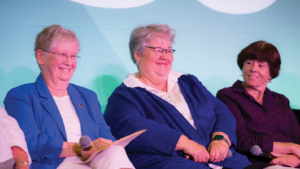
Rebecca M. Patton, DNP, RN, CNOR, FAAN, president from 2006 to 2010, led during a period of internal change and external influence. Dr. Patton described difficult decisions to refocus resources on the association’s core mission. During the passage of the Affordable Care Act, ANA was called on to quickly bring nurses to Washington, DC, for meetings with President Barack Obama. “We were often given credit by the Obama administration for being the push that was needed to get the Affordable Care Act passed,” Dr. Patton said.
Karen A. Daley, PhD, RN, FAAN, from 2010 to 2014, made it a priority to help nurses understand the Affordable Care Act and its implications for patients, scope of practice, care coordination, access, quality, affordability, and workforce needs. Dr. Daley also led efforts to strengthen alignment across the association, the American Nurses Foundation, the American Academy of Nursing, and the American Nurses Credentialing Center. “Every president is handed an agenda, but you also create it,” Daley said.
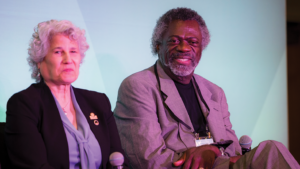
For Pamela Cipriano, PhD, RN, NEA-BC, FAAN, president from 2014 to 2018, crisis leadership took the form of the Ebola response. Dr. Cipriano described ANA’s role as a calm, science-based voice that elevated nurses’ infection control knowledge, supported education, and helped reduce fear among nurses and the public. She also pointed to the influence of social media and public recognition of nurses after the “nurses unite” movement, ANA’s continued safety agenda, workplace violence prevention, introduction of Healthy Nurse, Healthy Nation®, and the development of the ANA enterprise model, which strengthened collaboration across affiliated organizations.
Ernest Grant, PhD, RN, FAAN, president from 2019 to 2022, made history as the first male nurse to lead the association. During the COVID-19 pandemic, Dr. Grant described the speed with which ANA staff responded after the country shut down, including posting guidance for nurses caring for ventilated patients. To boost vaccine confidence, he participated in a COVID-19 vaccine clinical trial. He prioritized educating nurses and the public, addressing concerns about PPE and burnout, and noted the association’s leadership in the launch of the National Commission to Address Racism in Nursing, including ANA’s public apology to nurses of color.
Looking forward
“I passionately believe that when we understand where we have come from, we can better shape where we are going—and we are fortunate to have strong representations of nursing’s future among us,” Dr. Mensik Kennedy said. “ANA’s Next Generation Ambassadors assisted with the session by offering a forward-looking question: Where do you envision ANA in 2040, and what role should it play in shaping the future of nursing?”
Panelists were energized by opportunities to shape nursing’s future. They called for more nurses in policy roles, elected office, and healthcare leadership, and they emphasized that AI should be used as a tool to support hands-on care, not replace nursing judgment. They envisioned Magnet®-level excellence becoming the standard, prevention becoming a stronger national priority, an end to the nursing shortage, and nurses prioritizing their own health and safety.
“I still say when nurses are safer and healthier, patients are safer and healthier,” Dr. Daley said. Dr. Malone envisioned “A house big enough for all of nursing,” referring to her own presidential campaign and actions taken by this assembly to unite the profession. Dr. Grant looked toward a day when he was not the only man elected to the presidency.
Panelists expressed confidence in nurses’ power to influence what comes next. “Nurses must be seen as leaders who transform healthcare,” Dr. Cipriano said, and the profession should reach a point where no nurse ever again says, “I’m just a nurse.”
Dr. Mensik Kennedy thanked the panel for their insights, “grounding us in both possibility and purpose.”
Watch the full program at youtube.com/nursesmatter
 American Nurse is the official journal of the American Nurses Association and is a member benefit. Learn more about the association and the many benefits of joining.