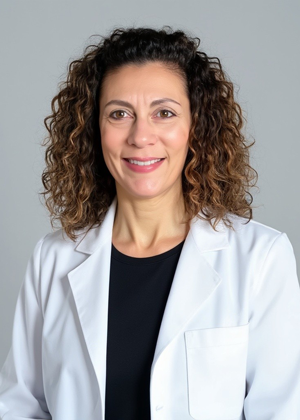

Chief Nurse Executive Christopher McLarty depends on diverse input.

How do you communicate the organizational values that you want to see reflected?
It’s important for leaders to role model organizational values. It starts with consistency and visibility. You need to convey values clearly and directly to everyone and “walk the walk” because people will be watching to see if you do what you say. Northwestern is a large, matrixed organization, so for me, that means making sure that I’m communicating effectively across the organization—with my peers and teammates, and with our service line vice presidents, directors, managers, and bedside nurses—so that everyone is hearing a consistent message from all leadership levels.
How do you foster creative thinking within your organization?
It’s an absolute necessity to have diversity of thought around the table. As a leader, it can be very easy to assemble a team that looks like you, thinks like you, and came from a similar background, but then you end up in this void of aligned thinking, which stifles all of the things you want at your organization: great leadership, innovation, engagement. I encourage the leaders around me to make sure that they are surrounded with people who think differently.
Has feedback from staff changed your mind or given you a different perspective?
Yes—it happens daily! I believe I have the best idea until someone tells me something different. I encourage my team to speak up if they think I’m on the wrong path or see something that I don’t. When I talk with my team, I want to hear what the pebbles in their shoes are. I ask, what’s distracting you? Give me the opportunity to make things better with you. I can’t do everything—there are limits—but tell me what’s on your mind.
What’s coming up on the horizon for CNOs?
A lot of us in healthcare are anticipating changes in the next few years, due to the evolving political landscape and the advancement of AI. And we don’t fully know yet how those changes will impact practice. But I believe it’s an incredible time to be in healthcare because we are going to be forced to re-envision healthcare delivery. And I want to make sure that the right voices are around the table: diverse clinical experts from nurses to therapists, advanced practice providers, to our physician colleagues. That is how we’re going to pivot and respond to the changes that are coming.
How can we encourage more men to choose nursing as a career?
We’ve got to rebrand nursing, full stop. We need to make sure that there is diverse representation of nurses in media and pop culture and on the national stage. A great start is the video that the American Nurses Enterprise released in April that shared the story of a male nurse practitioner serving a rural community. One of his patients, a rancher, described how the nurse’s practice kept him from having to travel 30 miles to the next town for healthcare, which meant he didn’t fall behind on work. Two men, talking about the impact of nursing. This type of reframing is going to spark a change in who’s interested in nursing.
— Interview by Elizabeth Moore, content creator at the American Nurses Association
 American Nurse is the official journal of the American Nurses Association and is a member benefit. Learn more about the association and the many benefits of joining.