
Individual- and system-level actions can promote mental health and well-being.

I BRING YOUR attention to a feature article in this month’s issue titled “The five Rs: This point-of-care tool can help preceptors promote psychological safety.” The article discusses the importance of creating psychologically safe learning environments for advanced practice RN (APRN) students. The authors describe key components of a supportive learning atmosphere, including permission to make mistakes and the establishment of clear expectations—both of which enable students to grow and learn without fear. The authors also highlight the critical role of psychological safety and illuminate the negative effects of bias and the microaggressions some students experience during clinical training.
Building on this framework, I’m sharing the concept of “Psychological PPE” as a complementary lens to the points discussed in the article. The Institute for Healthcare Improvement (IHI) developed “Psychological PPE: Promote health care workforce mental health and well-being” based on research and evidence-based recommendations aimed at protecting and supporting the mental health and well-being of the healthcare workforce during and after the COVID-19 pandemic. IHI reviewed available evidence on interventions that help protect staff mental health under extreme working conditions, including natural disasters, terrorist attacks, and prior pandemics. This research was synthesized into a set of evidence-based “Psychological PPE” recommendations.
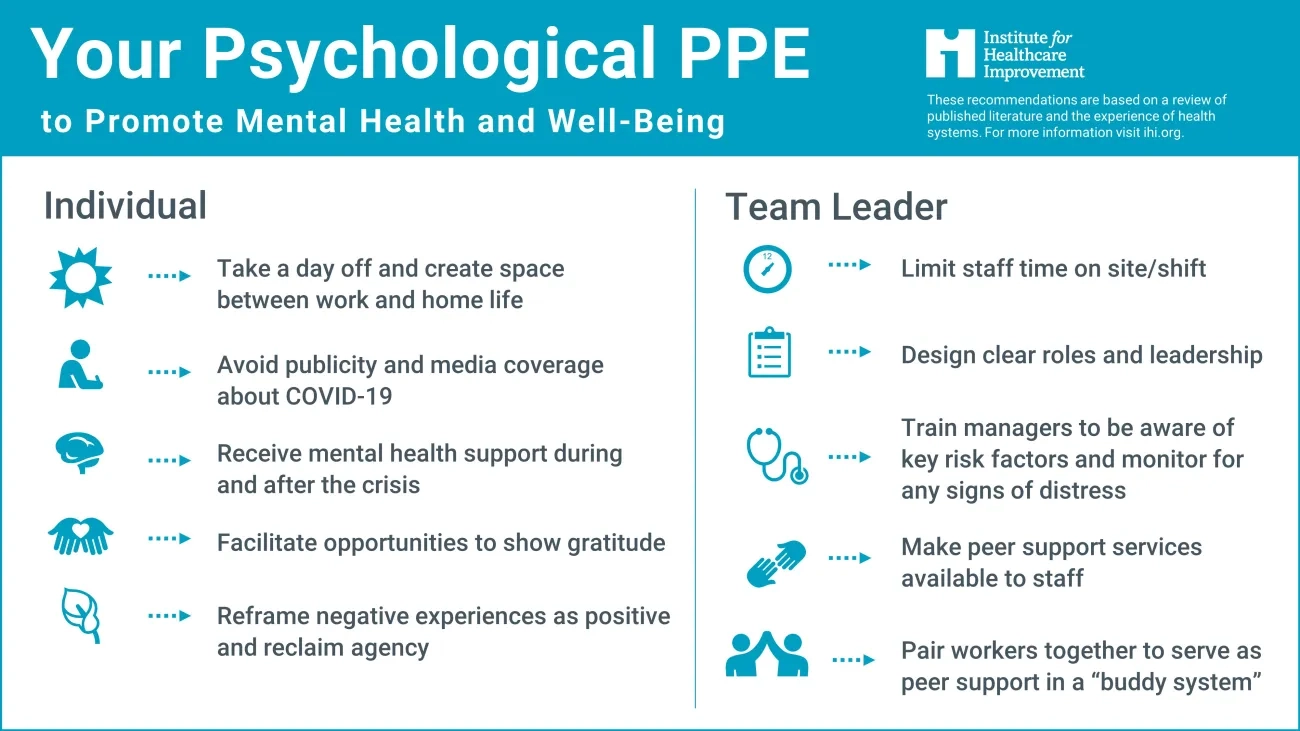
I’m particularly drawn to the action-oriented nature of this work. The recommendations specify both individual- and system-level actions and emphasize ownership by unit and team leaders who hold responsibility for protecting and supporting staff mental health and well-being. American Nurse Journal has permission from IHI to share the above graphic, which displays the recommendations. I envision posting it in clinical areas as a practical reminder of these essential interventions.
Burnout, moral distress, moral injury, and compassion fatigue within the healthcare workforce continue to undermine worker well-being, mental health, and joy in work. These conditions significantly contribute to retention challenges and staffing shortages while negatively impacting healthcare quality, workforce and patient safety, and patient experience. Applying strategies such as those illustrated by “Psychological PPE” leverages proven methods for creating a positive work environment to ensure high-quality healthcare, even in stressful times.

Lillee Gelinas, DNP, RN, CPPS, FAAN
Editor-in-Chief