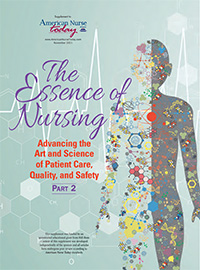
The second installment of this supplement covers topics suggested by Part 1 readers, including creating a culture of caring, intentional rounding, preventing falls, promoting mobility, optimizing nutrition, and enhancing the patient experience. The authors—among them nationally renowned experts, frontline caregivers, advanced practice nurses, educators, and consultants— share their multidisciplinary, evidence-based solutions. Working toward these goals enables nurses to deliver the essence of nursing and create meaningful changes in their care environments.
This supplement was funded by an unrestricted educational grant from Hill-Rom. Content of this supplement was developed independently of the sponsor and all articles have undergone peer review according to American Nurse Today standards.

Click here to download a printable PDF
Responding to the demand for more “Essence of Nursing”
By Melissa A. Fitzpatrick
Readers’ overwhelming response to Essence, Part 1 (published in May) inspired us to bring
you more articles on the high-priority topics your units and organizations are focusing on.
A culture of caring is a culture of curing
By Lillee Gelinas
The essence of nursing depends on a healthy and ethical work environment that reflects the
art of caring, the science of curing, and the soul of our profession.
The value of purposeful rounding
By Jane McLeod and Sue Tetzlaff
A growing body of research suggests effective purposeful rounding promotes patient safety, encourages team communication, and improves staff ability to provide efficient patient care.
Tailoring falls-prevention interventions to each patient
By Patricia Quigley
The author provides do’s and don’ts to help you customize care to each patient’s unique fall risk instead of relying on universal fall precautions.
Boosting the success of a hand-hygiene campaign
By Megan Read and Karen Chandler
Locally owned and driven changes are more likely to sustain hand-hygiene improvements than
off-the-shelf, one-size-fits-all programs.
Choosing a support surface to prevent pressure ulcers
By Laurie McNichol, Carolyn Watts, Dianne Mackey, Mikel Gray, and Christopher Carchidi
An evidence- and consensus-based algorithm helps clinicians chose the right surface for each
patient.
Implementing a mobility program for ICU patients
By Darla Topley
Learn about five strategies to foster an ICU culture that promotes early mobility, which helps prevents complications and enhances quality of life after discharge.
Six steps to optimal nutrition care
By Peggi Guenter, Ainsley Malone, and Rose Ann DiMaria-Ghalili
Malnutrition lengthens hospital stays and contributes to poor outcomes. From initial
screening to transition of care planning, nurses play a crucial role in nutrition care.
Promoting early student engagement and proactive prevention of missed nursing care
By Pamela Wells and Amanda Pierce-Anaya
Healthcare technologies raise students’ awareness of missed care before actual patient
care, while offering working nurses proactive tools to help prevent missed-care episodes.
The essence of nursing, in our readers’ words
Readers’ own stories evoke the heartwarming, touching, and humorous aspects of being a
nurse.
The essence of nursing
To help you deliver the essence of nursing care, this infographic provides an at-a-glance summary of the key points discussed in this supplement.