Early recognition and rapid intervention lead to a good outcome.
- Patients with chronic obstructive pulmonary disease require thorough assessment and rapid recognition of deterioration
- Precise oxygen delivery via Venturi mask is crucial to effective care.
- Nurses must always verify the oxygen flow rate to prevent hypoxia or hypercapnia.
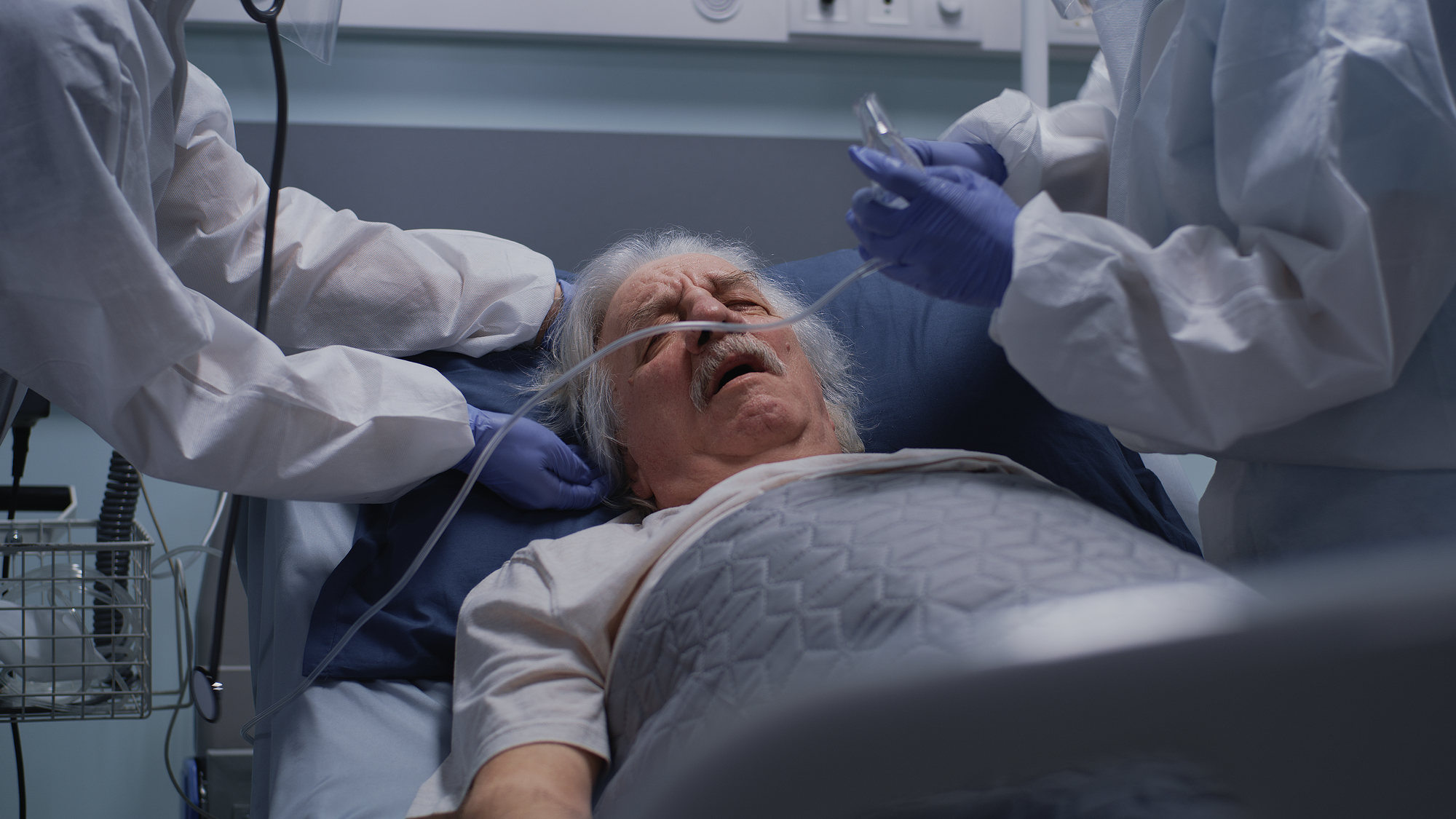
MR. ROBERT MARTINEZ*, a 75-year-old man with a history of chronic obstructive pulmonary disease (COPD), hypertension, and a 20-pack-year smoking history, is transferred from the ED to a med–surg unit for continued monitoring after a COPD exacerbation. The provider orders 3 liters per minute (LPM) of supplemental oxygen via nasal cannula. After 4 hours on the unit, Mr. Martinez’s assigned nurse, Pat, and a training nurse, Taylor, notice changes in his condition.
Initial assessment
Pat observes Mr. Martinez’s increasing restlessness and confusion. At assessment, his SpO2 has dropped to 84%, RR has increased to 31 breaths per minute, and HR has risen to 108 bpm. Recognizing the significance of these findings, Pat and Taylor conduct a focused respiratory assessment, including auscultation, palpation, and inspection. They auscultate generalized wheezing throughout his lung fields, a classic sign of airway constriction in patients with COPD. Upon inspection they note accessory muscle use, indicating increased work of breathing.
Understanding the need for timely intervention, Pat contacts respiratory therapy to initiate a bronchodilator breathing treatment and notifies the provider, who orders a Venturi mask set at 50% FiO₂ to maintain SpO₂ between 89% and 92%, continuous SpO2 monitoring, and arterial blood gases.
Intervention and critical thinking
Pat guides Taylor through the steps of switching Mr. Martinez from a nasal cannula to a Venturi mask. She explains the importance of delivering the correct O2 concentration to reduce the risk of hypercapnia, a common concern in patients with advanced COPD. Pat asks Taylor to place the mask on Mr. Martinez while she checks a call light from another patient.
After the respiratory therapist administers the bronchodilator breathing treatment, Taylor resumes oxygen delivery via the Venturi mask as ordered. A follow-up inspection reveals continued accessory muscle use, while auscultation reveals reduced wheezing, indicating reduced obstruction and improved air flow. However, 10 minutes later, the patient’s SpO₂ remains low at 86%, and his respiratory distress hasn’t significantly improved. Pat reassesses the situation and discovers that the Venturi mask is still connected to a flowmeter set at 3 LPM, insufficient for the 50% FiO₂ required by the mask. Unlike nasal cannulas, which deliver variable oxygen concentrations, Venturi masks require a specific flow rate to maintain their fixed O2 concentration; a 50% FiO₂ typically requires a 12 to 15 LPM flow rate. Pat adjusts the flowmeter. Within minutes, the patient’s SpO₂ rises to 92%, his breathing eases, and he reports feeling better.
Outcome and lessons learned
Mr. Martinez’s condition stabilizes over the following hours. This case highlights the importance of thorough assessment, rapid recognition of patient deterioration, and careful attention to O2 delivery settings in patients with COPD. It also underscores the critical role of nurse mentorship in training new staff to ensure they develop the clinical judgment and confidence necessary to respond effectively to patient emergencies.
Patient and staff education
For patients with COPD (a progressive lung disease that limits airflow), maintaining precise O2 delivery is critical. Venturi masks provide a controlled, fixed concentration of O2, but they require the correct flowmeter settings to function properly. Nurses should always verify the required LPM settings on the Venturi device itself to avoid potentially dangerous hypoxia or hypercapnia. Ongoing education about the use of different O2 delivery devices helps to ensure patient safety and positive outcomes.
*Name is fictitious.
The authors are assistant professors at University of South Florida in Tampa
American Nurse Journal. 2026; 21(2). Doi: 10.51256/ANJ022648
References
Aranburu-Imatz A, López-Carrasco JC, Moreno-Luque A, et al. Nurse-led interventions in chronic obstructive pulmonary disease patients: A systematic review and meta-analysis. Int J Environ Res Public Health. 2022;19(15):9101. doi:10.3390/ijerph19159101
Bhutta BS, Alghoula F, Berim I. Hypoxia. StatPearls. March 4, 2024. ncbi.nlm.nih.gov/books/NBK482316/
Ernstmeyer K, Christman E, eds. Oxygen therapy. In Nursing Skills. Chippewa Valley Technical College; 2021. ncbi.nlm.nih.gov/books/NBK593208/
Global Initiative for Chronic Obstructive Lung Disease. Global Strategy for Prevention, Diagnosis and Management of COPD: 2025 Report. goldcopd.org/2025-gold-report/
Khan KS, Jawaid S, Memon UA, et al. Management of chronic obstructive pulmonary disease (COPD) exacerbations in hospitalized patients from admission to discharge: A comprehensive review of therapeutic interventions. Cureus. 2023;15(8): e43694. doi:10.7759/cureus.43694
O’Driscoll BR, Howard LS, Earis J, Mak V. British Thoracic Society guideline for oxygen use in adults in healthcare and emergency settings. BMJ Open Respir Res. 2017;4(1):e000170. doi:10.1136/bmjresp-2016-000170
Keywords: chronic obstructive pulmonary disease, COPD, oxygen management, mentoring