
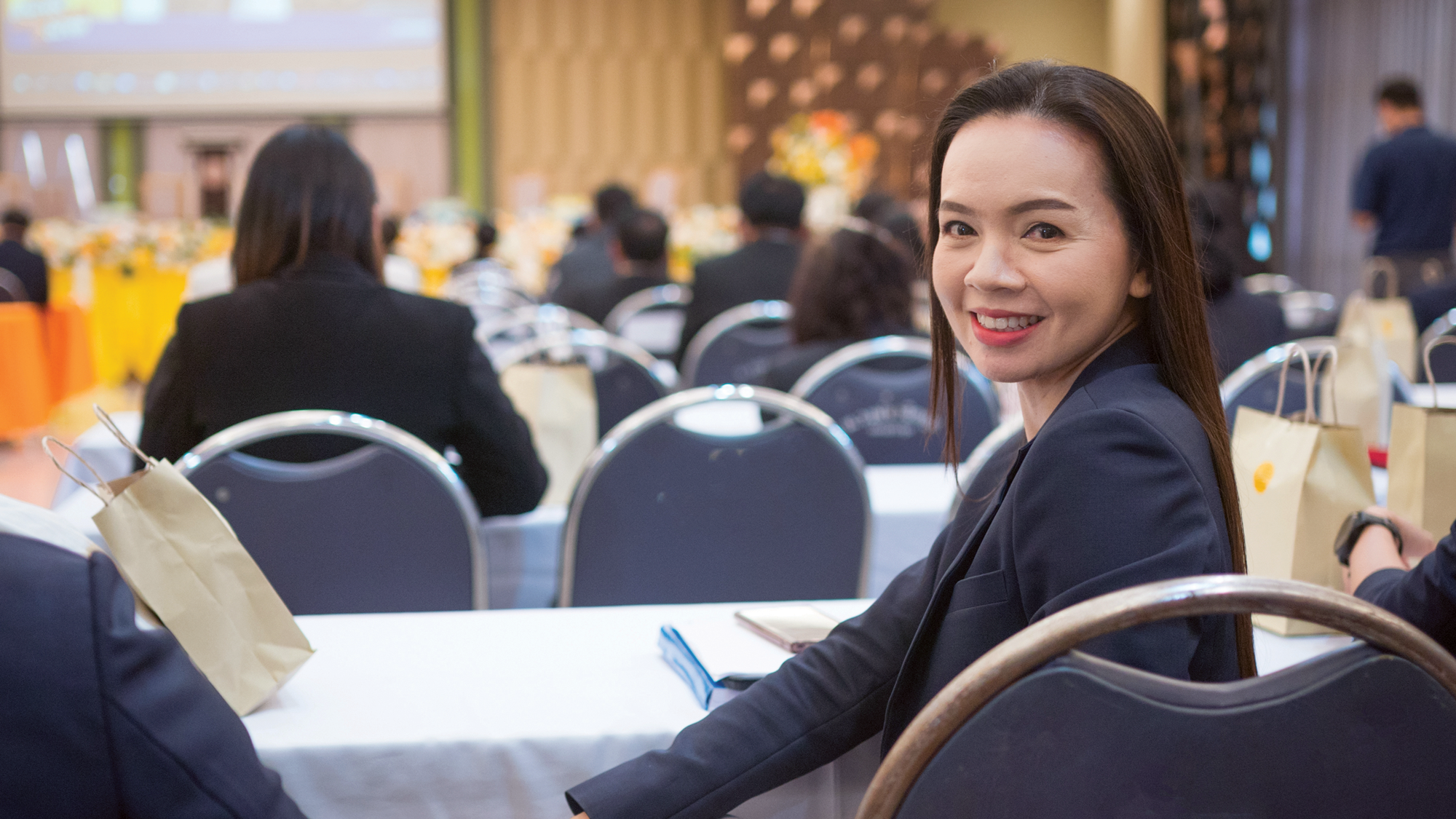
Tips for creating a welcoming, inclusive, and memorable event
Conferences and annual membership meetings provide time for members to connect and showcase the work of their professional organizations. They offer opportunities for upgrading skills, developing professional networks, and providing insights into professional trends. Volunteering at these planned events allows nurses to give back to the profession.
According to Klinshaw, nurses join professional organizations for five reasons: professional growth, education, networking, career advancement, and access to research and scholarship opportunities. Most nurses expect access to these opportunities at planned conferences and annual meetings.
Nurses who plan professional conferences aim to create experiences that leave attendees feeling invigorated, engaged, and part of something bigger than themselves. However, poorly planned events can leave attendees feeling disoriented and disconnected.
Incorporating warm welcomes, an atmosphere of belonging, and a sense of mattering as a part of professional nursing events can leave attendees feeling cared for and deeply connected to the organization.
Sustain a warm welcome
A less-than-welcoming experience happened to me once. Upon entering a voluminous convention center, I immediately felt uneasy and overwhelmed by the sheer size of the space. No one greeted attendees at the door, and no signage provided direction. I experienced no sense of excitement or camaraderie. This feeling of disconnection continued throughout the conference.
The disconnection I experienced was momentarily relieved when I found the registration desk. However, it was merely a sign-in checkpoint, not a warm welcome.
Mohrmann and Shepherd define “welcoming” as “will-come”, an affirmation that an individual’s arrival has been anticipated and embraced. Turner and Zepeda describe welcoming as the action of receiving others with a friendly salutation, extending kindness or politeness. The individuals at the registration desk were kind but matter-of-fact and uninterested.
According to Darling, welcoming cultures develop out of a duty and desire to invite others. A friendly greeting followed by genuine hospitality and an expressed sense of welcome can help sustain that spirit of welcome.
Most nurses who attend a conference want connection when they register. That first point of contact at the registration desk serves as a pivotal opportunity to make guests feel anticipated and welcomed.
This welcome also should be “wise” and intentional. Cohen describes wise intentionality—the realization that not all individuals have been historically seen or heard—as essential to making everyone feel welcome. Shepherd and Mohrmann argue that it is our duty as humans to be welcoming at all times. They describe it as a responsibility and necessity.
💡Takeaway. To help attendees feel welcome, event planners can call on organization members to serve as volunteer greeters and event ambassadors. Greeters can
facilitate a sense of welcome as they offer friendly salutations and help attendees find their way. Speakers can point out ambassadors, wearing a shirt or vest designating their role, in opening remarks and throughout the conference, directing attendees to look for them if they require
assistance.
Create an atmosphere of belonging
At that conference where I felt uncomfortable, I experienced the sting of what Cohen calls “belonging uncertainty.” It cast a gray cloud over my experience, endangering my sense of belonging to the professional organization of which I was a member.
Jackson describes joining and actively engaging in a professional organization as a strategy for fostering a sense of professional belonging. According to Press Ganey, belonging is the essence of work culture, and I argue the same is true for a professional organization.
Putnam and colleagues define social capital as the trust and established norms of an organization. It’s foundational to connection and belonging. Richardson and colleagues describe two forms of social capital: structural and cognitive. Structural social capital involves the actions and behaviors within a social network; cognitive social capital entails perceptions of trust and being trusted—a sense of belonging.
A sense of belonging has relevance for nurse retention in practice and professional nursing organization membership. According to Baumeister and Leary’s landmark work, people are inherently motivated to build connections with others.
According to Allen and colleagues, the desire to belong can be met through joining and belonging to groups and organizations. In contrast, Cohen notes that uncomfortable moments can provide insight into how it feels to be excluded or outside of one’s comfort zone.
As nurse event planners, we want to put our guests at ease, not inflict discomfort. Baumeister and Leary describe how belonging evokes pleasant emotions, whereas feeling excluded or unseen evokes negative emotions such as loneliness and depression. According to Press Ganey, celebrating accomplishments, championing diversity, being respectful, creating social norms, and establishing opportunities for connection can foster a sense of belonging. A well-crafted and intentional planned event can incorporate these ideas to foster belonging in attendees.
💡Takeaway. To help facilitate a sense of belonging at events, leverage the power of social capital by creating opportunities for connection. For example, serve coffee and tea with the goal of enabling conversation. Ask members to share a moment of connection that highlights organizational work. Thank members for coming and let them know they’re vital to the success of the organization.
Build a sense of mattering
No nurse should feel unseen or unvalued—we all want to feel that we matter. Finding your name tag at the registration desk denotes that you’re expected; you belong. Mattering, however, requires more. To feel as though you matter, you want the opportunity to be seen and heard.
According to Flett, people have an inherent need to feel they matter to others and that they’re significant to the world around them. Prilleltensky notes that a sense of mattering entails feeling valued and knowing that your presence adds worth. Haizlip and colleagues posit that nurses derive a sense that they matter from their work with patients and colleagues, their level of expertise, and the value and support they feel from those they work with, as well as from the organization for which they work.
Strategies to ensure that professional organization members feel they matter at planned events include showing appreciation—thanking them for coming and for sharing their time and talents with the organization. According to Gamache and Griffin, appreciation helps to retain volunteers in nonprofit work, which has relevance in retaining members in professional nursing organizations. Ultimately, event planners want to create community.
💡Takeaway. To help event attendees feel as though they matter—and to grow and retain membership—involve them as volunteers to assist fellow members. In addition to typical volunteer certificates, hold a small gathering within the event (breakfast or a coffee and tea reception) to thank volunteers for their contributions.
Purpose, inclusion, and memory
Cox noted 10 straightforward steps to conference planning: booking the location, creating the budget, building an event planning team, reviewing past event evaluations, brainstorming sessions and speakers, inviting speakers, beginning the countdown, attending the pre-conference, putting boots on the ground at the event, and debriefing and planning for next year.
In addition to these critical steps, successful professional conferences identify their purpose, establish practices to ensure everyone feels included, and create activities that build lasting memories.
Identify your purpose
Perkins argues that all planned events should start with a why. To help attendees understand why they’re at the conference, infuse the event with frequent references to the organization’s vision and mission. These dynamic organizational signposts can be called out during presentations and highlighted in conference materials. Parker describes how to create events with a strategic purpose: Your organization is only as successful as your members, so create a meeting geared toward them. Consider creating a World Café within the conference for an organizational pulse check and to assess and address professional issues. Your event may be the only opportunity for members to see the organization in real-time action, so be intentional. Remaining inclusive helps set the tone of the event and ensures an experience in which everyone feels safe.
Plan and design for everyone
Planning wisely involves providing hospitality in which everyone feels welcome. For example, Marriot Bonvoy, a leader in the hospitality industry, now incorporates neuroinclusive practices when an event has an attendance of 250 or more. The practices take into account the needs of those with neurological variances, including individuals with epilepsy, autism, or attention deficit disorder. Baumer and Frueh note that neurodiversity serves as a call to recognize that we’re all different thinkers, learners, and actors. (See Neuroinclusive practices.)
disorder. Baumer and Frueh note that neurodiversity serves as a call to recognize that we’re all different thinkers, learners, and actors. (See Neuroinclusive practices
- This calm room allows attendees who feel overloaded to retreat, regulate, and reset.
- Provide signage that indicates the room as a quiet space with no talking.
- Normalize its use by letting attendees know the room is open to everyone.
- Ear plugs
- Fidget toys
- Printed versions of conference agenda and maps
- Sleep masks
- Sunglasses
Baumer and Fruerh offer additional tips for ensuring a pleasurable event for all attendees.
Sound and light sensitivity
- Alert attendees to potentially unpleasant lighting and noise.
- Communicate trigger warnings in advance for any expected loud noises, and ask the venue about planned fire alarms.
- If having a dance, ask the DJ about the type of music and lighting. Convey that information to attendees.
Movement needs
- Provide fidget toys.
- Build in stretch breaks.
- Offer flexible seating.
- Normalize moving by noting it in announcements. Explain that the event is a dynamic and fluid environment in which everyone will occasionally move and stretch together. Place fidget toys on tables and let attendees know that they’re free to change their seating as necessary.
Communication
Ask someone unfamiliar with your event to read conference materials to ensure the following.
- Content is clearly written.
- Materials are free of unnecessary jargon, biased language, metaphors, and euphemisms.
Conference etiquette
- Review housekeeping rules and norms/tone of the setting.
- Discuss professional comportment.
- Include the audience in these discussions. Explain conference etiquette at the beginning of the conference and where to find more information in the printed materials or the conference app. Offer opportunities for attendees to share suggestions.
Attendee preferences
- Don’t make assumptions about what an attendee needs.
- Ask attendees to share their preferences, needs, and goals via email or the conference app. Explain that you may not be able to accommodate all needs, but that you’ll do your best.
No-contact zones
Some individuals may not feel comfortable interacting with others.
- Be mindful of their needs.
- Respect their boundaries.
To further mitigate discomfort at events, normalize the conversation surrounding the creation of safe zones. One way to support this effort is to use a text analyzer before releasing conference announcements, calls for abstracts, and registration updates to identify potentially harmful language. Use one of the many bias detectors to create inclusive documents. Witty.Works, for example, is an AI-powered bias detection and prevention tool.
Lasting memories
Conferences serve as tangible deliverables for members of professional organizations, something they can experience firsthand, so planners should intentionally create memorable experiences. Parker points out the similarity between talks and conferences; audiences typically remember the first and last 5% of a talk, and maybe some crucial moments here and there, and yet many of those presenting a talk or planning an event give little attention to the opening and closing.
According to Belanger, creating memorable planned events entails evoking powerful emotions as one reflects back on the conference and evaluates their time there. With this in mind, strategically appraise presentations. Stringer recommends instructing speakers to keep it simple; use slides with less text and more images, video clips, or graphs to convey their message. To keep the audience thinking and engaged, tell stories; narratives can evoke emotions. Establishing a theme for the meeting can help speakers align their presentations with the organization’s goals and its members. Consider asking members to share their nursing stories and what led them to the organization. (See Conference evaluations.)
Conference evaluations
When it comes to evaluating experiences, Belanger describes the peak-end rule in which evaluation or judgement of an experience occurs at its peak and when it’s over. For this reason, conferences should consider the following:
- Engage audiences by creating experiences that evoke emotions. The music playing at the opening of the conference, the vibrant speaker who opens the meeting, organizational leader engagement, and the overall connection of attendees have the power to evoke positive emotions.
- Incorporate elements of surprise and novelty, such as an unexpected performance or an activity that breaks the routine of conventional conference norms.
- Personalize experiences to foster belonging and connection. Gratitude serves as a simple way to foster belonging. Thanking others for sharing their time and talents can help ensure they feel seen and heard. It also creates opportunities for connection and conversation.
- Create sensory-engaging experiences to instill memories. Intentionally engage all five senses: sight (lighting, staging, room setup, signage); sound (music, conversation space, volume); touch (seating, tables, fabrics, temperature, chair spacing); taste (foods, beverages); scent (subtle, soothing, seasonal).
- To sustain memories, maintain engagement beyond the event via communication, social media, and content sharing.
Conferences as windows
Nursing conferences or events can serve as opportunities to ignite and incite passion in a professional organization. Planned events or gatherings can help to reveal the latest trends in practice, education, research, and policy. Whether in-person or virtually, these events create a space to build deep connections and create a sense of duty to one’s professional organization.
Nursing is a science and an art, which extends to nursing event planning. Well-planned events serve as spaces to engage, retain, and gain members. Planners can support those goals by creating welcoming and inclusive events that foster a sense of belonging and mattering, have a clear purpose, and create memories. (Learn more about creating a memorable event at bit.ly/3R4iym8.)
Kendrea Todt is an assistant professor and honors coordinator for the College of Nursing at East Tennessee State University in Johnson City.
American Nurse Journal. 2026; 21(7). Doi: 10.51256/ANJ0726124
References
Allen K-A, Gray DL, Baumeister RF, Leary MR. The need to belong: A deep dive into the origins, implications, and future of a foundational construct. Educ Psychol Rev. 2022;34(2):1133-56. doi:10.1007/s10648-021-09633-6
Baumeister RF, Leary MR. The need to belong: Desire for interpersonal attachments as a fundamental human motivation. Psychol Bull. 1995;117(3):497-529. doi:10.1037/0033-2909.117.3.497
Baumer N, Frueh J. What is neurodiversity? Harvard Health Publishing, Harvard Medical School. November 23, 2021. health.harvard.edu/blog/what-is-neurodiversity-202111232645
Belanger S. Creating moments that matter: A guide to planning memorable events. Bluewater. November 16, 2023. bluewatertech.com/a-guide-to-planning-memorable-events/
Bolter J, Stadler R. The role of sensory design in creating memorable event experiences. Int J Event Festival Manage. 2025;17(1):45-64. doi:10.1108/IJEFM-01-2025-0004
Clements AJ, Sharples A, Bishop J. The World Café method for engaging groups in conversation: Practical considerations and an agenda for critical evaluation. Occup Psychol Outlook. 2023;3(1):6-18. doi.org/10.53841/bpsopo.2024.3.1.6
Cohen GL. Belonging: The Science of Creating Connection and Bridging Divides. New York City, NY: W. W. Norton & Company; 2022.
Cox C. 10 steps to planning a successful conference. Am Nurse J. May 29, 2018. myamericannurse.com/10-steps-planning-successful-conference
Darling J. The fragility of welcome – Commentary to Gill. Fennia Int J Geog. 2018;196(2):220-4. doi:10.11143/fennia.75756
DePrisco M. Taking advantage of professional associations in every career stage. Forbes. January 23, 2023. forbes.com/sites/forbesbusinesscouncil/2023/01/23/taking-advantage-of-professional-associations-in-every-career-stage/
Enna Global. Why managers should give fidget toys to every employee in meetings. enna.org/why-managers-should-give-fidget-toys-to-every-employee-in-meetings/
Flett GL. An introduction, review, and conceptual analysis of mattering as an essential construct and an essential way of life. J Psychoeduc Assess. doi:10.1177/07342829211057640
Gamache P, Griffin JS. A simple strategy for volunteer appreciation and retention. NonProfit PRO. February 18, 2020. nonprofitpro.com/article/a-simple-strategy-to-volunteer-appreciation-and-retention/
Goodman C, Khan Z. Thriving together series. How to foster a sense of belonging. George Mason University. wellbeing.gmu.edu/thriving-together-series-how-to-foster-a-sense-of-belonging
Haizlip J, McCluney C, Hernandez M, Quatrara B, Brashers V. Mattering: How organizations, patients, and peers can affect nurse burnout and engagement. J Nurs Adm. 2020;50(5):267-73. doi:10.1097/NNA.0000000000000882
Jackson D. The case for belonging: Why nursing organisations matter. J Adv Nurs. 2025;81(11):7294-6. doi:10.1111/jan.17110
Klinshaw G. Five reasons to join a professional nursing organization. University at Buffalo School of Nursing. October 18, 2021. nursing.buffalo.edu/news-events/nurses-report.host.html/
Marriott Bonvoy. Marriott International becomes first hospitality company to introduce neuroinclusive practices at its largest customer events. November 2023. marriottbonvoy events.com/news-and-highlights/article/555/marriott-international-becomes-first-hospitality-company-to-introduce-neuroinclusive-practices-at-its-largest-customer-events
Mohrmann ME, Shepherd L. Ready to listen: Why welcome matters. J Pain Symptom Manage. 2012;43(3):646-50. doi:10.1016/j.jpainsymman.2011.09.004
Parker P. The Art of Gathering: How We Meet and Why It Matters. New York City, NY. Penguin; 2018.
PCMA. Guiding principles in experience design: Six truths for innovative event strategies. June 5, 2023. pcma.org/six-truths-event-design-strategies/
Perkins E. 3 keys to purposeful & strategic association events. Raybourn Group International. July 14, 2021. raybourn.com/the-three-keys-to-purposeful-strategic-association-events-2/
Press Ganey. Strategies for building sense of belonging. December 15, 2025. pressganey.com/resources/blog/building-belonging/
Prilleltensky I. Mattering at the intersection of psychology, philosophy, and politics. Am J Community Psychol. 2020;65(1-2):16-34. doi:10.1002/ajcp.12368
Putnam RD, Leonardi R, Nonetti RY. Social capital and institutional success. In: Making Democracy Work: Civic Traditions in Modern Italy. Princeton, NJ: Princeton University Press; 1993; 163-86.
Richardson J, Postmes T, Stroebe K. Social capital, identification and support: Scope for integration. PloS One. 2022;17(4):e0266499. doi:10.1371/journal.pone.0266499
Shepherd L, Mohrmann ME. Welcome: Patterns of the Moral Life. New York City, NY: Bloomsbury Academic; 2026.
Stringer H. The makings of a memorable research talk. APA Monitor. June 1, 2022. apa.org/monitor/2022/06/career-research-talk
Turner P, Zepeda EM. Welcoming ain’t belonging: A case study that explores how two-year predominantly white colleges can foster an environment of validation and mattering for men of color. High Educ Stud. 2021;11(2):127-38. doi:10.5539/hes.v11n2p127UC Berkely. Activity breaks. uhs.berkeley.edu/activitybreaks
Watchorn V, Cartledge M, Grant C, Walker A, Hale I. “A calm space to reset”: perceptions of sensory rooms in Australian public buildings. ArchNet-IJAR. 2025. doi:10.1108/ARCH-10-2024-0453