Frontline stories of opportunity and impact
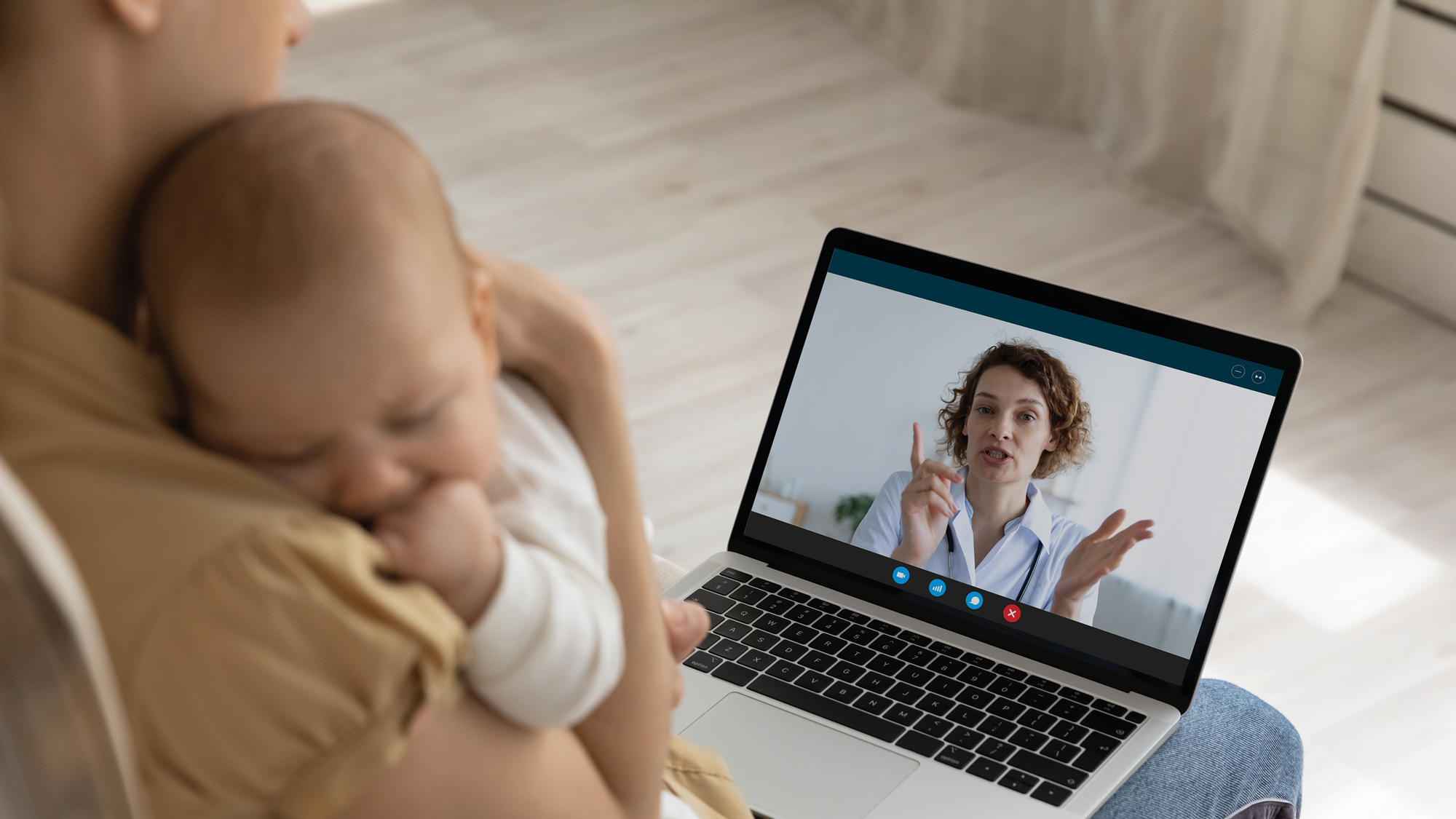
Virtual nursing has long leveraged technology to support communication and collaboration with patients, providers, and colleagues. Current HIPAA-compliant telehealth technologies allow nurses to assess and monitor patients as well as provide education. Voice-activated documentation at the bedside can help ensure patient safety, while communication technology connects patients with providers and nurses with each other.
Hiring and training new graduate nurses and nurses from other population backgrounds to become pediatric experts requires time, expense, and ongoing support. Virtual nursing can ease that burden. Declining undergraduate pediatric nursing education content, as described by Rice and colleagues, along with workforce shortages, may position pediatric nursing for virtual innovation. The development of the virtual nurse (VN) role at our organization, Nemours Children’s Hospital, relied on Cloyd and Thompson, Thomas, and Welsh and colleagues, as well as American Nurses Association and American Association of Critical-Care Nurses telehealth recommendations.
Roles, responsibilities, and virtual nurse stories
Nurse managers recruited RNs working in the float/resource pool to be the first VNs based on their clinical experience and availability. The role encompasses medication reconciliation, admission and discharge, and patient safety. (See Intersection of care.)
Intersection of care
The roles and responsibilities of virtual nurses and direct care nurses overlap at Nemours Children’s Hospital.
- Admission navigator
- Physical assessment
- Patient rounding
- Medication list completion
- Pain re-assessment
- Medication administration
- Pain assessment
- Medication verification
- Breast milk verification
- Patient education, including medication and discharge content
- Hands-on bedside care
- Patient education reinforcement
- Focused discharge education
- Discharge planning
- Plan of care coordination
- Collaboration of interprofessional care
- Team meeting
- Rounds
- Emergency care escalation
- Code response
- Call light response
- Family concerns escalation
- Patient and parent/guardian response
- Direct patient and family/guardian interaction
- Family communication
- Chart audits
Medication reconciliation
Anna*, the first nurse who transitioned to virtual practice, had worked at Nemours for 11 years. When she worked as a direct care pediatric nurse, she felt confident efficiently completing patient admission databases and assuming complete medication reconciliations because the provider had reviewed them.
As a VN, Anna has opportunities for new insight into medication reconciliation and can provide assistance. For example, when she had an interaction with a distraught mother whose medically complex child received a PRN medication that the provider had listed as routine, Anna reviewed each medication, supported the patient’s mother, and collaborated with the new direct care nurse, medical residents, and specialty providers. The new direct care nurse expressed gratitude for the assistance, and the mother appreciated that Anna ensured medication accuracy and included family members in care planning.
This example highlights how virtual nursing enables a more attentive and responsive care model, suggesting that such practices are integral to patient safety, family engagement, and overall quality of pediatric care.
Care coordination
Anna also completed the admission history for an infant with respiratory distress, whose mother felt anxious and reported having limited resources. Given this patient’s situation, the VN was made the care coordinator. She collaborated with case management, social work, lactation, nutrition, and the medical team to provide comprehensive services for this baby and family.
As the virtual care program has expanded to other clinical areas, care coordination, especially within discharge planning and education, remains within the realm of the VN as needed. The virtual care program now also includes a virtual pharmacist who assists with patient and family medication coordination and education. The VN can collaborate with additional resources or rely on the inpatient bedside team. VN independence supports the patient–family first philosophy of care.
Admission and discharge
Beatrice, a critical care RN, described her VN role as an honor and an “eye opener.” She noted that communication and data-gathering through VN admission and discharge intake improve the patient healing process and overall inpatient experience. Previously, she didn’t fully appreciate the necessity of the admission interview, but in the virtual format she found families to be open and willing to ask questions. Beatrice also described how using a social determinants of health screening tool has helped many families by providing a referral to social work and facilitating access to the hospital food pantry.
Beatrice feels that virtual nursing can change the course of healthcare. “We are not rushing to complete the admission database, because we have to give medications in the next room,” she said. “Instead, we are listening and educating through and through.”
Hospital admission can prove frightening for children and their parents or guardians. VNs assist in guiding families through the experience by not only obtaining demographic and health history information but also by providing education and assisting with hospital acclimation.
This service led one mother to nominate Robert, a VN, for a DAISY Award, stating that he was the first person who made her feel heard and helped her understand the hospital events. Robert responded, “I can’t imagine being somewhere and not knowing what will be happening to my child. This is why we do what we do. Family-centered care and patient safety are major factors for VNs.”
Laurel, a pediatric night shift nurse who accepted a VN position, routinely coordinates discharge planning among interprofessional and subspecialty team members. With heightened awareness of patient needs, along with knowledge of specific team member expertise, she can collaborate and coordinate care to ensure that all aspects are accounted for before discharge and that parents or guardians feel comfortable and confident when taking their child home.
A young patient admitted with dehydration received I.V. fluids and then was deemed ready for discharge. Family discussion revealed the mother’s lack of confidence regarding her developmentally delayed child’s fluid intake and recent voiding. Laurel consulted with the direct care nurse and pediatric resident; together, they decided to delay discharge. “Parents have so much going on and can’t always remember details but are consistently with their child and can recognize concerns,” Laurel said.
VNs can serve as a safeguard and back-up for clinical care to help reduce risk and prevent harm. The VN role ensures careful attention to admission and discharge assessments, education, and planning. These changes correlate with reduced readmission rates, especially on short-stay units. Two of our locations reported declines in readmission rates since implementation of the VN role.
Patient safety
Patient safety requires effective communication. VN nurse Julia recognized the communication challenges that can occur with non-English speaking families. She sees supporting the Hispanic community as a critical nursing task.
Before launch of the VN program, nurses used in-person interpreters when possible, but they frequently relied on an electronic tablet with a video component. Now, the VN calls into the room with a live interpreter on the phone.
Julia had been unaware of the many unasked questions from Hispanic families until a few months into the VN pilot program, when she noticed improved communication, such as parents asking more questions about discharge and caring for their child at home.
“As a VN, I can focus on one patient individually, and this conveys my interest in taking time with families,” Julia said. “Distractions like call bells, someone physically looking for their nurse, among other interruptions, aren’t seen by families while under care of the VN.”
Two of Nemours’ VNs initially worked as clinical nurses on a short-stay unit that hosted the first VNs in the Delaware location. Working from a unit-based office setting, these VNs remain in contact with direct care nurses and all members of the interprofessional team. This collaboration supports efficient admissions and discharges. It also promotes the use of illness-directed clinical pathways that guide anticipated care and team-based discharge planning based on projected timelines and patient progress.
Rapid turnover and short lengths of stay require all team members to address patient needs through their individual responsibilities. In a virtual encounter, VN Megan noticed that a patient had two prescriptions for an antibiotic at discharge, one in a liquid form and the other a pill form. Megan quickly called the provider, adjusted the patient discharge instructions, and spoke to the family to ensure they understood the form of medication prescribed and how to administer it.
VN program outcomes
These VN experiences highlight how “good catches” enhance patient safety while improving care quality and the overall patient experience.
A dedicated VN who reads and reviews admission notes, ongoing hospital-based and discharge plans, and pharmacologic and non-pharmacologic treatments can intervene for patients during their hospitalization and serve as a support to the direct care nurse, potentially reducing errors and their associated costs.
Implementation of the VN program at Nemours correlates with increased patient satisfaction scores, especially within non-English speaking communities. Among both Spanish- and English-speaking families, 80% reported positive impacts of the VN program; Spanish-speaking families reported the highest score overall in response to the statement, “Nurses listened carefully.”
Using a VN for discharge planning and instruction correlates with reduced time to discharge by more than half. Our organization noted a decrease in the average discharge throughput hours after implementing the VN role. The start of the VN program also correlates positively with improved completion of medication education at discharge and now includes pharmacist participation.
In addition, the program has proven budget-neutral, allowing units to assign VNs and use remaining positions for direct care nurses, which helps address concerns about future staffing and clinical workflows. Interprofessional survey data indicate 80% satisfaction among staff (direct care bedside nurses, physicians, and other professionals) who’ve been involved with the VN pilot program.
Future considerations
At Nemours, the VN role has been associated with patient satisfaction, higher quality of care, and error reduction, findings similar to those of Bhaloo and colleagues and Thomas. However, additional data will help to further document outcomes in the pediatric hospital setting. These data will allow us to leverage resources for the continued benefit of patients and to consider alternative uses for the role, such as employing the VN to be the initial responder for evaluating patient status, especially when decompensation occurs.
New virtual systems that include artificial intelligence allow nurses to anticipate worsening patient conditions based on electronic monitoring and reporting from the camera view, document tasks such as dressing changes, and collaborate with other team members. Within these systems, VNs can better use their assessment skills, view patients in consultation with the direct care nurse, call for emergency assistance, and document events.
At the systems level, documenting cost savings associated with the VN role can potentially lead to financial support. Our use of supplemental resource nurses and current bedside nurses didn’t incur additional costs. The creation of job descriptions that optimize the VN role and ensure training and expertise also can support sustainability and effectiveness.
VNs at Nemours Children’s Hospital reported satisfaction in the role, and the program documented improved patient care that incorporated interprofessional collaboration. In addition to direct bedside nursing peer support, the role also enhances patient safety and satisfaction. Opportunities for VNs continue to expand, making this role a fulfilling position, especially within pediatric care.
*Names are fictitious.
The authors work at Nemours Children’s Hospital. Catherine Haut is director of nursing research and evidence-based practice in Wilmington, Delaware. Aimee Stilp, Jessica Droz, Christina Burton, and Kristin Reagan are virtual nurses in Orlando, Florida. Meghan Davis and Ashley Brown are virtual nurses in Wilmington. Samantha Guerra is the cardiac care coordinator in Orlando.
References
American Academy of Ambulatory Care Nursing. Telehealth nursing practice. 2023. aaacn.org/practice-resources/telehealth/telehealth-nursing-practice
American Nurses Association. ANA core principles on connected health. 2019. nursingworld.org/globalassets/docs/ana/cpch.pdf
American Nurses Association. March 2, 2021 statement for the record from ANA to the House Energy and Commerce Health Subcommittee. nursingworld.org/practice-policy/work-environment/health-safety/disaster-preparedness/coronavirus/what-you-need-to-know/legislative-and-regulatory-advocacy/march-2-2021-statement-for-the-record-from-ana/
Bhaloo T, Prakash J, Dial N, et al. Using Implementation Science to Evaluate a Virtual Nursing Care Model in a Medical and Surgical Acute Care Setting. Comput Inform Nurs. 2026;44(1):e01318. doi:10.1097/CIN.0000000000001318
Brindise T. Virtual nurse program implementation. J Radiol Nurs. 2024;43(3):198-202. doi.org/10.1016/j.jradnu.2024.06.005
Cloyd B, Thompson J. Virtual care nursing: The wave of the future. Nurse Lead. 2020;18(2):147-50. doi:10.1016/j.mnl.2019.12.006
Miller J, Stahl M, eds. AACN Tele-Critical Care Nursing Practice: An Expert Consensus Statement Supporting Acute, Progressive and Critical Care 2022. American Association of Critical Care Nurses. 2022. aacn.org/~/media/aacn-website/nursing-excellence/standards/aacn-teleicu-nursing-practice.pdf
National Council of State Boards of Nursing. The NCSBN position statement on telehealth nursing practice. 2014.ncsbn.org/papers/the-ncsbn-position-paper-on-telehealth-nursing-practice
Rice M, Etheridge S, Armstrong A, et al. Call to action: Bolstering the diminishing pediatric nursing workforce. J Nurs Educ. 2024;63(12):806-12. doi:10.3928/01484834-20240725-01
Thomas L. Nursing workflow redesign and technology are keys for virtual nursing success. Nurse Lead. 2024;22(4):453-7. doi:10.1016/j.mnl.2023.11.015
Tibbe M, Arneson S, Welsh C. Rise of the virtual nurse. AACN Adv Crit Care. 2023;34(4):314-23. doi:10.4037/aacnacc2023391
Welsh C, Brindise T, Deane B, Ferraro K, Lemke J, Rashleger L. Alleviating bedside nurse burden: A virtual nursing program. Nurse Lead. 2025;23(2):158-62. doi:10.1016/j.mnl.2024.10.017
















1 Comment. Leave new
This article is timely. This past week, a patient was so upset that I woke her for her 10pm medications; something clicked: “We need to deliver healthcare differently.” Why am I waking this patient up at 10pm? What would she do if she was home? It wasn’t and antibiotic, though it was an anticoagulant, it can be given 6am and 6pm. Also, we do vital signs every four hours, why? The evidence showed very little to no change in allowing patient to sleep through out the. night. If they wake up during the night, we do the vital signs. Those who are unstable have their vital signs automated rather than waking the patient up. Nursing leadership believes that only the ICU can have automated vital-signs monitoring; let us be creative in how we deliver care. This will improve patient satisfaction scores.
I was going to write a proposal on the use of virtual nursing for admissions and discharges when I saw this article. Virtual nursing has many advantages: it will reduce nurse burnout, improve ED throughput, and enhance patient satisfaction with discharge education and overall hospital rating.
Your work has inspired me to move on with my proposal. I will definitely contact the author to get some support.