This point of care tool can help preceptors promote psychological safety.
- Psychologically safe advanced practice RN learning environments create an atmosphere of support, set clear expectations, and allow room for mistakes.
- Bias and microaggressions experienced by students during clinical training can result in feelings of frustration and powerlessness.
- Preceptors can take five actionable steps to ensure psychological safety.
SEVERAL NURSING ORGANIZATIONS (including the American Nurses Association [ANA], the American Association of Colleges of Nursing, and the American Association of Nurse Practitioners in Women’s Health) have acknowledged the importance of increasing representation in the nursing workforce and improving access to care and outcomes. In 2024, ANA published a statement that articulates a clear vision for the nursing profession where every nurse has the equal opportunity to excel, and every patient receives the highest standard of equitable care. In response to these calls to action, Chicca and Shellenbarger and Warren and colleagues note that preceptors require tools that foster psychologically safe learning environments where all students can learn effectively.
As part of that effort, we developed five actionable steps (the Five Rs) that preceptors can use to ensure psychological safety, with attention to diversity and inclusion, as they cultivate a more diverse nursing workforce.
Psychologically safe learning environments
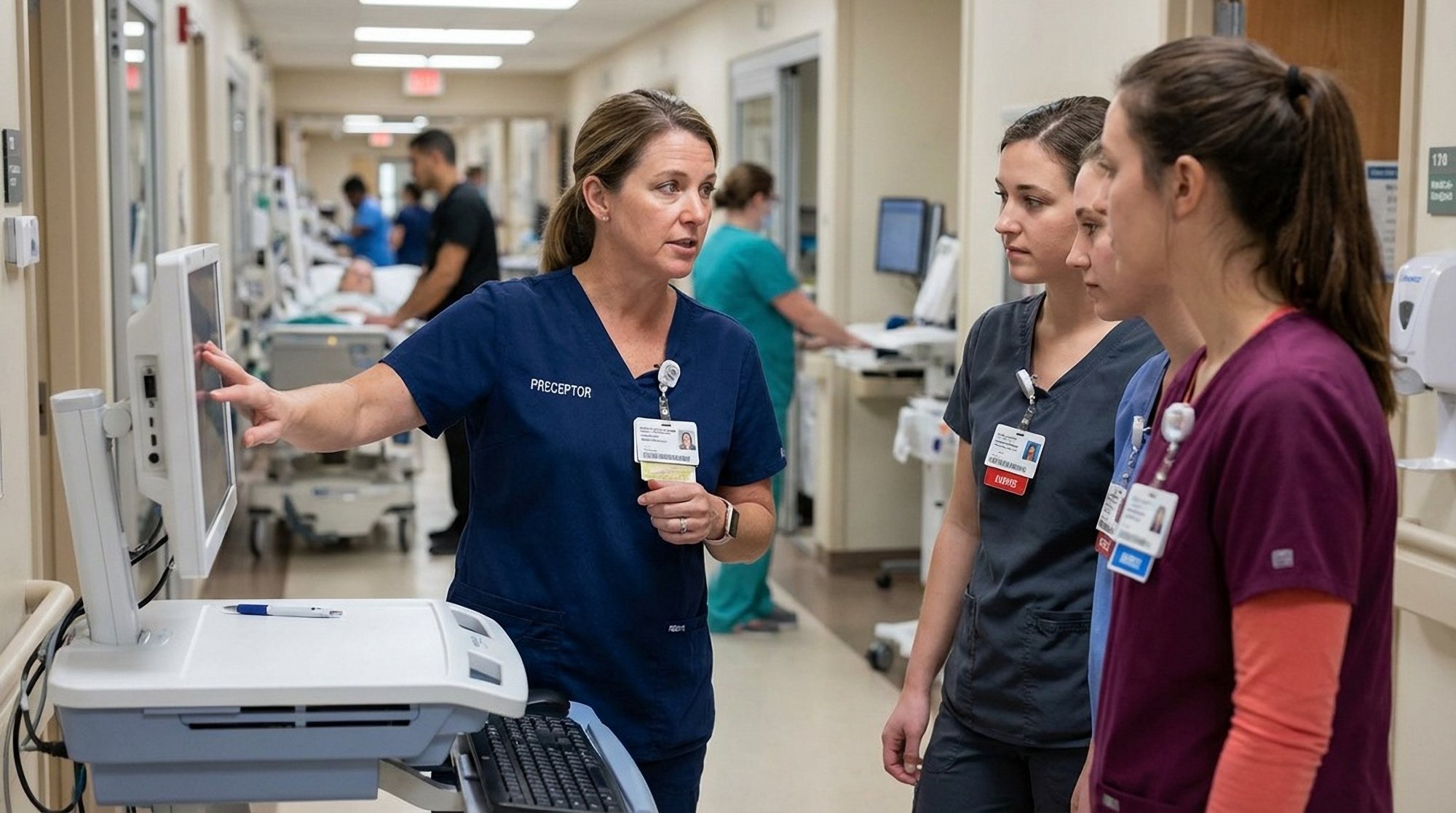
All learning involves risk-taking and a willingness to experience growth. According to Chicca and colleagues and Turner and Harder, primary components of a psychologically safe learning environment include permission to make mistakes, a supportive preceptor, orientation to the setting, and clear expectations for performance. In this environment, students have the opportunity to practice clinical decision making with the support of their preceptor so that they can make errors without compromising patient care. In contrast, a psychologically unsafe environment may include the presence of biases and microaggressions that inhibit learning. (See Definitions)
Definitions
Understanding the following terms can help preceptors create psychologically safe environments for nurses.
Antiracism serves as an abundant framework of ideas and political actions to counter racial prejudice, systemic racism, and the oppression of racialized, colonized peoples. The process and practice of antiracism works to change our hearts, communities, and institutions moment by moment.
Diversity embodies inclusiveness, mutual respect, and multiple perspectives. As a catalyst for change, it results in health equity that encompasses all aspects of human differences, including socioeconomic status, race, ethnicity, language, nationality, sex, gender identity, sexual orientation, religion, geography, disability, and age.
Implicit bias, unconscious attitudes (both favorable and unfavorable), affects one’s understanding of judgments about and actions toward others. By definition, these biases exert influence without one’s awareness or reflection; they’re not under the person’s control. An individual can’t voluntarily conceal implicit biases, and others exposed to them feel their impact.
Inclusion involves creating environments in which any individual or group can feel welcomed, respected, supported, and valued. An inclusive climate embraces differences, offering respect in words and actions so that all persons can fully participate.
Microagressions are brief and commonplace daily verbal, behavioral, or environmental indignities, whether intentional or unintentional, that communicate hostile, derogatory, or negative racial slights and insults toward people of any marginalized group.
Racism is the conscious or unconscious intentional enactment of racial power, grounded in racial prejudice, by an individual or group against another individual or group perceived as having lower racial status.
Sources: American College of Nurse Mid-Midwives + Shift Consulting, Effland and colleagues, Josiah
Weiss and colleagues describe psychological safety as supporting student retention and progression. It functions as a foundational component of student well-being, a proxy for satisfaction with the clinical learning environment, and a hallmark of effective supervision—all factors closely linked to persistence and on-time completion. These supervisory behaviors (modeling fallibility, inviting questions, and providing constructive feedback) signal safety and are consistently associated with better learning experiences and sustained engagement.
In contrast, as noted by Dong and colleagues, a psychologically unsafe environment may include the presence of biases and microaggressions that inhibit learning. Global perspectives in health professions education underscore that such threats to inclusion and learner safety suppress voice, reduce willingness to contribute to or challenge problematic practices, and thereby diminish learning opportunities and the equality of patient care.
Although the evidence base is heterogeneous, studies (including by Montgomery and colleagues) have demonstrated significant associations between higher psychological safety and objective patient safety outcomes (increased error reporting and reduction in certain adverse events), reinforcing the idea that the same conditions that enable learners to grow also contribute to safer care. At the same time, measuring patient safety solely as an absence of harm can complicate the interpretation (higher reporting may reflect more safety, not less), underscoring the importance of cultivating psychologically safe environments while refining outcomes assessment.
Mitigating barriers
Preceptors guide APRN students in the integration of didactic learning, hands-on skills, and decision making in the clinical setting. They adapt to students’ different personalities, cultures, and learning styles. Preceptors may face obstacles to effectively modeling psychological safety within this diversity. For example, they may work in systems that don’t support or aren’t conducive to students’ psychological well-being. Several factors can lead to this type of unsupportive environment, including work hours, patient volume and resources, and lack of respect for the APRN role.
Preceptors can mitigate barriers to implementing psychological safety by intentionally cultivating a supportive learning environment within their own clinical interactions, regardless of broader system constraints. Employing concise teaching strategies, such as debriefs and structured feedback, allows preceptors to promote safety despite high workload or limited resources. Clarifying expectations, inviting questions, and tailoring communication to students’ individual learning styles and cultural backgrounds further strengthen trust. Additionally, modeling professional role clarity and reflective practice helps students navigate environments where the APRN role may be undervalued. Through these focused strategies, preceptors can foster psychological safety even in settings that aren’t inherently supportive.
Preceptor reflection
To create a psychologically safe learning environment that facilitates success, the preceptor must engage in a process of self‑reflection about their own responses to bias and demonstrate empathy in their interactions with students. Although preceptors may experience their own emotional discomfort when bias occurs, briefly acknowledging these feelings can enhance their ability to remain present, supportive, and responsive to the learner’s needs. Having strategies to identify and respond to psychologically unsafe learning events can prove helpful.
Actionable steps
Many nurses find that they lack the ability to respond in the moment to uncomfortable situations. The American College of Nurse-Midwives + Shift Consulting advises nurses to address the witnessed words or behavior rather than the person who said them.
In an effort to follow that advice, we developed our Five Rs tool (Respond, Recall, Redirect, Relate, and Reflect). Based on our experience as student preceptors and faculty, the ideologies and concepts of researchers (including Effland and colleagues and the Josiah Macy Jr. Foundation), and the American College of Nurse Midwives Anti-Racism Toolkit for Midwives, the tool aims to promote actionable steps preceptors can take to promote psychologically safe learning environments. The steps described frequently flow in the order presented, but they can occur in a different order. (See Five actionable steps.)
- Immediately call out the offensive statement, action, or situation.
- Use “I” rather than “you” statements.
- “When we both have a few minutes, I’d like to discuss the statement I just heard.”
- “I heard something that didn’t sit well with me.”
- “Let’s go home, regroup, and talk about this tomorrow.”
- “Let’s talk over lunch when we’ve both had a chance to regroup.”
- Facilitate conversation about the offensive statement or behavior at an appropriate time and place.
- Use “we” statements.
- “A comment made earlier raised concern with me. Can we take a few minutes now to discuss it privately?”
- Assign ownership.
- Use “you” statements.
- Request clarification.
- Establish intent.
- “What did you mean when you made that statement?”
- “I’m not sure I understand. Can you explain what you meant when you said that?”
- “I’m sure you didn’t mean it that way, but when you made that statement, I found it offensive.”
- Admit to mistakes and knowledge gaps.
- Discuss commonalities and normalize being wrong.
- Invite questions.
- Practice active listening.
- “I know I’ve made incorrect assumptions about clients. Taking the time to learn about cultural differences and similarities has helped me. Is there anything you’d like to know about my experience?”
- Explore implicit biases.
- Practice regular self-care to promote physical and mental well-being.
- Seek support through sharing with trusted sources.
- Self-educate.
- Affirmations
- Humor
- Spirituality/religion
- Training programs:
- Humanitas Institute—web-based bias and equity courses: www.humanitasinst.org/courses
- Biologix Solutions—Web-based implicit bias training for healthcare: blxtraining.com/course/implicit-bias-training/
- Trusted support sources (peers, mentors, counselors)
- Withdrawing for self-protection
Sources: American Association of Nurse Practitioners, Effland and colleagues, Josiah Macy Jr. Foundation
Respond
Immediately bring attention to words or behavior that contribute to a psychologically unsafe learning environment. Responding exposes the offending words or behavior despite awareness or intent. Sue and colleagues note that depending on the environment, situation, and witnesses present, it may be appropriate to defer discussing the event in detail to a more appropriate time.
Recall
Discuss the event in an environment conducive to open communication and where parties feel comfortable and safe. The conversation shouldn’t incite blame or anger, which can close down effective communication. Using “I” statements rather than “you” statements avoids assigning guilt. Recalling events soon after they occur prevents preoccupation with the incident, which can increase anxiety and fear.
Redirect
Provide the opportunity to assign ownership in a nonthreatening manner and assist with establishing the intent of the offending statement, behavior, or event. After determining the intent, clarify the statements made. Without establishing intent and clarity, an enlightening conversation may prove impossible. Redirection allows the individual to explore possible beliefs or biases contributing to the statement or behavior.
Relate
Connect the event to tangible, real-life examples, emphasizing humanity and conveying the significance of the behavior or statement for all involved. The preceptor should invite questions, practice active listening, and validate feelings. Change requires admitting mistakes and knowledge gaps. Highlight areas that require self or institutional education. Normalize being wrong and emphasize that no one is immune to bias.
Reflect
Encourage those harmed by microaggressions, racism, or bias to prioritize both mental and physical well-being. Mentors, therapists, or peers can help create a safe space to work through events and interactions and explore feelings and reactions. If a psychologically unsafe environment persists for a student despite intervention, withdrawal from the clinical setting and reassignment to another for self-protection may be appropriate. For those who’ve made a biased statement or engaged in a microaggression, reflection provides an opportunity to explore their implicit biases and seek opportunities to self-educate.
Student/preceptor scenario
A nurse practitioner student reporting to the preceptor says, “This is a 17-year-old primigravida Native American client who presents to the clinic today at 38 weeks after missing several prenatal visits. She reports that the baby is moving fine. She plans to breastfeed and doesn’t want to discuss birth control.” A colleague in the clinic overhears the discussion and says, “I hope you discussed birth control because you know she’s one of those people and will probably be back again pregnant next year.”
Respond. The preceptor says to the colleague, “That statement, ‘She’s one of those people and will probably be back again pregnant next year,’ doesn’t sit well with me. I’d like to discuss this with you after I complete this next visit.”
Recall. The preceptor says to the colleague, “Now that we have a few minutes and privacy, can we discuss the statement made earlier using the words ‘those people’ in regard to a Native American client? When statements like that are made, I’m uncomfortable because I identify it as a microaggression.”
Redirect. The preceptor says to the colleague, “Can you explain what you mean when you say ‘those people’?”
Relate. The preceptor says to the colleague, “I previously had similar thoughts, but took the time to educate myself on the cultural practices of our Native American clients and realized I was wrong. I’m happy to share educational resources I used. I don’t want our students exposed to racism, bias, or misconceptions in our clinic.”
Reflect. The preceptor says to the student, “You witnessed an unfair comment based on the patient’s cultural background. As nurse practitioners, it’s important that we create an environment for our patients and for ourselves that’s safe and culturally appropriate. We also should take a leadership role in addressing these issues. I find reflection on thoughts and feelings surrounding such events helpful. Journaling and sharing the experience with a trusted peer, mentor, clinical faculty member, or counselor may help you with reflection.”
Practice
Chicca and Shellenbarger and Folkvord and Risa describe role-playing, simulation, and scripting as effective strategies for questioning assumptions, promoting self-efficacy, and engaging in reflection about cultural difference and its role in healthcare. Preceptors and students can verbally practice implementing the Five Rs via role-playing. In simulation, this might occur in the context of other aspects of simulated patient care, such as managing responses to bias while performing a physical assessment. Scripting offers the opportunity to prepare and practice responses to use in the moment when situations occur.
Learners and preceptors may experience discomfort when practicing responses to bias or cultural difference, and limited clinical time frequently restricts opportunities for extended engagement. In addition, without clear structure, these activities may elicit only superficial participation. These barriers can be reduced through brief, structured practice scenarios, integration of micro‑practice into clinical workflows, and focused debriefing that emphasizes reflective learning. Employing realistic cases and explicitly linking activities to the Five Rs further support meaningful, authentic skill development within constrained educational contexts.
Role modeling responsibility
Preceptors have a responsibility to role‑model responses to challenging clinical encounters, including bias, microaggressions, and racism. To succeed, preceptors must remain open to self‑reflection and continue interrogating their own biases and behavior. They should listen to their students to understand their perspectives and use the Five Rs, adapted to fit individual student needs, to foster psychologically safe learning environments.
By tailoring the approach to each learner’s communication style, prior exposure, and cultural lens, preceptors demonstrate their commitment to advancing a diverse, inclusive profession capable of delivering culturally appropriate, safe, unbiased care to those we serve.
The authors are faculty members at Frontier Nursing University in Versailles, Kentucky.
References
American Assocition of Colleges of Nursing. Enhancing diversity in the nursing workforce. April 2023. aacnnursing.org/news-data/fact-sheets/enhancing-diversity-in-the-nursing-workforce
American Association of Nurse Practitioners. Diversity, equity and inclusion. aanp.org/diversity-equity-and-inclusion
American College of Nurse-Midwives + Shift Consulting. Unpacking Our Birth Bag: Anti-Racism Toolkit for Midwives. form.jotform.com/ACNMAdmin/unpacking-our-birth-bag-anti-racism
American Nurses Association. Diversity, equity, inclusion commitment statement. August 2, 2024. nursingworld.org/content-hub/resources/workplace/DEIB-Commitment-Statement
Chicca J, Shellenbarger T. Fostering inclusive clinical learning environments using a psychological safety lens. Teach Learn Nurs. 2020;15(4):226-32. doi:10.1016/j.teln.2020.03.002
Dong C, Altshuler L, Ban N, et al. Psychological safety in health professions education: Insights and strategies from a global community of practice. Front Med. 2025;11:1508992. doi:10.3389/fmed.2024.1508992
Effland KJ, Hays K, Ortiz FM, Blanco BA. Incorporating an equity agenda into health professions education and training to build a more representative workforce. J Midwifery Womens Health. 2020;65(1):149-59. doi:10.1111/jmwh.13070
Folkvord SE, Risa CF. Factors that enhance midwifery students’ learning and development of self-efficacy in clinical placement: systematic qualitative review. Nurse Educ Pract. 2023;66:103510. doi:10.1016/j.nepr.2022.103510
Josiah Macy Jr. Foundation. Addressing harmful bias and eliminating discrimination in health professions learning environments. macyfoundation.org/assets/reports/publications/jmf_2020_confsummary_fin.pdf.
Loomis H, Hackley B, Alexander-Delpech P, McGahey E, Perlman D. Midwifery students’ experiences of bias in the clinical setting: Prevalence, types, and impact. J Midwifery Womens Health. 2025;70(1):50-60. doi:10.1111/jmwh.13680
Montgomery A, Chalili V, Lainidi O, et al. Psychological safety and patient safety: A systematic and narrative review. PLoS One. 2025;20(4):e0322215. doi:10.1371/journal.pone.0322215
National Organization of Nurse Practitioner Faculties. The National Organization of Nurse Practitioner Faculties (NONPF) reaffirms diversity, equity, and inclusivity in nurse practitioner education. August 23, 2023. cdn.ymaws.com/www.nonpf.org/resource/resmgr/statements_&_papers/20230823_nonpf_reaffirmation.pdf.
Nurse Practitioners in Women’s Health. Position Statement: Structural Racism and Implicit Bias in Women’s Healthcare. October 27, 2020. cdn.ymaws.com/npwh.org/resource/resmgr/positionstatement/npwh-ps-102020-structuralrac.pdf
Sue DW. The challenges of becoming a White ally. Couns Psychol. 2017;45(5):706-16. doi:10.1177/0011000017719323
Sue DW, Alsaidi S, Awad MN, Glaeser E, Calle CZ, Mendez N. Disarming racial microaggressions: Microintervention strategies for targets, White allies, and bystanders. Am Psychol. 2019;74(1):128-42. doi:10.1037/amp0000296
Turner S, Harder N. Psychological safe environment: A concept analysis. Clin Simul Nurs. 2018;18:47-55. doi:10.1016/j.ecns.2018.02.004
University of California Berkeley: Division of Equity and Inclusion. Strategic Planning for Equity, Inclusion, and Diversity.; 2015. diversity.berkeley.edu/planning-process.
Warren N, Baptiste DL, Foronda C, Mark HD. Evaluation of an intervention to improve clinical nurse educators’ knowledge, perceived skills, and confidence related to diversity. Nurse Educ. 2017;42(6):320-3. doi:10.1097/NNE.0000000000000355
Weiss AK, Schultz K, Guttadauria BC, Varpio L. Exploring the construct of psychological safety in the graduate medical education learning environment: A scoping review. Acad Med. 2026;101(1):112-21. doi:10.1093/acamed/wvaf014
Keywords: psychological safety, advanced practice, diversity, inclusion, cultural sensitivity