
Summit attendees collaborate to strengthen nursing and provide optimal care.
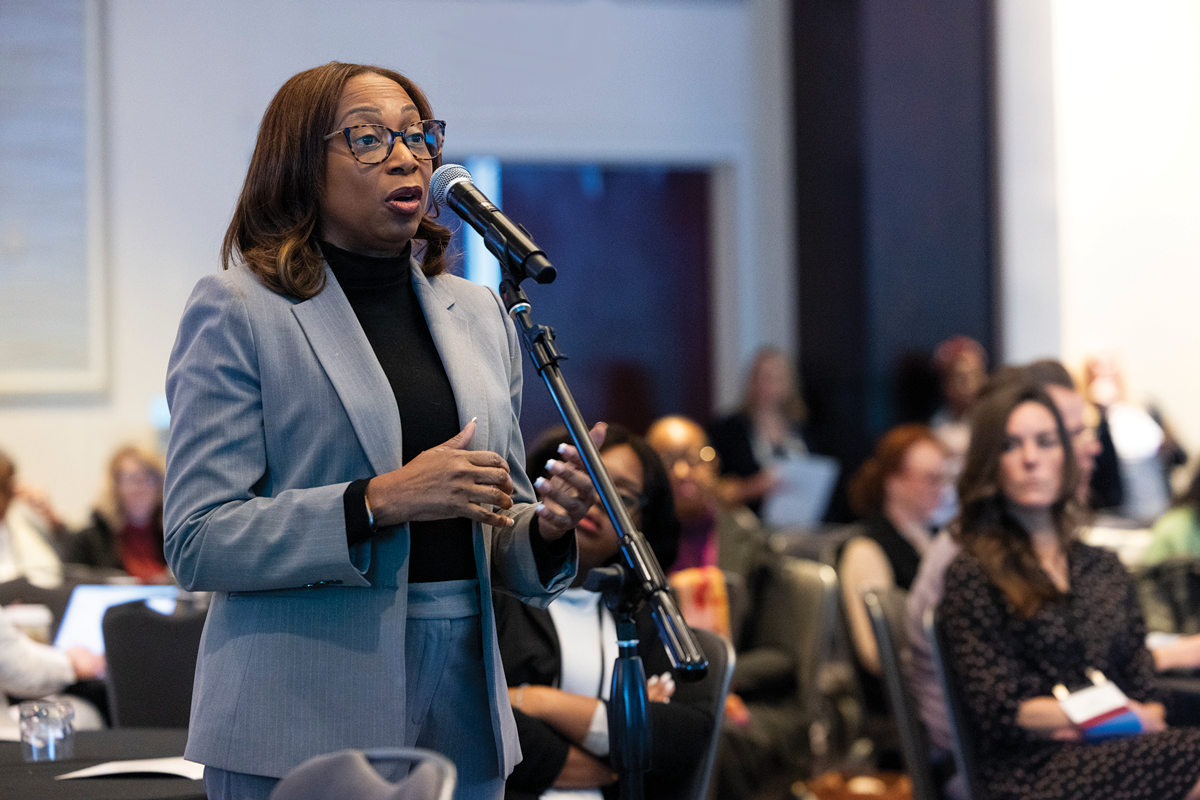
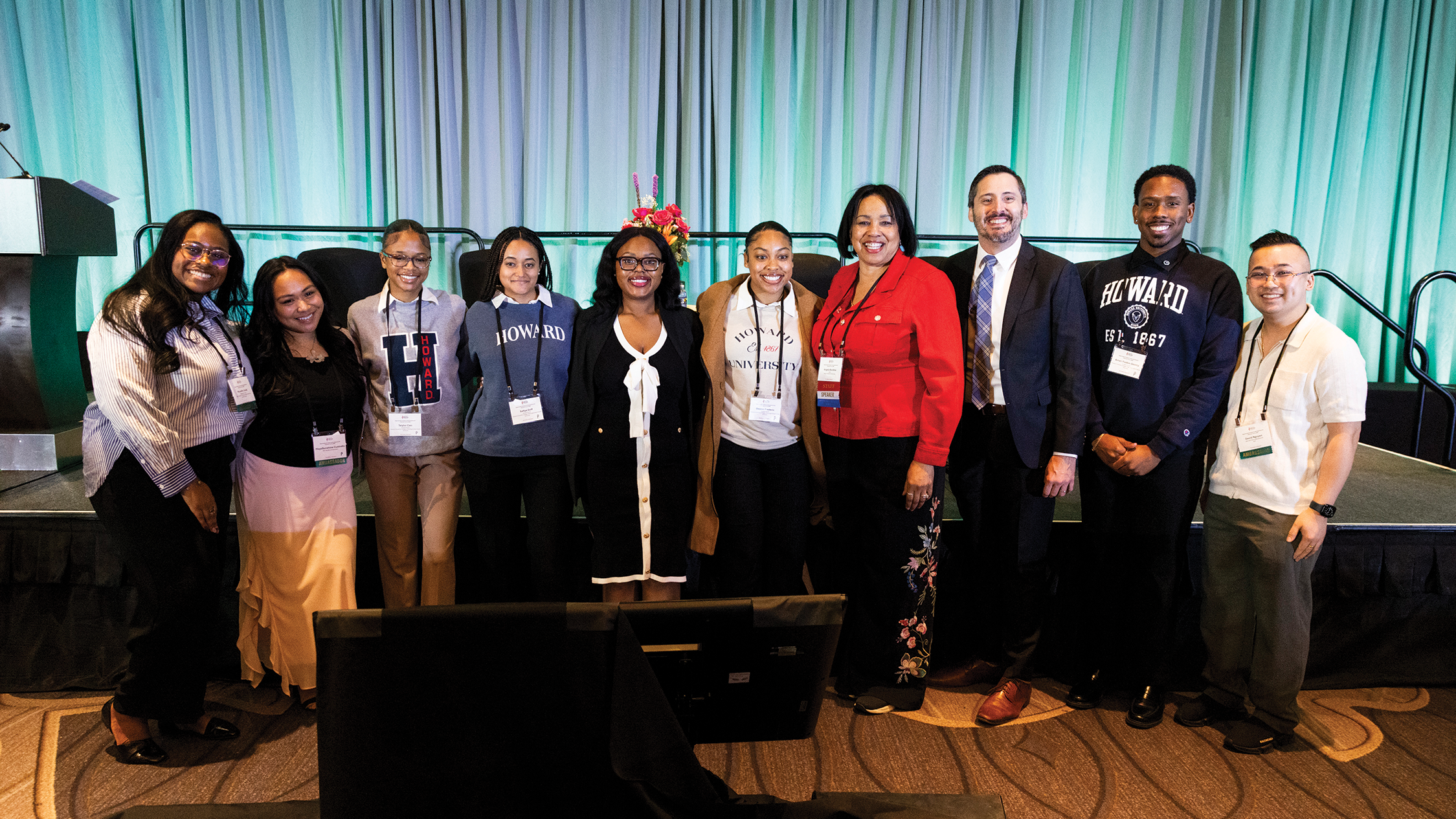
Shared insights, poignant storytelling, and actionable strategies defined the 2026 Opportunity & Impact in Nursing Summit, hosted by the American Nurses Enterprise (ANE) February 12-14 in Washington, DC. Over 3 days, esteemed researchers and educators, visionary leaders, and inspiring trailblazers described their lived experiences and work advancing health equity and improving outcomes for workplaces and recipients of care.
The summit was a tangible expression of the American Nurses Association’s (ANA) commitment to its equity vision for the nursing profession.
“My deepest hope is that these three days provide a safe haven. A place of refuge. A space to think, reflect, share, strengthen, and sustain each other,” said ANA President Jennifer Mensik Kennedy, PhD, MBA, RN, NEA BC, FAAN. “Thank you for this opportunity to fuel your work, your ideas, your experiences, and collective impact. We continue—together—our journey to a brighter future and a nursing profession and healthcare system that are just, inclusive, and truly equitable for all.”
The summit, noted ANE CEO Angela Beddoe, “is about expanding opportunities, advancing the nursing workforce, and turning our shared values into real action for the benefit of the profession.”
Intimate conversations
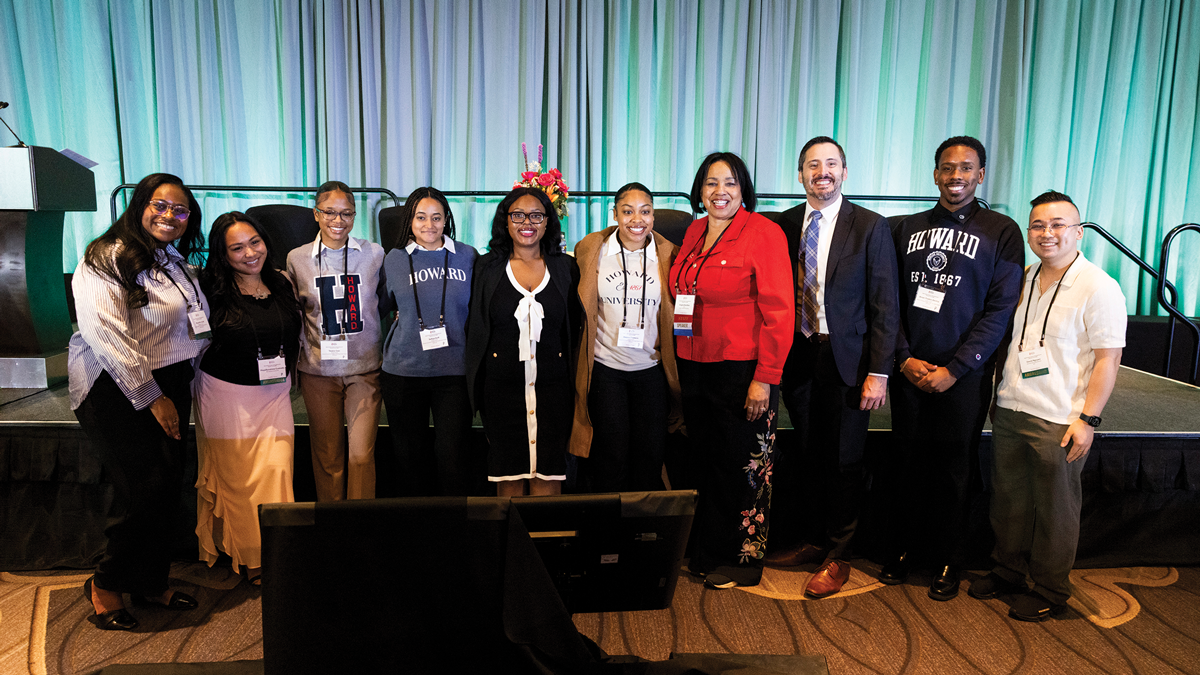
In an emotionally raw and riveting fireside chat, Mercedes Wells, in conversation with Lucinda Canty, PhD, RN, CNM, FACNM, FAAN, and Ann Kurth, PhD, MPH, MSN, CNM, FAAN, described her trauma in November 2025 of being discharged from a hospital while in active labor—only to give birth on the side of a road just 8 minutes later. Their discussion brought into sharp focus the systemic barriers—and very human costs—behind maternal health inequities in the United States.
“This experience has changed me, but it also has caused me to find what my purpose is,” Wells said. “I’ve been thrust into health advocacy for Black maternal health. That’s who I am now, and I’m excited about the journey, because it’s so important.”
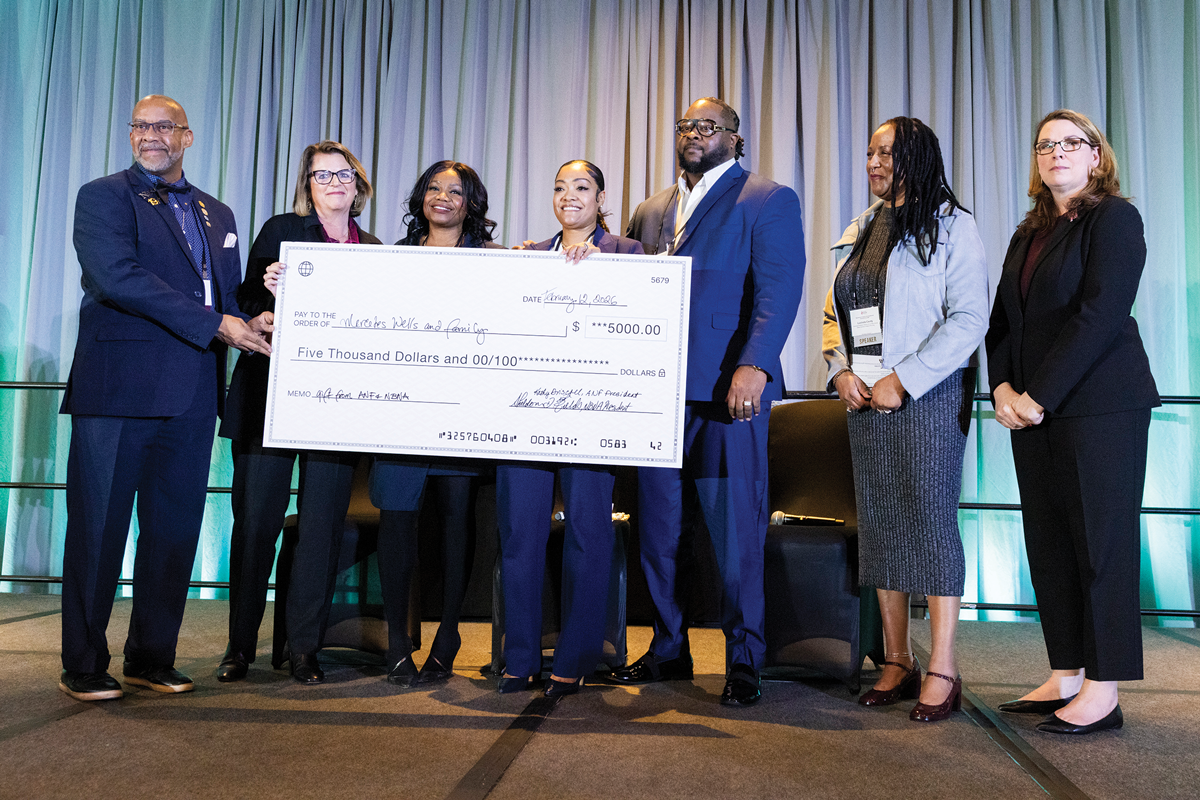
In a recorded video, Representative Robin Kelly (IL-02) discussed her introduction of the WELLS Act (Women Expansion for Learning and Labor Safety Act) in honor of Wells. The act “includes racial bias training. It can’t be just a check mark that hospitals cross off. Racial bias training must be applied over and over until racism is rooted out of our healthcare system,” she said.
In a fireside chat with Beddoe, Corenza Townsend, chief administrative officer at Norton West Louisville Hospital, traced the arc of her career and her challenges and triumphs starting as an LPN at age 19, rising in management at Norton Healthcare, becoming a multi-business owner, and envisioning then bringing to life a hospital for West Louisville, KY.
Before Norton West Louisville Hospital opened in November 2024, this part of the city hadn’t had a hospital for about 150 years and the life expectancy of its residents was 12 to 15 years shorter than elsewhere in Louisville, according to Townsend. She believes the active community engagement involved in developing the hospital, which served nearly 60,000 patients in its first year, can become a national model. “I hope we can do that across systems nationally, and that we get used to planning for and strategically working towards volatility, leaning into the change faster.”
Policy and public opinion
The impact of public policy on the nursing workforce pipeline was the focus in a panel discussion about the Department of Education’s proposed rule that would continue to consider post-baccalaureate nursing studies as graduate rather than professional degrees, thereby imposing new annual and lifetime graduate loan caps of $20,500 and $100,000, respectively. This designation and the loan limits could restrict expansion of the faculty pipeline, which in turn could affect the profession’s ability to bring in more baccalaureate level students and meet the country’s healthcare needs.
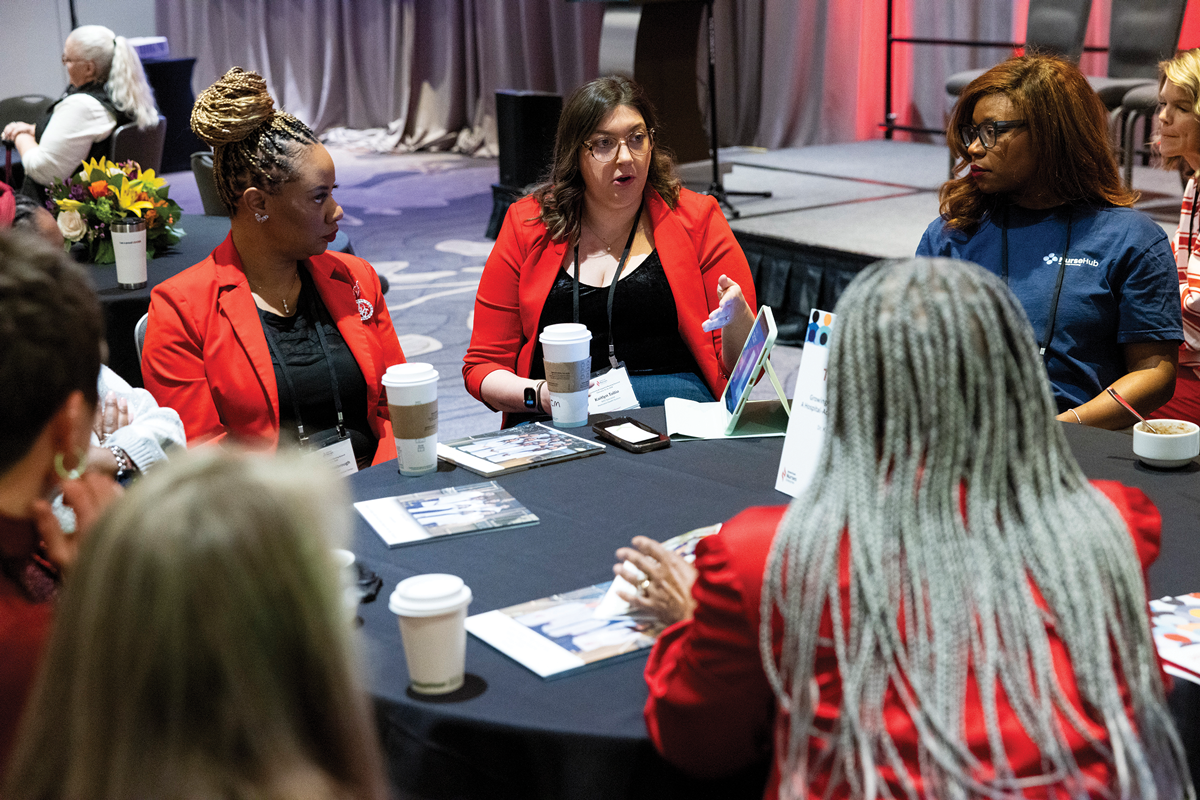
“If we can’t get people into our undergraduate programs, we’re going to continue to have issues as we look at solving healthcare and access in this country,” said ANE CNO Brad Goettl, DNP, DHA, RN, FNP-C, FAAN. “Advanced practice nurses are filling that gap all across the country, especially in our rural communities.”
In a plenary session, Chrissie McHenry, managing principal at Raben, a public policy, strategic communications, and organizational consultancy, examined her findings from extensive opinion polling and focus groups as a springboard for understanding perceptions about the values of and language about workforce advancement.
Perspective changing performances
Two performances at the summit resonated deeply with attendees, tapping into emotions, challenging perspectives, and inspiring and motivating change. A Refutation retold Philadelphia’s 1793 yellow fever epidemic through two conflicting historical accounts read by acclaimed actors. The readings served as a catalyst for a moving onstage discussion and Q&A with nursing icons on how these narratives from 2 centuries ago still ring true when describing health inequities.
Attendees also experienced an extraordinary musical performance and storytelling from Tad Worku, a musician, emergency nurse, family nurse practitioner, and executive mission coach at Inland Empire Health Plan. He shared how optimism, hope, and human connections make a positive impact on our work and our lives.
Investing in equity
The impact of investing in nurses from under-resourced and underrepresented backgrounds was highlighted in a panel discussion involving alumni and fellows of the Minority Fellowship Program (MFP) at ANA. After some 50 years, the more than 1,000 MFP alumni have markedly advanced research in behavioral health, made significant treatment inroads in underserved communities, and established themselves as extraordinary leaders and mentors.
“The MFP wasn’t just a fellowship for me. It was a professional turning point,” said moderator and MFP alumna Nia Josiah, DNP, MSN, RN, PMHNP, a practice assistant professor at Penn Nursing. “It helped me move from being deeply passionate about behavioral health to being prepared to lead, teach, advocate, and influence the systems that shape how mental health and substance use care is delivered, particularly in communities that have been historically under resourced.”
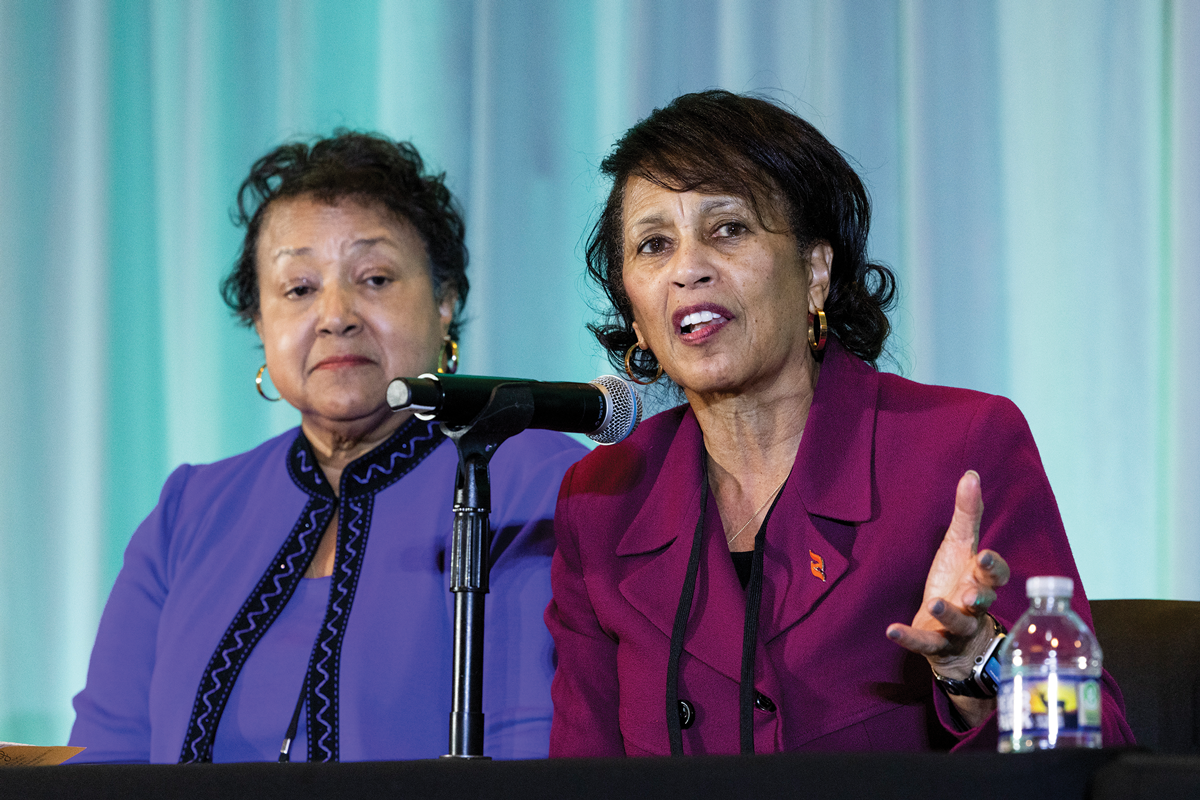
A panel discussion with Oriana Beaudet, DNP, RN, FAAN, VP of nursing innovation at ANA, Jennifer Shepherd, DNP, MHA, RN, NEA-BC, NPD-BC, FAAN, FFNMRCSI, director of nursing programs at ANA, and Craig Watkins, PhD, professor and executive director of the IC² Institute at the University of Texas at Austin, focused on how artificial intelligence (AI) has the potential to advance and hinder health equity. Watkins, who chaired the Ace Your Health AI Task Force that produced “Building a Healthier Future: Designing for AI Health Equity,” a white paper published by NAACP and Sanofi, described the white paper’s three-point AI and Health Equity Governance Framework as a means for organizations to use AI “in ways that are aligned with your values, your capacity, your mission, the patients that you’re serving, and the staff that you’re developing and cultivating.”
Rear Admiral Jennifer Moon, CNO of the U.S. Public Health Service Commissioned Corps, outlined the HOPE (Honor, Obligation, Purpose, and Empowerment) framework as a guiding principle for leadership and nursing practice. She challenged the audience to lean into self-reflection as a way to strengthen workplace environments and better serve all patients. “Self-reflection is essential for recognizing where inequities exist within our own organizations and practices,” she stressed. “It prompts us to examine how our decisions, policies, and behaviors impact our practice regarding the most vulnerable populations. By committing to ongoing self-reflection, we ensure that health equity remains at the center of our professional mission, guiding us to create fair, just, and accessible care for all.”
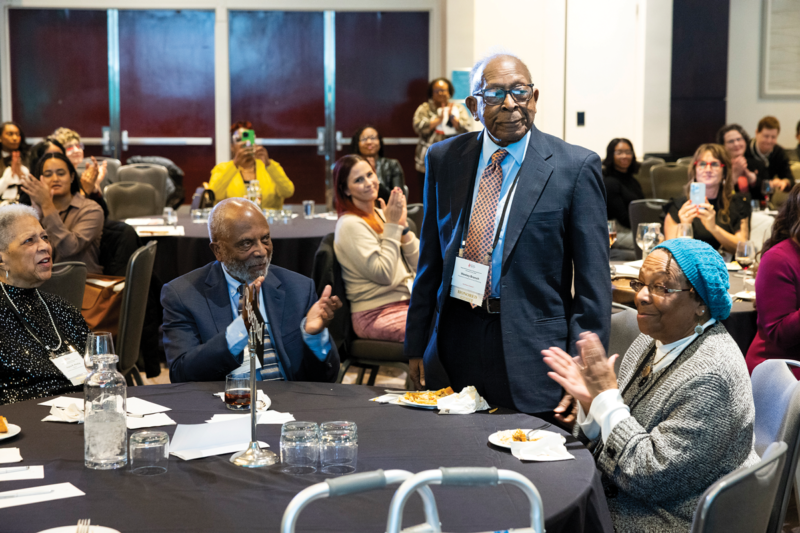
Freedmen’s Hospital Alumni
Gwendolyn Bardwell
Wesley Branch
Gladys Boyd
Elenore Cobham
Barbara Elzey
Geneva Hassle
Carol Johnson
Vivian Kwabenah
Julia McFarlane
Joyce Phillip
Mary Pinn
June Robinson
Joan Sanders
Barbara Tate
Harriet Tate
Marie Wright
Pathways forward
Authors Lily Zheng and Joan Williams shared their insights on how to make workplaces equitable for all based on their extensive research and consulting engagements with a broad range of organizations. Zheng, author of Fixing Fairness, described how the FAIR framework—Fairness, Access, Inclusion, and Representation—can catalyze equity and outcomes. Williams, author of Bias Interrupters, explored five types of bias—Prove It Again, Tight Rope, Maternal Wall, Tug of War, and Racial/Specific Group—and interventions to counteract each, along with outcomes she has observed in her decades of consulting and research. She stressed the importance of measuring and iterating interventions as needed until the measured outcomes improve. She added that while effective bias training makes a difference, organizations frequently need to go deeper and address structural level biases.
Katie Boston-Leary, PhD, MBA, RN, FADLN, FAONL, FAAN, senior VP of equity and engagement at ANE, also emphasized the necessity of systemic level change in reshaping the nursing profession and in reforming healthcare to achieve optimal outcomes for all recipients of care. “We must build systems that liberate potential instead of testing endurance,” she stressed. “We have to create environments where people don’t have to prove they’re strong enough to belong, to ensure that no one is held mentally, professionally, structurally at a modern-day point of no return. Opportunity is not charity. Impact is not accidental. They are choices, hard choices, and when aligned, they become transformation.”
For more about the 2026 Opportunity & Impact Summit visit nursingworld.org/nurse-equity-summit.
—Genna Rollins is a writer/editor at ANA.
American Nurse Journal. 2026; 21(4). Doi: 10.51256/ANJ042640
ANA Vision for the Nursing Profession
“We see a nursing profession where every nurse has the equal opportunity to excel, and every patient receives the highest standard of equitable care. We will not rest until health equity is a reality embedded in the heart and hands of every nurse and reflected in everyday practice. Together, we will lead the charge to transform healthcare into a system that is just, inclusive, and truly equitable for all.”
 American Nurse is the official journal of the American Nurses Association and is a member benefit. Learn more about the association and the many benefits of joining.