Your knowledge can improve patient health and safety.
- Understanding the historical development of NSAID therapy provides nurses with a strong foundation for promoting patient safety.
- Differentiating between COX-1 and COX-2 NSAIDs, along with their associated risk factors, helps identify patients who may be at increased risk for adverse effects.
Learning Objectives
- Differentiate selective COX-2 inhibitors, such as celecoxib, from non-selective NSAIDs based on mechanism of action and GI and cardiovascular risks.
- Explain how COX-1 and COX-2 inhibition affects prostaglandin production, inflammation, gastric protection, renal function, and platelet activity.
- Apply nursing assessment skills to ensure safe NSAID use, including evaluation of patient history, concurrent medications, and appropriate dosing.
Reflective Learning Question 1:
How does understanding COX-1 and COX-2 function help you recognize both the benefits and risks of NSAID therapy?
Reflective Learning Question 2:
How can careful patient assessment and teaching help prevent NSAID complications, especially in older adults or those with multiple health conditions?
No relevant financial relationships were identified for any individuals with the ability to control content of the activity.
Expiration: 5/1/29
1.5 ANCC contact hours
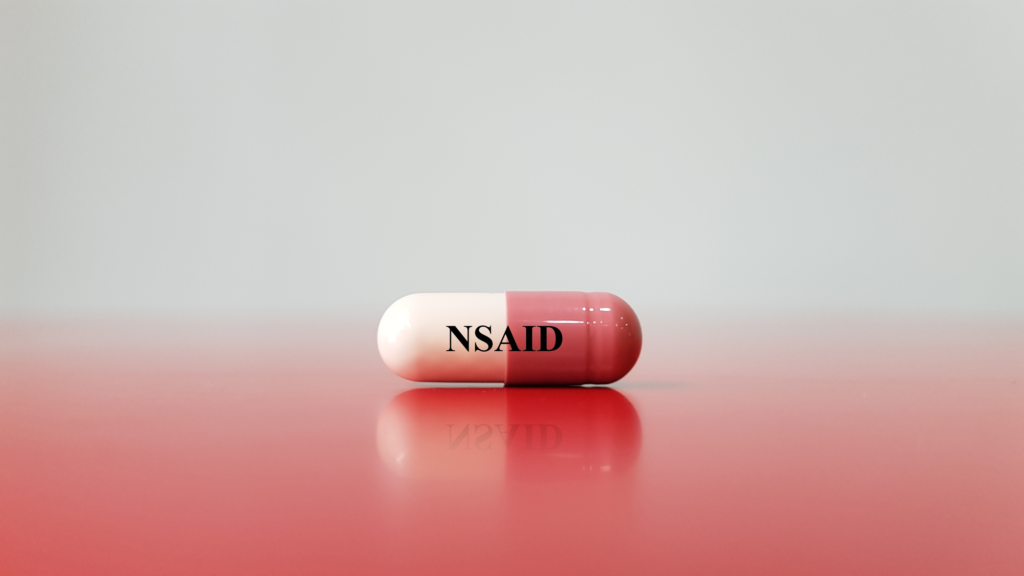
NSAIDS HAVE BEEN available since the introduction of aspirin in 1900. In 1915, aspirin became available as the first over-the-counter medication worldwide. In 1971, Vane and Piper published a seminal paper (as described by Botting) explaining how aspirin inhibits the production of prostaglandins and reduces inflammation, pain, and fever. Now, well over 20 NSAIDs exist on the U.S. market—with more available in other countries. Commonly used to manage pain from inflammation associated with arthritis, swelling, and sprains, they also can help address fever and body aches. Many NSAIDs, readily available over the counter (OTC), come in oral pill or topical cream or gel form.
According to Healthy People 2030, one out of every four U.S. adults has received an arthritis diagnosis. In 2024, the Centers for Disease Control and Prevention reported osteoarthritis as the most prevalent type of arthritis, affecting more than 32.5 million Americans 65 and older—women more than men. Rheumatoid arthritis, an autoimmune condition, affects approximately 1.36 million adults.
Hessami and colleagues predicted an escalation in individuals using NSAIDs in 2025 due to the increase in an older population at risk for multiple chronic conditions (MCCs). These conditions include cardiovascular disease, arthritis, cancer, diabetes, and chronic pain. The ubiquity of NSAIDs requires that nurses fully understand the differences among them, their indications for use, and the associated risks in patients with concomitant underlying conditions.
Cyclooxygenase enzyme
Cyclooxygenase (COX) can be found throughout the body. It forms prostanoids, which produce prostaglandins, prostacyclins, and thromboxanes and are responsible for the body’s inflammatory process. As a key formation of prostanoids, COX enzymes play a critical role in normal cellular function outside of inflammation. (See Definitions.)
Definitions
Prostanoids—Produced at the site of tissue damage, infection, or inflammation, these active lipid mediators are created by arachidonic acid through the cyclooxygenase pathway.
Prostacyclin—Released from the endothelium of all blood vessels, this circulating hormone inhibits platelet activation and provides cardioprotection. COX-1 and COX-2 NSAIDs inhibit prostacyclin production.
Prostaglandin—Resulting from bodily injury or illness, prostaglandin triggers inflammatory response, pain, and fever. Its production controls the processes of inflammation, blood clotting, and flow and occurs at the induction of labor. Prostaglandin decreases stomach acidity and stimulates protective mucus production in the GI tract.
Thromboxane—Produced from platelets, thromboxane acts as a vasoconstrictor during tissue injury and inflammation. It can fuel blood clot formation by occluding blood vessels and can contribute to heart attack and stroke.
COX-1 and COX-2—the two forms of COX enzymes—produce prostaglandins. COX-1 occurs in most body tissues and helps maintain the normal lining of the stomach and intestinal mucosa to protect it from digestive enzymes. COX-1 also plays a role in normal kidney function and platelet formation.
COX-2, discovered in the late 1990s, primarily exists at the site of inflammation. COX-2 generates prostaglandins and mediates inflammation and pain sites throughout the body, it isn’t responsible for blood clotting, and it has no influence on the GI mucosal lining.
Selective and non-selective NSAIDs
In the late 1990s, pharmaceutical companies developed COX-2 NSAIDs to inhibit prostaglandins without losing COX-1 protection. The companies promoted these selective NSAIDs as having a better profile against GI bleeding, which frequently occurs with COX-1 NSAIDs.
COX-2, found in the vascular endothelial cells, inhibits COX-1, preserves the synthesis of the vasoconstrictive thromboxane A2, and inhibits the production of the vasodilator prostacyclin. These factors can tip the balance toward vasoconstriction and the formation of thrombosis.
Rofecoxib was pulled from the U.S. market in 2004 because of the increased risk of cardiovascular events (including heart attack and stroke). Valdecoxib was withdrawn the following year because of increased risk of cardiovascular events and for producing a rare skin reaction. Currently, celecoxib is the only COX-2 selective NSAID available in the United States.
In 2000, the New England Journal of Medicine published the results of a randomized controlled trial comparing rofecoxib with naproxen in patients with rheumatoid arthritis. The investigators found that rofecoxib, a COX-2 inhibitor, had fewer GI complications than naproxen. The study also found that patients had four times the rate of heart attacks or stroke when compared with naproxen.
The FDA approved celecoxib in 1998 with indications for osteoarthritis and rheumatoid arthritis. After the FDA pulled valdecoxib off the market in 2005, it pink-slipped (monitored) celecoxib because of increased risk of heart attack incidence associated with COX-2 inhibitors. The FDA requested additional studies to ensure celecoxib safety.
In 2016, Nissen and colleagues performed a head-to-head randomized trial of over 20,000 patients, comparing celecoxib with ibuprofen and naproxen (the PRECISION Trial). Patients enrolled in the trial included those diagnosed with osteoarthritis and rheumatoid arthritis, as well as those at risk for or with a history of cardiovascular disease.
In 2018, after the 30-month PRECISION trial, the FDA approved the safety of celecoxib, finding that it differed little from COX-1 medications and didn’t carry a higher risk of heart attack or stroke than naproxen or ibuprofen. The data from this study showed the following incidence rates of heart attack or stroke: 2.3% with celecoxib, 2.5% with naproxen, and 2.7% with ibuprofen.
These results led the FDA to issue a boxed warning for all NSAIDs (COX-1 and COX-2), citing that this class of medication increases the risk for cardiovascular events, such as thrombus formation, heart attack, and stroke. The recommended dose of celecoxib is 200 mg per day, or 100 mg twice daily. Selective COX-2 inhibitors primarily block the COX-2 enzyme while sparing COX-1. Because COX-1 continues to support the stomach’s protective lining, these medications are associated with a lower risk of GI ulcers and bleeding compared with non-selective NSAIDs. (See Boxed warning.)
Boxed warning
The U.S. Food and Drug Administration’s boxed warning for all nonsteroidal anti-inflammatory drugs notes the increased risk for the following:
- GI bleeding
- Heart attack
- Heart failure
- Hypertension
- Renal papillary necrosis
- Stroke
- Thrombus formation
COX-1 inhibitors
COX-1 inhibitors antagonize the COX-1 enzyme, thereby suppressing the conversion of arachnoid acid to prostaglandin. The reduction of prostaglandin helps to reduce inflammation, pain, and fever. Because COX-1 also protects the mucosal lining of the stomach through prostaglandin synthesis, inhibiting this physiological process can lead to GI ulceration and bleeding.
Platelets produce COX-1, generating large amounts of thromboxane A2, which in turn plays a role in platelet aggregation and serves as a vasoconstrictor mediator. Aspirin (salicylic acid) is the NSAID most representative of a COX-1 inhibitor and an antiplatelet agent used to prevent thrombus formation.
Non-selective NSAIDs
Most NSAIDs are non-selective and have influence on both COX-1 and COX-2. They’re classified based on their modality of action. Understanding which specific NSAID has greater affinity for COX-1 or COX-2 helps to identify their associated risk factors. (See NSAID selectivity.)
NSAID selectivity
Nonsteroidal anti-inflammatory drugs can have selectivity for COX-1 or COX-2, and some are nonselective.
COX-2 selective
Celecoxib
Etoricoxib (not available in the United States)
COX-1 selective
Aspirin
Indomethacin
Piroxicam
Sulindac
Nonselective
Diclofenac (oral and transdermal)
Etodolac
Ibuprofen
Ketorolac (oral and intra-muscular)
Meloxicam
Nabumetone
Naproxen
NSAID contraindications and risks
Nurses must recognize patients at risk for complications. Understanding the pharmacologic alteration of COX-1 and COX-2 helps nurses identify and prevent potential adverse events. NSAID therapy should be withheld in patients with a history of peptic ulcers; renal dysfunction (such as hemodialysis, renal failure, and fluid and electrolyte disorders); heart attack, atrial fibrillation, or stroke; blood clots; and hemophilia, thrombocytopenia, or von Willebrand disease. Individuals receiving anticoagulant therapy and those with sulfa allergies or aspirin-induced asthma also should not take NSAIDs.
Oral and topical diclofenac present the highest potential risk for cardiovascular and hepatotoxic events, and both carry the same boxed warning as oral NSAIDs. The FDA approved topical diclofenac for the relief of osteoarthritis of the joints (knees and elbows); it’s not indicated for large surface areas (such as the spine).
Patients should never use an oral NSAID in combination with topical diclofenac, two different NSAIDs simultaneously, or an NSAID with aspirin. These practices increase the risk for cardiovascular events, GI ulceration, and bleeding.
Nursing implications
Despite the ease of accessing OTC NSAIDs, nurses must assess and evaluate whether patients have already been prescribed NSAIDs. They also should know the consequences associated with increased doses. Awareness of the FDA’s boxed warning for NSAIDs and patients who have cardiac, GI, renal, or hematological risk factors can help ensure safer patient outcomes.
Clinicians should prescribe NSAIDs only as indicated by the FDA, and patients should follow dosing information found in the package inserts of individual NSAIDs. The nurse who remains informed and knowledgeable about NSAID therapy improves patient health and safety.
Kim Kuebler is an advanced practice provider in Brunswick, Georgia, and editor-in-chief of the Multiple Chronic Conditions Resource Center.
American Nurse Journal. 2026; 21(5). Doi: 10.51256/ANJ052606
References
Bombardier C, Laine L, Reicin A, et al. Comparison of upper gastrointestinal toxicity of rofecoxib and naproxen in patients with rheumatoid arthritis. N Engl J Med. 2000;343(21):1520-8. doi:10.1056/NEJM200011233432103
Botting R .Vane’s discovery of the mechanism of action of aspirin changed our understanding of its clinical pharmacology. Pharmacol Rep. 2010. 62(3):518-25. doi: 10.1016/S1734-1140(10)70308-X
Bruno A, Tacconelli S, Contursi A, Ballerini P, Patrigani P. Cyclooxygenases and platelet functions. Adv Pharmacol. 2023;97:133-65. doi:10.1016/bs.apha.2022.12.001
Centers for Disease Control and Prevention. Arthritis in adults age 18 and older: United States, 2022. February 2024. cdc.gov/nchs/products/databriefs/db497.htm
Ghlichloo I. Nonsteroidal anti-inflammatory drugs (NSAIDs). May 2023. StatPearls statpearls.com/point-of-care/25968
Goldberg DR. Aspirin: Turn-of-the-century miracle drug. Science History Institute. June 2009. sciencehistory.org/stories/magazine/aspirin-turn-of-the-century-miracle-drug
Healthy People 2030. Arthritis workgroup. odphp.health.gov/healthypeople/about/workgroups/arthritis-workgroup
Hessami A, Pourali A, Saeedi M, Ghara AAN, Kheradmand M, Moosazadeh M. A study of demographic and clinical characteristics of consumers of non-steroidal anti-inflammatory drugs: A large population-based study utilizing enrollment phase data from the tabari cohort. BMC Public Health. 2025;25(1):2947. doi:10.1186/s12889-025-24005-3
Laine L. Gastrointestinal safety of coxibs and outcomes studies: What the verdict? J Pain Symptom Manage. 2002;23(4):S5-10. doi:10.1016/S0885-3924(02)00368-8
Nissen SE, Yeomans ND, Solomon DH, et al. Cardiovascular safety of celecoxib, naproxen, or ibuprofen for arthritis. N Engl J Med. 2016;375(26):2519-29. doi:10.1056/NEJMoa1611593
Qureshi O. COX inhibitors. February 2024. StatPearls. statpearls.com/point-of-care/20083
U.S. Food and Drug Administration. FDA drug safety communication: FDA strengthens warning that non-aspirin nonsteroidal anti-inflammatory drugs (NSAIDs) can cause heart attacks or strokes. July 2015. fda.gov/drugs/drug-safety-and-availability/fda-drug-safety-communication-fda-strengthens-warning-non-aspirin-nonsteroidal-anti-inflammatory
U.S. Food and Drug Administration. Medication guide for nonsteroidal anti-inflammatory drugs (NSAIDs). accessdata.fda.gov/drugsatfda_docs/label/2024/020998s058lbl.pdf#page=41
Waxman HA. The lessons of Vioxx—Drug safety and sales. N Engl J Med. 2005;352(25):2576-8. doi:10.1056/NEJMp058136
Key words: nonsteroidal anti-inflammatory drugs, NSAIDs, cyclooxygenase enzymes, boxed warning, COX-1, COX-2