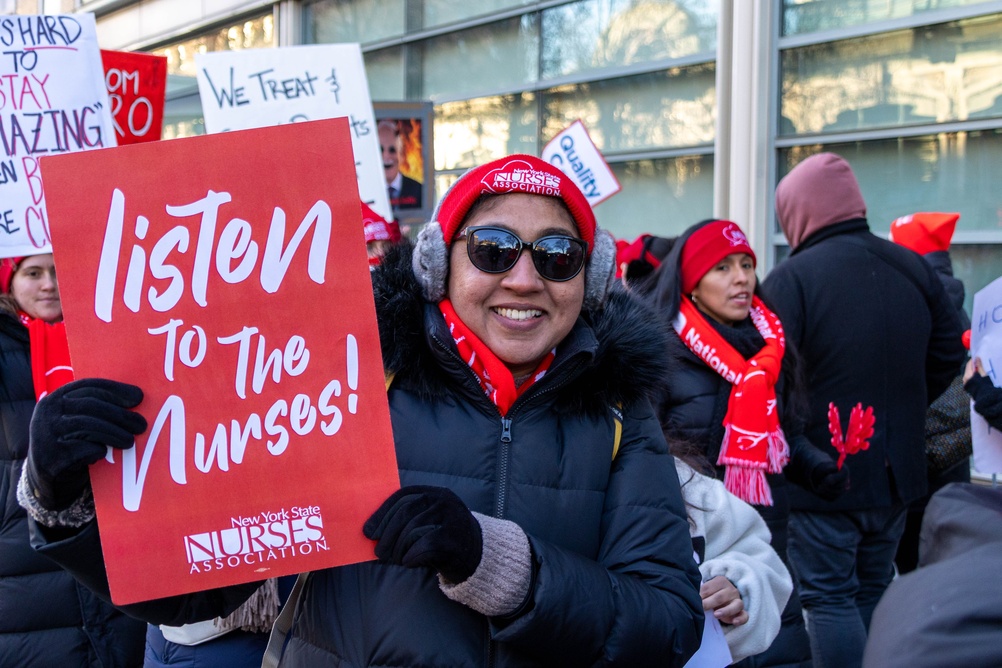
On January 9, 2026, Kathy Hochul declared a State of Disaster Emergency in New York, citing critical healthcare staffing shortages across New York and surrounding areas. In the weeks that followed, nearly 15,000 nurses walked off the job across multiple hospital systems, bringing those staffing concerns into sharp public focus. Just three days after the declaration, on January 12, New York’s nursing strike began, marking a collision between policy acknowledgment and frontline workforce unrest. Now, with nurses at Montefiore Medical Center, across the Mount Sinai Health System, and most recently at NewYork-Presbyterian reaching tentative agreements, the landscape has shifted toward stabilization. Although final ratification processes remain underway in some settings, these developments signal meaningful progress in addressing workforce concerns that had exposed deep vulnerabilities within the state’s healthcare infrastructure—vulnerabilities that directly affect patient safety and the sustainability of the nursing profession.
Approximately 15,000 nurses participated in strike action across several major healthcare institutions. Represented by the New York State Nurses Association, the nurses sought new labor agreements following months of prolonged and unresolved negotiations. Hospital leadership characterized the strike as disruptive, while nurses described it as necessary. Framing the strike solely as a labor dispute obscures its broader significance. The strike constituted a public health emergency with implications that extended beyond contract language, influencing patient safety, workforce stability, and public trust in healthcare delivery.
The situation has evolved significantly in recent weeks. Nurses at Montefiore and across the Mount Sinai system—including Mount Sinai Hospital and Mount Sinai Morningside and West—approved new 3-year agreements by decisive margins, affecting roughly 10,500 nurses who have returned to patient care. Most recently, nurses at NewYork-Presbyterian have reached a tentative agreement after extended negotiations. Although the strike at that institution prolonged instability within one of the city’s largest academic medical centers, the tentative agreement represents meaningful progress and an opportunity for institutional restoration. This resolution extends beyond contract terms, shaping public trust in healthcare delivery and reinforcing that advocacy and professional accountability are essential to the future of nursing.
Progress and Persistent Concerns in Negotiations
As outlined by the New York State Nurses Association, negotiations faltered when hospital administrators did not sufficiently address priorities that nurses identify as essential to both patient safety and long-term workforce stability. These priorities included enforceable safe staffing ratios, preservation of healthcare benefits, and stronger safeguards against workplace violence. Particularly troubling were proposals from some of the city’s most financially secure hospital systems to reduce or modify nurses’ health benefits which is an apparent contradiction within a profession centered on protecting health and promoting well-being.
The approval of new 3-year contracts at Montefiore and within the Mount Sinai system demonstrated that constructive negotiation and compromise are attainable. The tentative agreement at NewYork-Presbyterian further suggests that sustained dialogue can yield progress, even after prolonged disruption. The details of implementation and accountability will remain central moving forward, but the collective movement toward agreement reflects an important recalibration within the healthcare system.
Why Patients Should Care
Patients should care about the nursing strike because it reflects systemic conditions that directly influence patient safety, care quality, and the reliability of healthcare delivery. Decades of evidence demonstrate that inadequate nurse staffing is associated with increased medical errors, higher mortality rates, longer hospital stays, and poorer outcomes. Nurses are the constant presence at the bedside, uniquely positioned to recognize subtle changes in patients’ conditions and coordinate timely interventions within complex healthcare systems. Inadequate staffing levels jeopardize patient safety and care quality. Nurses did not strike to withdraw care, but to advocate for conditions that enable safe and effective patient care.
The newly negotiated agreements across major hospital systems may help restore workforce stability and strengthen working conditions for thousands of nurses and the patients they serve. As institutions transition from strike response to contract implementation, the focus must now shift toward rebuilding trust and ensuring that negotiated provisions translate into measurable improvements at the bedside.
Violence, Burnout, and the Cost of Neglect
Although agreements have now been reached across major institutions, the concerns that prompted the strike extend beyond wages. Nurses have reported escalating workplace violence, including physical assaults and insufficient security protections. Chronic understaffing compounds these risks, forcing nurses to care for increasingly complex patients with limited resources and support.
The tentative agreements offer an opportunity to address some of these longstanding issues through enforceable standards and renewed collaboration. Burnout reflects the cumulative impact of sustained systemic strain rather than individual weakness. Without lasting structural change and accountability, workforce instability and risks to patient care could reemerge.
The Future of Nursing
The ripple effects of the nursing strike extended beyond hospital systems into nursing education. Clinical preparation relies on stable, sustained partnerships between academic programs and healthcare organizations. During the period of labor disruption, inconsistencies in clinical site availability challenged the continuity necessary for effective student learning and professional development. Nursing programs adapted rapidly by expanding simulation-based learning, relocating students to alternative clinical settings, and revising schedules with limited notice.
At the same time, nursing students were watching closely. Beyond mastering clinical competencies, they were observing how healthcare institutions respond when nurses raise concerns about safety, staffing, and professional respect. The strike became an unintended lesson in workforce advocacy, shaping how future nurses understand both their value within the system and the realities of professional accountability and collective voice.
As agreements are reached and nurses return to practice, greater stability is beginning to restore confidence in clinical placement planning and academic–practice partnerships, but also among nursing students who are closely observing how the profession is valued and protected.
From Applause to Advocacy
There is a painful irony in this moment. During the height of the COVID-19 pandemic, New York nurses were publicly celebrated as heroes, honored each evening at 7 pm as communities applauded their dedication and sacrifice. More recently, many of those same nurses stood outside healthcare facilities in the cold, holding protest signs rather than stethoscopes.
Nurses are highly skilled professionals who know their patients intimately and remain present through moments of vulnerability, suffering, and recovery. Commitment to care, however, should not require personal sacrifice to the point of physical injury, emotional harm, or moral distress. As tentative agreements move toward ratification and nurses return to the bedside, the profession stands at a critical juncture that calls not only for contract resolution, but for cultural and structural renewal.
Rebuilding the Nursing Workforce Through Trust
What unfolded in New York extends beyond a single labor dispute. It reveals the consequences of prolonged underinvestment in the nursing workforce and the fragility of healthcare systems that depend on it. Rebuilding trust between nurses and hospital leadership is essential to restoring stability and safeguarding patient care. As agreements are implemented and nurses return to practice, the profession stands at a defining moment, one that will shape not only patient outcomes, but also the outlook of nursing students preparing to enter a workforce they have watched tested in real time. Honoring negotiated commitments, strengthening academic–practice partnerships, and sustaining meaningful reform are critical steps toward protecting patients and securing the future of the nursing profession.
Update
Strike Concluded, Accountability Begins: A Turning Point for Nursing
On February 21, nurses at NewYork-Presbyterian voted overwhelmingly to approve new three-year contracts, formally concluding a historic 41-day strike that stands as the largest nursing strike in New York City history. The agreement received decisive support, with 93% of nurses approving the negotiated terms, signaling collective confidence in the path forward and reflecting the strength of collective advocacy alongside the central role nurses hold in safeguarding patient care. Resolution now shifts responsibility toward implementation, transparency, and measurable change. For nursing students and early-career nurses who witnessed these events, this chapter offers a defining lesson: professional voice matters, patient advocacy demands courage, and nursing leadership shapes the future of healthcare. The profession advances not only with new contracts, but with a renewed obligation to protect patients, uphold standards of care, and ensure that the next generation of nurses enters a system aligned with their commitment and professional integrity.
Michele Lucille Lopez, DHEd, MA, RN, CNE, is an assistant professor of nursing at Pace University’s College of Health Professions