
Working across disciplines, this health system implemented a process aimed at improving communication, care, and safety.
- A multidisciplinary team collaborated to improve workplace safety by implementing an interactive screening tool and easy-to-use documentation within the electronic health record.
- These strategies dramatically increased reporting, enhanced prevention, and fostered a safer environment for staff and patients.
Those who provide WPV training reported hearing about more accounts of mild, moderate, and even extreme acts of violence than were included in annual reports.
NURSES KNOW that although workplace violence (WPV) isn’t part of our job, we frequently encounter it. Patients, visitors, and, unfortunately, sometimes co-workers can become verbally, sexually, or physically aggressive. As noted by the Occupational Safety and Health Administration (OSHA), healthcare and social service workers are especially at risk. According to Lim and colleagues, healthcare workers are five times more likely to experience workplace violence injuries on the job than workers in any other industry. This trend has been recognized nationally and globally by OSHA and the World Health Organization (WHO).
Workplace violence: From risk to response
Many colleagues in our large system (five hospitals and several clinics), including nursing and ancillary staff, receive training on how to identify escalating behavior and implement de-escalation techniques. In addition, leadership encourages staff to report WPV events via the hospital’s online occurrence-reporting system. However, those who provide WPV training, including the behavioral health manager, nursing educators, and the security team, reported hearing about more accounts of mild, moderate, and even extreme acts of violence than were included in annual reports.
When we—a critical care nursing supervisor, a system analyst nurse, and a senior behavioral health manager—reviewed WPV reports within our organization, we found that yearly totals included only events that involved a security response. Annual reports for all of the system’s facilities amounted to 151 to 168 incidents a year from 2022 to 2024. This discovery signified the need for a better method to track violent incidents.
Getting started
In an effort to address what we viewed as a disconnect between the number of reported WPV and actual events, we began exploring possible reasons for the discrepancy. We didn’t follow a formal approach or conduct a literature review. Ultimately, what we’re sharing here is our experience navigating an ongoing challenge.
We began by asking frontline nursing staff about their experiences and workflow. In unit-based meetings, we asked about WPV events, including name calling, verbal or physical threats, sexual comments, and encounters with physical aggression. When we asked nurses if they felt comfortable reporting these events, most said no.
When we asked why they didn’t report WPV, many nurses said they saw violence as part of their job. Some didn’t want to take the extra time out of their day to complete the electronic occurrence report, and several nurses said they feared patients would know they’d made a report as their names are visible in progress notes. Some nurses described patients calling customer relations from their hospital beds to file complaints against nurses for documenting bad behavior.
Documenting WPV
After compiling and reviewing responses from the nursing staff, we created and embedded a patient/visitor violence flowsheet into the electronic health record (EHR). Flowsheets, which aren’t part of patient-accessible progress notes, provide a quick way to document and run reports. The flowsheet allows nurses to document instances of aggression when they happen. They can quickly note who was violent, the target of the violence, and the level of violence (mild, moderate, or extreme) based on the Therapeutic Alternatives in Crisis Training all bedside staff receive when hired. Nurses also can include quotes, observed behavior, injuries, and interventions.
We then worked with EHR analysts to develop a daily report for distribution to the vice president of nursing, chief nursing officers (CNOs), nursing directors, and other key WPV committee members, including security, risk management, and the legal department. This report, generated at 0630 each day, shows all the incidents of violence documented in the flowsheets within the past 24 hours. This information alerts leadership to the violence risk on their units and allows them to debrief with staff and develop prevention plans.
The patient/visitor violence flowsheet significantly increased the number of reported incidents. The WPV committee began meeting weekly to review documented acts of violence noted in the flowsheet, occurrence reports, security logs, and reports run from the patient/visitor violence flowsheets. The committee keeps a list of all reports in one combined document.
Assessments, interventions, and reports
The WPV committee members reviewed cases and root causes within the organization. Our anecdotal sharing allowed us to identify opportunities for improvement, including protecting bedside staff and enhancing communication among all disciplines. For example, some ancillary staff experienced violence because they hadn’t been informed about an individual patient’s history of violence or aggression.
A subcommittee (including a critical care supervisor, behavioral health manager, and CNO) reviewed violence screening methods, including the East London Modified-Broset screening tool, which we learned our behavioral health department was already using. The vice president of nursing and director of human resources gave permission to build the tool into our nursing documentation. (See East London Modified-Broset tool.)
East London Modified-Broset tool
As part of the patient/visitor violence flowsheet, the eight-point East London Modified-Broset tool helps nurses screen for patient and visitor violence risk. It uses direct language based on the following criteria:
- Adherence with as-needed medications
- Boisterousness
- Confusion
- Irritability
- Physical threats
- Responsiveness to de-escalation
- Use of objects to harm
- Verbal threats
To avoid adding another task to nurses’ required documentation, the critical care supervisor and behavioral health manager designed an interactive tool that provides nurses with real-time interventions when working with patients at risk of violence or actual violent behaviors. Similar to a fall screening, the interventions are based on a total patient score.
On admission, nurses screen patients using the East London Modified-Broset tool and then as needed when they note positive indicators. The WPV committee recommended screening any patients with identified risk factors at every shift or with any change in level of aggression. The committee also established a scoring system and created meaningful interventions to prevent behavior escalation and workplace injuries. (See Scores and interventions.)
Scores and interventions
Violence risk scores, based on the East London Modified-Broset tool assessment, trigger the following interventions.
- Assess the surroundings.
- Be conscientious of body positioning. Keep yourself between the patient and the doorway.
- Remove anything that could be used as a weapon.
- Consider a safety tray with no glass or metal utensils.
- Be cautious of body language (e.g., don’t cross arms or place hands on hips).
- Explain and narrate care.
- Decrease or increase rounding based on patient response.
- Decrease the number of people entering the room.
- If family calms the patient, enlist their help.
- If family or visitors agitate the patient, set visiting restrictions.
- If a safety attendant is necessary, consider a video monitor for attendant safety.
- Consider all the above interventions as well as the following as soon as the threat has been identified/documented:
- Behavioral Emergency Response Team call-in addresses any underlying mental health or addiction concerns that could contribute to increased agitation.
- Safety huddle, including leadership, nursing, physicians, and family when appropriate, identifies patient triggers and appropriate interventions.
- Patient is identified for aggression precautions.
- An orange magnet on the doorframe lets ancillary staff know that they should check with nursing before entering the room.
- Use safety trays with no glass, metal, or hot liquids; serve only finger foods.
- Any score of 4 or higher triggers a text alert to the chief nursing officer, shift supervisor, security, and unit leadership as well as WPV committee members.
- Leadership communicates with bedside staff to determine additional resources.
- Security checks in with bedside staff and increases rounding in the affected department.
- Call a Mr. Speed (aggressive patient response team).
- A team of two staff members provides all care; nobody enters the room alone.
- Bundle all care to reduce exposure.
- Contact local law enforcement as necessary.
EHR integration
An EHR analyst and the behavioral health manager worked together to build the patient/visitor violence flowsheet, daily WPV reports for leadership, and an alert system. In addition, the analyst merged the East London Modified-Broset tool with the violence assessment flowsheet already used by the behavioral health unit. The analyst then modified this new tool by assigning a numeric value of 0 for “no” and 1 for “yes” to each item, allowing the total score to be calculated automatically. The EHR analyst built a text message alert triggered by a flowsheet score of 4 or higher, which allowed for quickly notifying leadership and security to patients at high risk for violence.
To avoid burdening nursing leaders with unnecessary messages, the analyst built subgroups to separate leadership and security alerts based on location and departments. When the WPV team discovered that security at two hospital locations didn’t carry cell phones and used a different notification system, the analyst built a best practice alert into the EHR that prompts the clinician to call security dispatch in the event of a score of 4 or higher. Leaders are trained to check in on staff when an alert populates in their units. This ensures real-time safety initiatives are in place to further reduce the risk of injury to staff.
The EHR analyst created a daily report that identifies all patients with scores of 4 or higher in the previous 24 hours. An all-locations report goes to all CNOs and WPV sub-committee members and a per-location report goes to managers for their unit only.
These reports have helped the WPV team monitor assessment tool use and ensure patients with scores of 4 or higher appear on these reports. The analyst also uses the reports to help monitor whether text message alerts are being triggered.
Rollout and education
To help ensure leadership buy-in and bedside use of the East London Modified-Broset screening tool, the WPV committee created an all-inclusive presentation in collaboration with critical care leadership, the behavioral health manager, and a member of local law enforcement. This approach provided message cohesiveness to staff: Your safety comes first, and the team supports you. The committee knew that overcoming the culture of not reporting WPV wouldn’t be easy. Leadership needed to embrace a zero-tolerance culture and support all staff in understanding the importance of reporting and documenting WPV.
Presentations began with leaders at the two largest locations. The WPV committee critical care leader discussed the importance of a culture that supports staff in reporting and documenting all instances of WPV. The critical care leader demonstrated the assessment tool and explained expectations for bedside staff, leadership, and security. After the behavioral health manager discussed interventions and how and when to involve security and law enforcement, our law enforcement partner explained laws that protect healthcare workers and discussed the process for reporting crimes.
After leadership had a solid understanding of the new process, the WPV committee set a date for a nursing grand rounds presentation, with options for in-person and virtual attendance. Compared to other grand rounds, attendance was astounding—about 80 nurses attended in-person when typically they see about a dozen. This indicated to the committee that nurses were ready for the change. We shared a full recording of the grand rounds presentation as well as an abbreviated version through the health systems’ online learning platform.
Where we are now
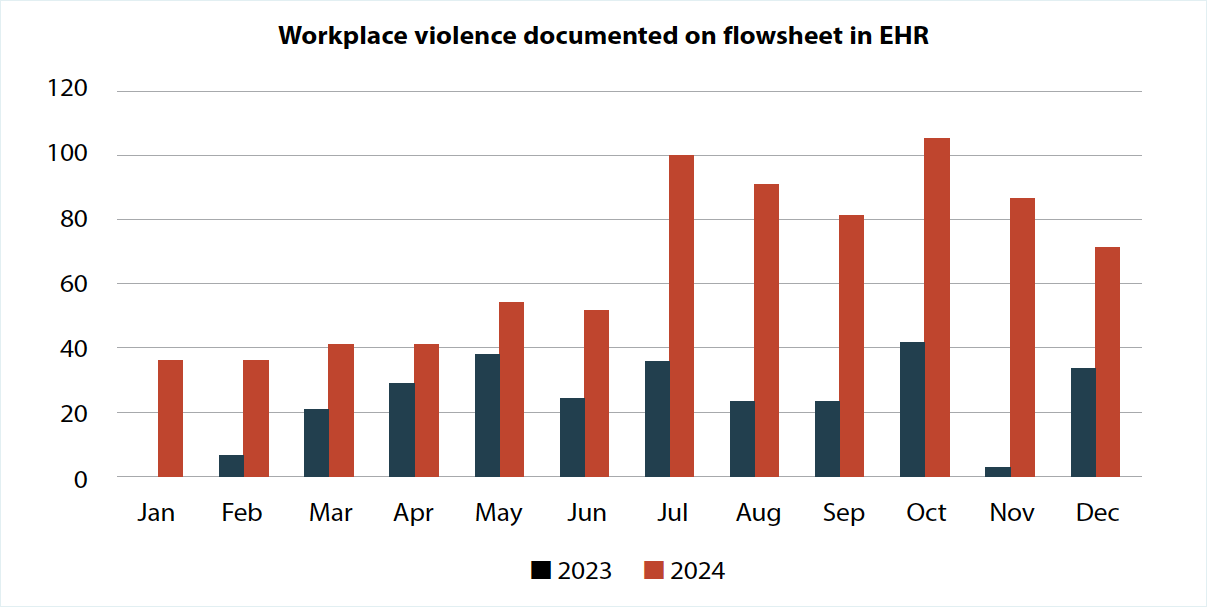
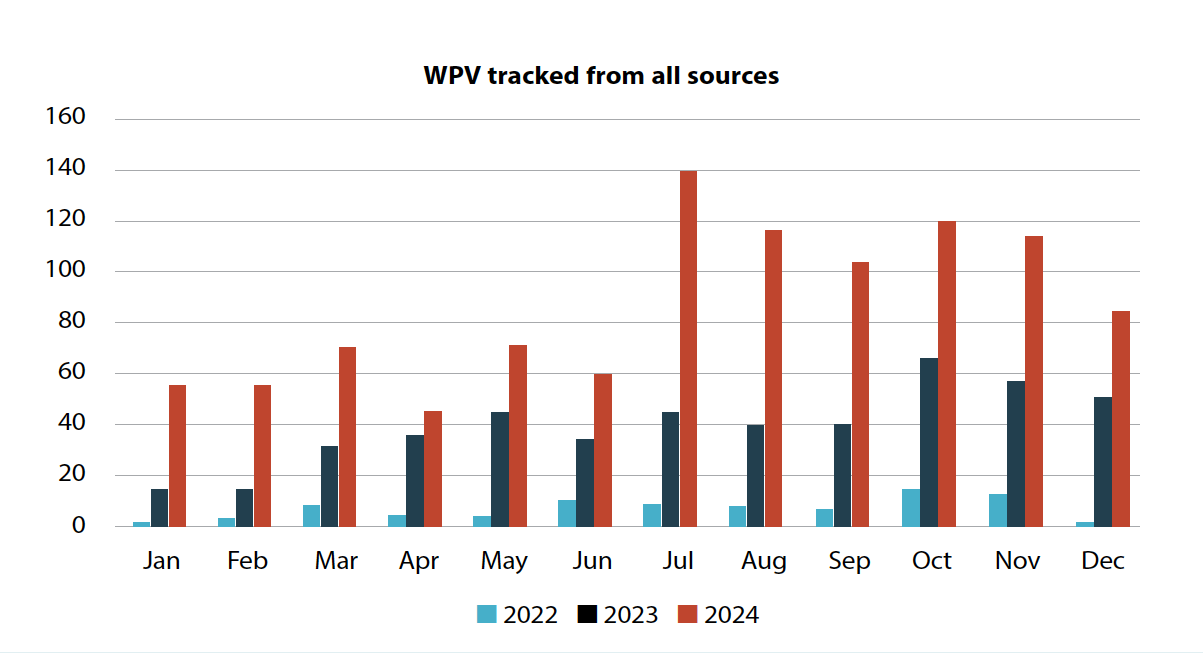
Violence screening, documentation, and tracking all levels of violence have been implemented only in the hospital setting. Clinic incidents are included if staff complete an occurrence report. Between October 2023 and September 2024, we saw a dramatic increase in documented and reported incidents of violence, from 150 to 895. (See Reporting increase.)
Reporting increase
Reports of workplace violence increased after integrating the new assessment and reporting system into the electronic health record (EHR).
Increase since training
The following figure demonstrates the increase in documentation in the EHR since bedside staff began receiving education on the East London Modified-Broset screening tool.
Overall reporting increase
The following shows the overall increase in reporting for the past 3 years from all sources, including the flowsheet, occurrence reports, and security reports.
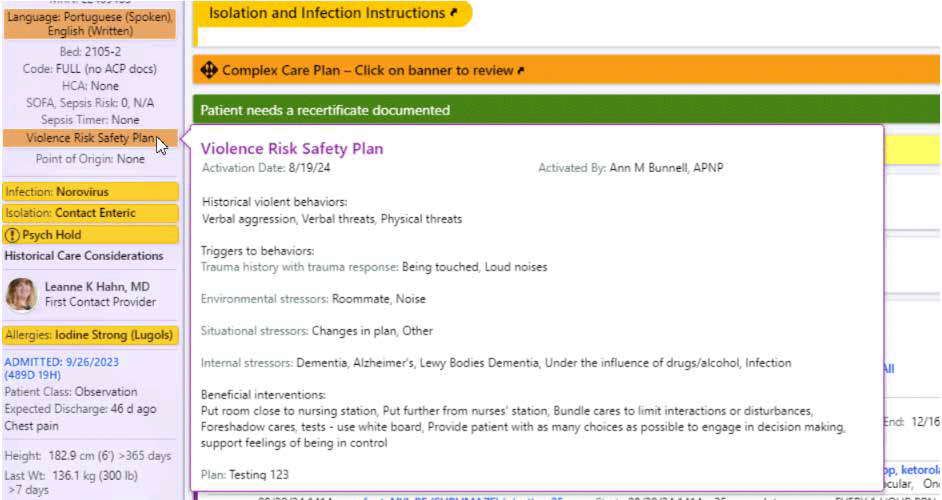
We’re still in the early stages of culture change, monitoring incidents of violence and consistently implementing precautions and interventions to prevent violence. Recently, the WPV subcommittee and EHR analyst created an orange banner that can be initiated by the WPV committee for patients who consistently present with violent behaviors. The banner (consistent with the orange door magnets that alert staff to talk to a nurse before entering a patient’s room) will be displayed in the storyboard of the patient’s medical record.
If a nurse or other staff member hovers their cursor over the banner, they’ll see a plan that indicates the patient’s typical level of violence, any known or identified triggers, and interventions that have proven effective in the past. For example, a patient’s history of violence across several stays or settings would trigger the WPV committee to review the appropriateness of the banner.
To make a distinction between risk communication and patient labeling, the WPV committee now regularly reviews documentation and deactivates the banner as appropriate. This dynamic system ensures staff and patient safety while also preventing patients from being permanently labeled as violent. This framework communicates the importance of individualized assessment and developing a plan to ensure everyone’s safety. (See Safety plan)
Safety plan
This fictional patient has a violence risk safety plan. Any member of the care team who accesses the electronic health record can view the plan.
Limitations
Failure to conduct a literature review, formally survey staff, and follow a formal framework limited our ability to assess the initiative’s success. We didn’t initially realize the impact it would have on our system or that we would have the opportunity to share it beyond our own institution. In hindsight, gathering pre- and postimplementation data regarding staff perceptions of the system’s culture and workplace safety would have proven valuable to assessing the project’s effectiveness.
Nursing impact
In the era of open records, nurses in our organization reported feeling hesitant to document patient behaviors within their notes due to the perceived risk of litigation or backlash from the patient or family. The occurrence reporting system, not accessible by patients, required nurses to exit out of the EHR and login to another platform. This time-consuming step prevented many nurses from reporting violent incidents.
By providing nurses with a flowsheet accessible through the EHR but not viewable by patients, nurses can easily and safely document violent behaviors without the risk of triggering retaliation or additional violence.
Safety and sustainability
This initiative has resulted in a process that allows staff to assess patients at risk for violent or aggressive behavior, ultimately protecting all health system employees. Involving multiple disciplines—from staff members who experience violence to individual managers and the committees recommending and reviewing organizational changes—in understanding the problem and then developing a solution had a direct impact on this informal project’s success. Keeping all staff and leadership engaged in WPV prevention will help ensure process sustainability.
The authors work at Mercyhealth in Janesville, Wisconsin. Amanda Drout is director of critical care nursing. Jaci Milbrandt is a system analyst nurse. Ann Axelsen Bunnell is a senior manager of behavioral health.
American Nurse Journal. 2026; 21(10). Doi: 10.51256/ANJ102640
References
Gautam S, Gautam M, Yadav KS, Chaudhary J, Jain A. Clinical practice guidelines for assessment and management of aggressive and assaultive behaviour. Indian J Psychiatry. 2023;65(2):131-9. doi:10.4103/indianjpsychiatry.indianjpsychiatry_518_22
Hackenberg CL, Sandlin J. Therapeutic Alternatives in Crisis Training (TACT) Training Manual. Professional Education Services, Inc.; 1994. Revised August 1, 2013.
Lim MC, Jeffree MS, Saupin SS, Giloi N, Lukman KA. Workplace violence in healthcare settings: The risk factors, implications and collaborative preventive measures. Ann Med Surg. 2022;78:103727. doi:10.1016/j.amsu.2022.103727
Occupational Safety and Health Administration. Guidelines for Preventing Workplace Violence for Healthcare and Social Service Workers. OSHA 3148-06R 2016. U.S. Department of Labor; 2016.
World Health Organization. Framework guidelines for addressing workplace violence in the health sector. 2002. who.int/publications/i/item/9221134466
Key words: Workplace safety, interactive tools, safe environment