Multidisciplinary collaboration in K-Card implementation
- A quality improvement project demonstrated that improving Kamishibai Card (K-card) compliance through frontline engagement, electronic health records enhancements, and real-time feedback can strengthen pressure injury prevention practices.
- Structured rounding tools that support a proactive safety culture and continuous learning, has the potential to improve patient outcomes.
HOSPITAL-ACQUIRED pressure injuries (HAPIs), areas of localized skin and tissue damage that develop when prolonged pressure restricts blood flow, typically form over bony prominences in patients with limited mobility. According to Roderman and colleagues, HAPIs affect an estimated 2.5 million U.S. hospitalized patients each year and contribute to roughly 60,000 deaths, typically due to complications such as sepsis, cellulitis, and osteomyelitis. Choragudi and colleagues reported that PI prevalence rates vary across healthcare settings, with higher rates observed among critically ill and high-risk patient populations. As preventable “never events” identified by the Centers for Medicare & Medicaid Services, HAPIs represent a major clinical and financial burden, with annual treatment costs exceeding $11 billion.
To strengthen prevention efforts, many hospitals have adopted Kamishibai Cards (K-Cards), a visual quality improvement (QI) tool designed to prompt structured conversations between nurse leaders and frontline staff. A study by Stewart found that K-Cards enhanced adherence with evidence-based interventions and supported peer-to-peer feedback. They can support real-time validation, coaching, and adherence to PI prevention bundles. (See K-Card explained.)
Pressure injuries and indwelling urinary catheters
Preventing hospital-acquired pressure injuries
At Vanderbilt Tullahoma Harton Hospital (VTHH), a multidisciplinary team of bedside nurses, wound care specialists, nurse leaders, and quality representatives identified significant gaps in skin assessment and bundle adherence (timely Braden scoring, patient education, pressure-reducing devices, shear/friction mitigation, repositioning, and moisture management) in 2023, with adherence rates below 30% and HAPI incidence rising from 3.2 to 5.6 per 1,000 patient days. To address these concerns, nurse managers implemented K-Cards in December 2023.
Primary nurses completed the cards at the start of each shift, in addition to documenting six bundle interventions in the electronic health record (EHR). Early challenges included inconsistent use and concerns about workflow impact, prompting a QI project focused on K-Card–based auditing to strengthen bundle adherence and reduce HAPIs in this community hospital setting.
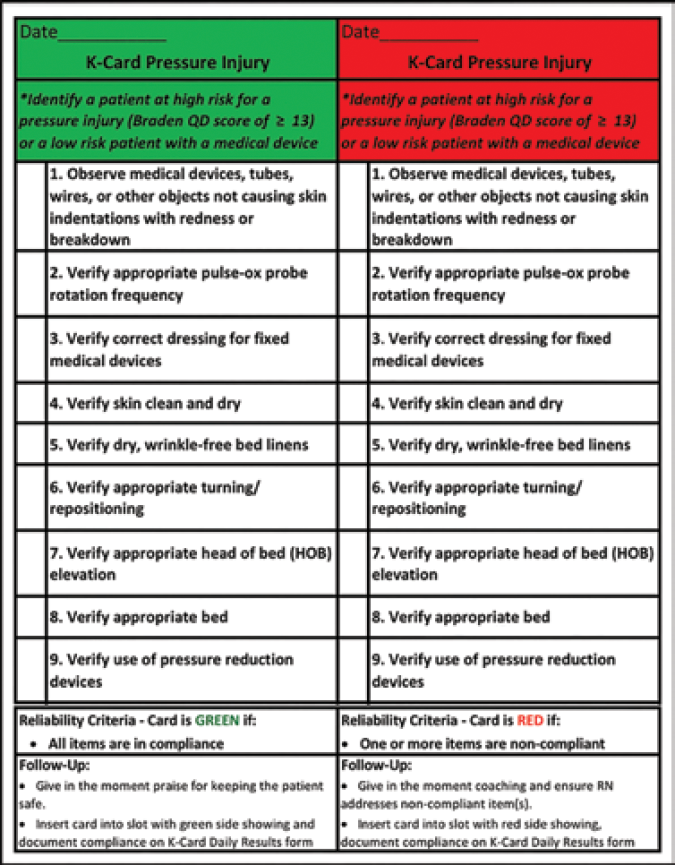
K-Card explained
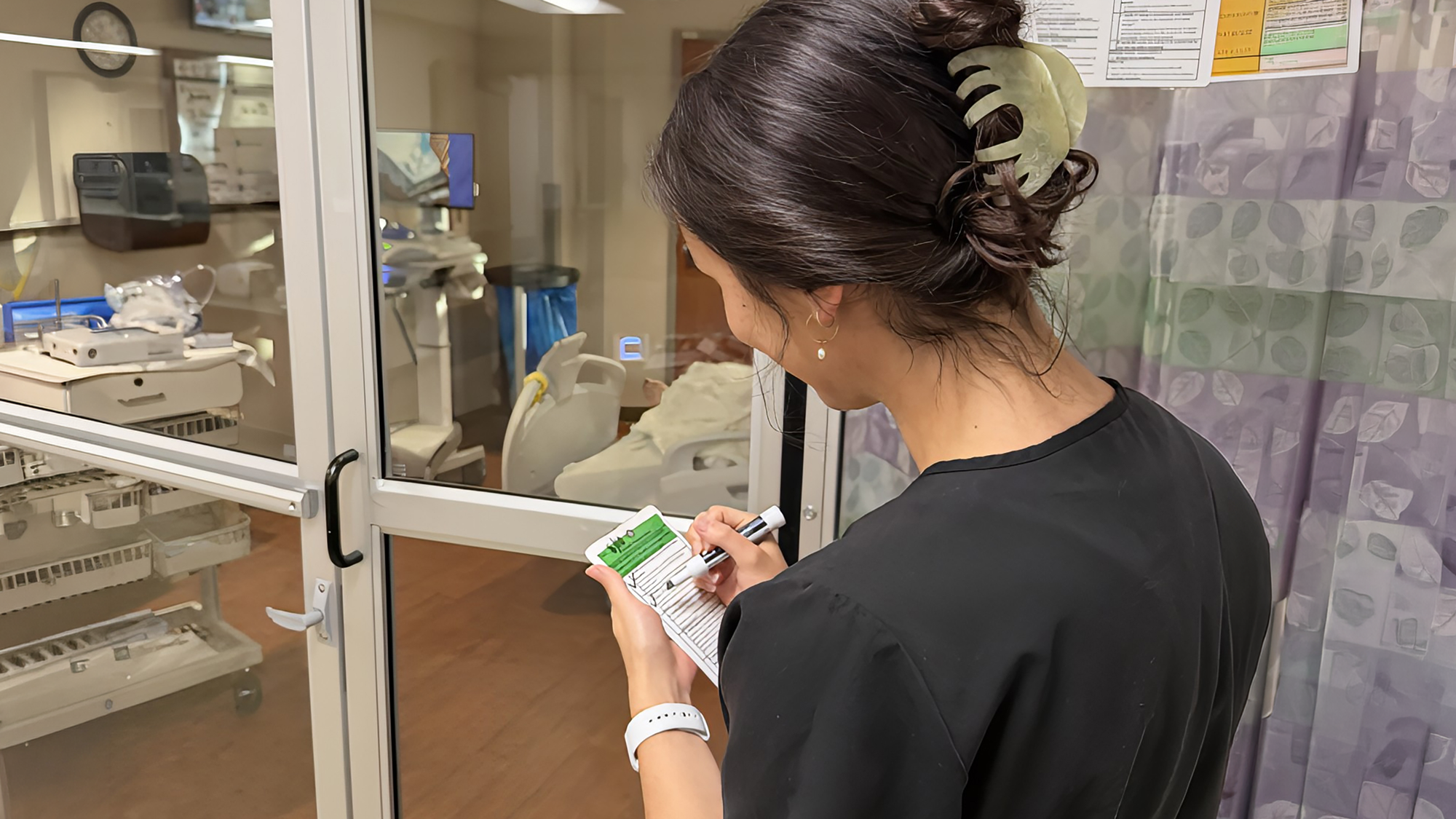
Two-sided Kamishibai Cards (K-Cards), placed outside patient rooms, serve as visual reminders and are used by auditors as validation tools. Red indicates uncompleted tasks and green denotes all tasks have been completed.
Project overview
The multidisciplinary team launched this QI project in direct response to concerns raised about K-Cards during routine nurse leader rounding. Frontline nurses consistently reported duplicative documentation, fragmented workflows, and repetitive communication processes that created delays, inconsistencies, and frustration. These inefficiencies reduced nurse satisfaction and pulled staff away from essential direct-care responsibilities, creating potential patient safety risks.
The QI project aimed to streamline these processes and improve efficiency through staff engagement and evidence-based interventions. The chief nursing officer led extensive engagement efforts, including leadership rounding, listening sessions, huddles, one-on-one conversations, shared governance meetings, and reviews of employee feedback, to better understand workload challenges, communication gaps, resource needs, and opportunities for improvement.
After reviewing HAPI data and staff feedback, the multidisciplinary team developed a plan that refined the use of K-Cards to strengthen HAPI bundle adherence. The revised K-Card process supported peer-to-peer feedback, real-time coaching, and improved adherence to PI prevention protocols.
Implementation strategy
The multidisciplinary team followed Plan-Do-Study-Act (PDSA) cycles to guide implementation of their QI project. Manandi and colleagues describe PDSA as supporting a structured, data-driven process for testing changes, evaluating outcomes, and sustaining practice improvement through continuous learning and staff engagement. (See PDSA cycle ramp.)
PDSA cycle ramp
The quality improvement project team used Plan-Do-Study-Act (PDSA) cycles to guide implementation of electronic Kamishibai Cards (K-Cards) to aid hospital-acquired pressure injury prevention. The team conducted four cycles over a 4-month period.
- Cycle 1: Communicate K-Card process updates via email to nursing staff and leaders.
- Cycle 2: Standardize the process through checklists and staff education. Leaders round on staff to encourage adoption.
- Cycle 3: Onboard new staff with updated education, remove outdated tools, and continue leader rounding.
- Cycle 4: Develop and refine reports, initiate data collection, and implement real-time visual tracking on electronic whiteboards.
In addition, the team used a key driver diagram to outline the project aim, key drivers, and related change ideas. Six primary drivers were identified: staff knowledge of K-Card elements, staff engagement, optimized IT tools, effective communication, standardized K-Card processes, and easy card access. (See Key drivers.)
Key drivers
Using a key driver diagram aided in outlining project aims and suggestions for changes or adjustments.
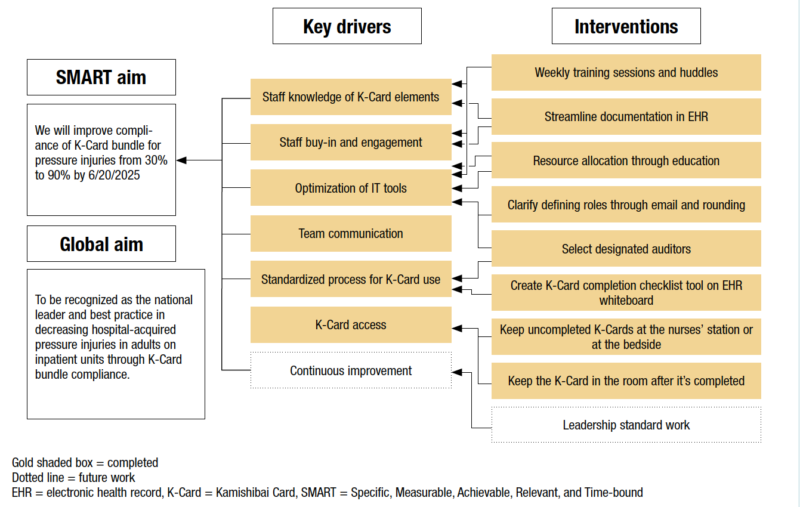
To support these drivers, the team implemented coordinated interventions, including data review, frontline engagement, targeted education, process standardization, real-time feedback, leadership rounding, and continuous monitoring of key performance indicators. PDSA cycles aided in assessing effectiveness and refining strategies. Weekly training sessions and daily huddles, led by assistant managers and charge nurses, reinforced consistent messaging.
Nurse managers and health informatics staff streamlined documentation within the EHR, integrating K-Card elements (HAPI bundle elements) into the electronic whiteboard for real-time tracking. The physical K-Cards are now used by auditors (nurse leaders in quality, safety, risk and prevention; charge nurses; and some staff nurses) to validate EHR documentation at the bedside. Roles and responsibilities were clarified through targeted communication and leadership rounding, and resources were allocated to ensure frontline support. Visual reminders placed at the bedside (such as turning schedules) and whiteboard notes (for example, to keep skin dry and clean) reinforced standardized practice, while nurse leaders provided coaching during rounding. These combined efforts strengthened staff engagement, improved workflow reliability, and supported sustained adherence to PI prevention practices.
K-Card scoring
During implementation, the multidisciplinary team identified an opportunity to enhance the use of the electronic whiteboard within the EHR to support K-Card documentation and adherence monitoring. Each completed intervention documented in the EHR earned one point, and full HAPI bundle adherence turned the K-Card score green, providing a real-time visual indicator of completion of the prevention bundle. If one component was missing or undocumented, the score remained red. The red and green indications in the electronic cards mimic the physical K-Cards. In the case of missing or incomplete information, the auditor provided coaching.
When the K-Card turned green, the auditor and the primary nurse would round together to validate that all interventions had been properly completed. The auditor provided immediate, in-person feedback, reinforcing effective practices or addressing any gaps. This real-time coaching supported continuous learning and promoted consistent adherence to HAPI prevention protocols.
Education and expansion
Nurse managers and educators delivered K-Card process training using a structured, evidence-based approach described by Sapri and colleagues, incorporating the evidence supporting PI prevention, reviewing the revised K-Card workflow, demonstrating required interventions, and providing opportunities for clarification and questions. Super-users (those who had done well in the pilot) received focused training to reinforce the process and provide peer-to-peer support at the bedside. Leaders validated competency through real-time coaching and documentation review. Best-practice content was shared during staff meetings, huddles, and new-hire orientation, with preceptors ensuring competency.
Because the workflow had been revised from the December 2023 rollout, training included intentional reinforcement of complete documentation, accountability through leadership rounding and audits, and real-time feedback to address gaps. Leaders supported adoption through targeted re-education, consistent communication, real-time coaching, and structured follow-up.
To maintain momentum, nurse managers and the quality team conducted weekly audits to provide actionable feedback. Adherence data were shared with staff to promote ownership, while quality and safety champions audited documentation and delivered feedback. Nurses across units and hospitals received training to ensure system-wide consistency. Nurse leaders validated adherence via direct observation, K-Card documentation in the EHR, bedside rounding, and routine compliance audits. They compared documented interventions with the patient’s clinical condition and provided real-time coaching in cases of partial or missing documentation.
After a successful 2-month pilot on the 30-bed medical–surgical unit, the initiative expanded through a phased rollout tailored to other nursing units. Staff received targeted training, hands-on workshops, and support from super-users. Open communication, feedback loops, and active leader involvement strengthened engagement. Rounding encouraged staff to voice concerns, enabling proactive adjustments.
Outcomes
K-Card bundle adherence increased from 30% to 96% on the medical–surgical, progressive care, and intensive care units. HAPI rates declined by 50% over 9 months in all three areas. During staff discussions, nurses expressed genuine excitement about the positive results achieved through the K-Card QI project. They described feeling heard and valued throughout the process, with many expressing gratitude that leadership not only listened to their input but also actively incorporated it into the initiative. This collaboration fostered a sense of ownership among the nursing staff and reinforced the significance of their clinical insight in driving patient safety outcomes.
As bundle adherence improved, the K-Card rounds created a collaborative dialogue among nurses and providers. Providers began to actively solicit input from bedside nurses, and they worked together to solve potential PI risks early, resulting in better patient outcomes and stronger interdisciplinary relationships. In addition, providers have become more aware of what nurses are monitoring and documenting, which has led to more targeted discussions and faster decision-making around patient care. As a result, providers have gained a deeper appreciation for nursing vigilance and frequently adjust care plans based on nursing documentation.
Staff satisfaction data, quality indicators, Hospital Consumer Assessment of Healthcare Providers and Systems results, dashboards, and performance reports aided in monitoring the intervention’s impact. Leaders reviewed metrics regularly, addressed barriers, and implemented corrective actions. Ongoing follow-up via meetings and huddles ensured improvements were sustained and integrated into daily operations. Overall, the K-Card initiative established a structured, evidence-based approach to PI prevention, fostering accountability, learning, and clinical excellence through strong leadership, frontline engagement, and strategic use of data and technology.
Return on investment
As noted by Roderman and colleagues, HAPIs are among the costliest preventable hospital-acquired conditions. The financial impact is substantial, with national HAPI-related costs exceeding $26 billion annually. Treatment costs for a single PI can range from approximately $20,900 to more than $151,700, depending on severity. Advanced-stage injuries account for the greatest share of healthcare expenditures. HAPIs also lead to increased lengths of stay and additional resource use.
According to Roderman and colleagues, effective prevention efforts can reduce complications, improve operational efficiency, support quality outcomes, and decrease avoidable healthcare expenses. At our 135-bed community hospital, a 50% reduction in HAPI rates improved patient outcomes while reducing avoidable costs. Roderman and colleagues state that sustained PI reduction supports patient safety, quality performance, regulatory readiness, and overall organizational effectiveness.
Of note, this HAPI reduction initiative required no significant financial investment. The project was supported through monthly 1-hour committee meetings and involved minimal staff overtime. This underscores how strategic, collaborative efforts can yield substantial benefits in patient care and institutional performance with limited resource demands.
Challenges and limitations
Direct observation and staff feedback revealed challenges during K-Card bundle implementation. Resistance to change surfaced early, as several nurses expressed a preference for the physical K-Cards and voiced discomfort with transitioning to an electronic format.
Technical issues were identified through real-time troubleshooting logs and staff reports of system glitches or downtime that interrupted documentation and affected data accuracy. Training gaps emerged during leader rounding and competency checks, where inconsistent use of the K-Card and variations in documentation practices indicated that some staff hadn’t fully understood the updated workflow.
Resource constraints also were observed, particularly during high-volume periods when limited time and staffing made it difficult for nurses to maintain consistent adherence and follow-up. Over time, declining adherence trends highlighted the need for ongoing reinforcement, leadership presence, and structured follow-up to support long-term reliability of the K-Card bundle.
Lessons learned
Several lessons emerged during implementation. For example, HAPI reduction requires consistent K-Card use, and transitioning from physical to electronic K-Cards improved staff engagement and responsiveness as nurses became familiar with the workflow. Continuous education, real-time coaching, and timely feedback proved crucial to reinforcing correct K-Card bundle use and sustaining adherence. Leader rounding, staff feedback, and direct monitoring helped to identify barriers and support adoption.
Regular audits and EHR-based data tracking strengthened accountability by identifying gaps and guiding targeted improvements. Open communication encouraged staff to raise concerns early, while standardized onboarding and competency validation helped ensure consistency among new and temporary staff.
Nursing implications
This initiative highlights the critical role of frontline nurse engagement in sustaining strategies to reduce HAPIs. Nurses were central to the project’s success by identifying barriers, promoting accountability, and consistently applying evidence-based prevention practices. Their involvement strengthened a culture of ownership, collaboration, and continuous improvement, demonstrating that lasting change occurs when those closest to patient care are actively engaged.
Nurse leader rounding created opportunities for real-time dialogue, problem-solving, success recognition, and reinforcement of prevention expectations. This partnership between leaders and frontline staff contributed significantly to improved outcomes and a stronger unit culture. The model of frontline engagement and leadership support can be applied to other nursing-sensitive indicators such as fall prevention, catheter-associated urinary tract infection reduction, and central line–associated bloodstream infection prevention.
K-Cards functioned not only as adherence tools but also as coaching instruments, offering immediate guidance and reinforcing best practices. Integrating timely feedback into daily nursing workflows enhances accountability, supports professional growth, and fosters a proactive culture of safety. This approach positions frontline nurses as active leaders in sustaining high-quality care and improving patient outcomes.
Challenges
Although the pilot demonstrated significant improvements in K-Card adherence and HAPI reduction, several challenges affected long-term sustainability. Ongoing education was needed to maintain staff competency in K-Card processes and HAPI prevention practices, particularly given nurse turnover and the frequent use of float staff unfamiliar with the workflow. Maintaining a consistent audit process also required dedicated time and personnel, which was challenging during competing operational demands.
Data accuracy remained another challenge. Periodic validation audits identified occasional discrepancies between documentation and bedside practice, making direct observation essential to confirm adherence and maintain data integrity. In addition, staffing shortages and competing patient care priorities sometimes limited the consistent completion of all bundle elements and adherence activities.
To address these challenges, the team implemented standardized education during orientation, provided refresher training during staff meetings and huddles, and used unit champions to reinforce best practices. Leadership rounding, real-time feedback, and routine validation audits helped strengthen accountability and improve documentation accuracy. Continued monitoring through EHR dashboards and adherence reports allowed nursing leaders to identify barriers early and provide targeted support to units experiencing staffing challenges or declines in bundle compliance.
Engagement, sustainable improvements
Increasing K-Card bundle adherence promotes earlier identification and intervention for patients at risk of PIs. By standardizing assessments and reinforcing best practices through daily rounding, this initiative showed that focused nursing action can directly reduce HAPI rates and improve patient outcomes. The results highlight the importance of frontline engagement, consistent processes, and data-driven feedback in achieving sustainable improvements in patient safety. This QI project provides additional support that K-Card bundle adherence is associated with decreases in HAPIs, reinforcing the effectiveness of structured rounding tools in enhancing preventive care and overall patient outcomes.
Marilyn Smith is the chief nursing officer at Vanderbilt Tullahoma Harton Hospital in Tullahoma, Tennessee. Chasity Gipson is an assistant manager of nursing at Vanderbilt Tullahoma Harton Hospital. Demesha Warren is a health IT senior customer care specialist at Vanderbilt University Medical Center in Nashville, Tennessee.
References
Centers for Medicare & Medicaid Services. Hospital-acquired conditions. June 24, 2026. cms.gov/medicare/medicare-fee-for-service-payment/hospitalacqcond
Choragudi S, Andrade LF, Bermudez NM, Burke O, Sa BC, Kirsner RS. Trends in inpatient burden from pressure injuries in the United States: Cross-sectional study National Inpatient Sample 2009-2019. Wound Repair Regen. 2024;32(4):487-99. doi:10.1111/wrr.13182
Dhivya P. Hospital-acquired pressure injuries (HAPI): A quality indicator from risk to recovery. Int J Health Sci Res. 2025;15(7):181-4. doi:10.52403/ijhsr.20250722
Manandi D, Tu Q, Hafiz N, Raeside R, Redfern J, Hyun K. The evaluation of the Plan-Do-Study-Act cycles for a healthcare quality improvement intervention in primary care. Aust J Prim Health. 2024;30(1). doi:10.1071/PY23123
Roderman N, Wilcox S, Beal A. Effectively addressing hospital-acquired pressure injuries with a multidisciplinary approach. HCA Healthc J Med. 2024;5(5):577-86. doi:10.36518/2689-0216.1922
Sapri ND, Ng YT, Wu VX, Klainin-Yobas P. Effectiveness of educational interventions on evidence-based practices for nurses in clinical settings: A systematic review and meta-analysis. Nurse Educ Today 2022;111:105295. doi:101016/j.nedt.2022.105295
Stewart S. Kamishibai cards: A conversation about patient safety. J Nurs Care Qual. 2021;36(4):333-8. doi:10.1097/NCQ.0000000000000541
Key words: hospital-acquired pressure injury, pressure injury prevention, safety culture, Kamishibai Cards, K-Cards