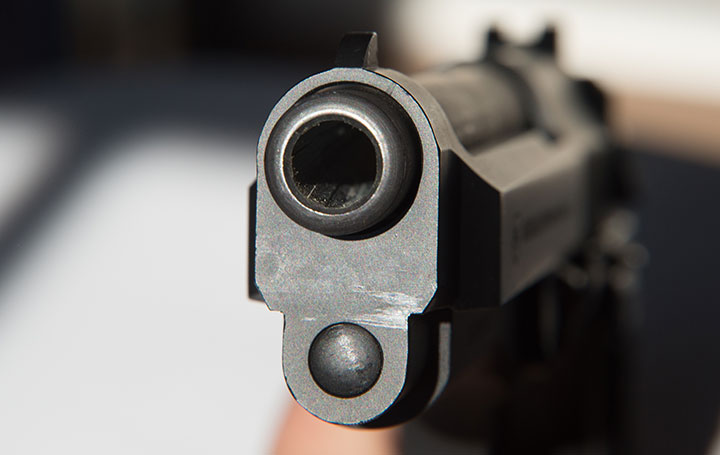
It’s one of a healthcare provider’s worst nightmare—a person within the facility has a weapon. What will you do? Who will you call? What can you expect from the outside agencies who respond? In Fast Facts for the Triage Nurse, 2ndEd., disaster management expert Erik Angle RN, MICN, MEP, covers essential actions to take in the event you find yourself faced with such a horrific event.
INCIDENT RESPONSE
The risk of an active shooter or active violence incident is higher in the community than within the hospital itself.
Attack Occurs in the Community
When an attack happens within the community (not within your facility), you should do the following:
- Assume the role as assigned in the hospital’s emergency operations plan (EOP) and prepare for incoming mass casualties.
- Recognize that there is the potential that the hospital could be a secondary target.
Attack Occurs Within the Hospital/Healthcare Facility
Active shooter or active violence incidents in a healthcare setting present unique challenges, such as a large vulnerable patient population and hazardous materials. There are special challenges such as with firearms and MRI machines (these machines contain large magnets that can cause accidental discharge of a weapon or may physically remove the weapon from the hands of law enforcement). To be prepared for an attack within your facility, you should know the following:
- How to initiate your facility policy for active shooter or active violence incident response.
- Be aware of the standardized hospital emergency code for active shooter or active violence incident. Codes may vary from color based codes (e.g., Code Silver, Code Black) to plain language– based codes (e.g., “Security Threat: Active Shooter”) or may even be a hybrid of both (e.g., “Code Silver, active shooter” with the location mentioned and other plain language instructions that follow). It is important to know what your facility uses before you need it.
Attack Occurs Within Your Department/Unit
If an active shooter or active violence incident occurs in your department/ unit, do the following:
- Remain calm! Your thought process must switch from daily operations to survival mode, which is run, hide, and fight.
- Run, evacuate the immediate area, and warn others as able:
- If safe to do so, remove patients from hallways or take them with you.
- Close patient doors and instruct them to turn off the lights and be quiet. If patients are mobile, instruct them to potentially hide in their bathrooms and lock the bathroom door.
- Leave personal belongings behind but take your cell phone if you have it on you. Be sure to silence your cell phone but do not turn it off.
- Do not attempt to move or treat wounded people unless you have the time, the training, and it is safe to do so.
- Do not activate the fire alarm.
- Do not stay behind if others are not willing to go.
- Hide, if running and evacuation is not an option. Hide in a securable location, such as rooms with lockable doors (e.g., bathrooms, lounges, medication rooms). Lock, secure, and barricade doors by any means (e.g., using furniture, cabinets, bed, and belt). It is important to know which way the door will swing to do this successfully.
- Fight, if your life and the lives of others are at immediate risk. You need to fight your own fear and fight the attacker because fear can be your worst enemy in these incidents: Instinct and nature will work against you. As your heart rate increases, your self-control will decrease.
- There are two subconscious body functions that can be consciously controlled, eye blinking and breathing. Four deep four-count breaths and consciously slowing down your blinking may slow your heart rate, lower your stress level, and bring your body back under some degree of control.
- If it is decided to fight the attacker, try to coordinate with others for maximum impact. Use objects in your immediate environment as weapons (e.g., fire extinguishers, laptops, trauma shears, and hot coffee). Commit to your actions to fight like lives depends on it, because they do.
Attack Happens Outside Your Department/Unit
If the active shooter or active violence incident occurs outside your department/unit, you should do the following:
- Avoid the announced area of threat.
- Close and secure doors to your department, such as main doors, hallway doors, and even doors to the patient rooms, and stand by for further instructions.
- Do not let visitors, patients, and other staff members leave the area or walk the halls. If you are concerned that the threat may impact the patients in the waiting room/lobby, plan to calmly evacuate those patients to a secondary more secure location.
- Staff members with medical training may be requested to assist with victim evacuation and basic first aid if the scene is safe.
- Remain in “lockdown” mode until you hear “All clear” declared.
Prepare for Law Enforcement Response
The initial responding law enforcement team has a singular purpose of stopping the attacker and will not assist victims. When they arrive, do the following:
- Remain calm and follow their instructions.
- Expect that you may be yelled at and forcibly placed to the ground as a physical protective measure.
- Do not argue or fight with the police; they will consider you a threat and act accordingly.
- Anticipate that you will have weapons pointed at you by law enforcement.
- Avoid pointing, running, or screaming at them.
- Keep your hands raised, open, and away from your body.
- Ask for permission before reaching for objects under desks, clothing, and so on.
Do you know your facility policies? Are you prepared for your role in responding to a violent incident? Have you trained with your local agencies so you know what to expect in the event of a significant incident response? Have you participated in community disaster response events?
The content offered here merely skims the surface of the complex nature of such incident responses. Seek out continuing education opportunities that bring you together with local law enforcement. Participate in facility run incident responses. Prepare for the unexpected.
If your facility doesn’t practice for such events, be the champion to do so. Rally the team. Coordinate a training event. You don’t have to be the expert, you just need to bring in the experts to train the staff.
Invest in your future now. Your family, friends, colleagues, and future self will thank you.
Reproduced with permission from Springer Publishing Company from Fast Facts for the Triage Nurse (2ndEd.). New York, NY: Springer Publishing.
Lynn Sayre Visser is the author of Fast Facts for the Triage Nurse (2ndEd.) and Rapid Access Guide for Triage and Emergency Nurses. She has devoted her career to emergency nursing, triage education, and mentoring others.